

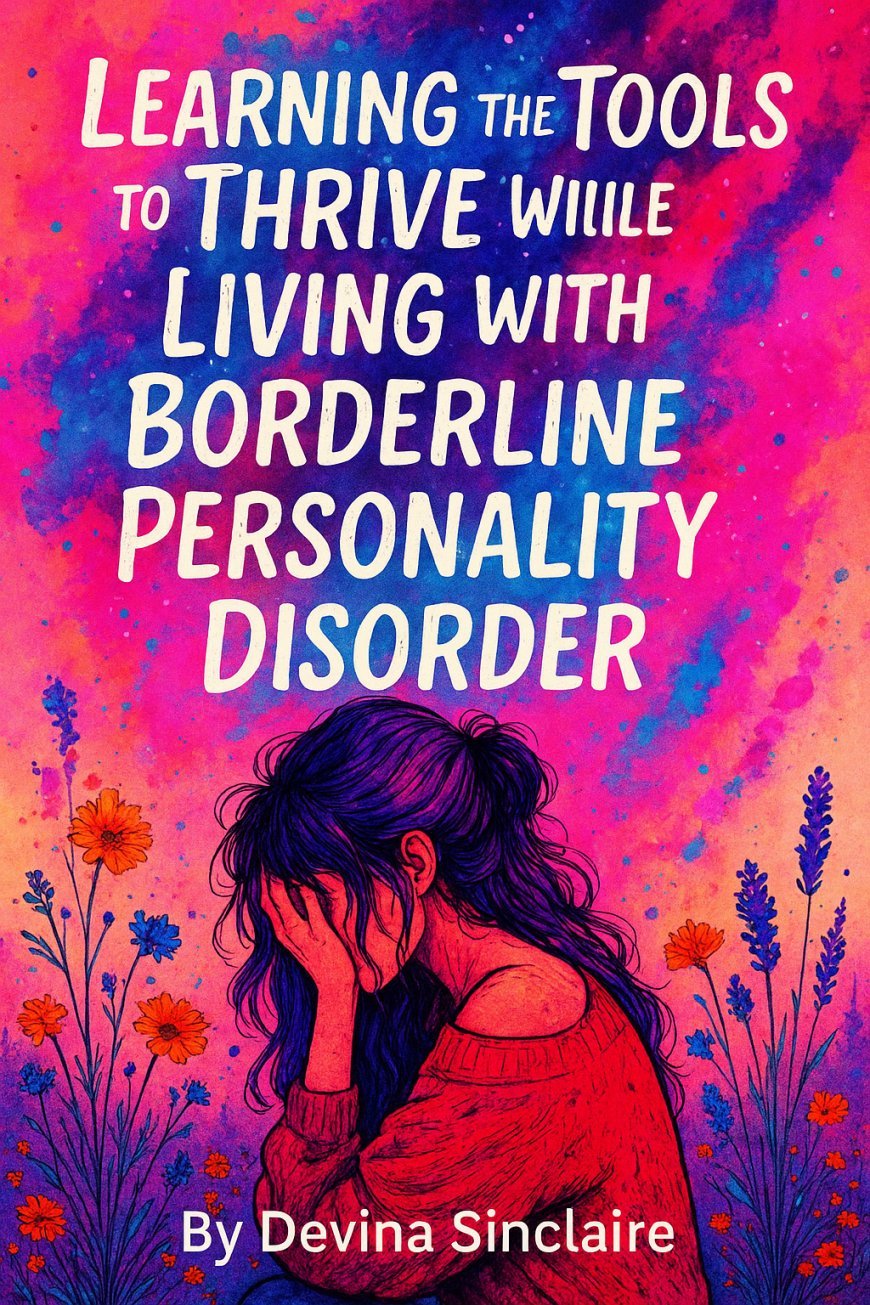
Learning the Tools to Thrive While Living with Borderline Personality Disorder
by Devina Sinclaire
For a long time, I lived in emotional extremes. One minute, I felt invincible—loved, connected, and full of energy. The next, I was drowning in rejection, anger, or shame, often over something small. The intensity was exhausting. I knew something was off, but I didn’t have the words for it—until I was diagnosed with Borderline Personality Disorder (BPD).
Getting that diagnosis was both a relief and a shock. I finally had an explanation for my emotional rollercoasters and chaotic relationships. But at the same time, I was terrified. BPD carries a heavy stigma, and I wondered if this meant I was broken forever.
What I didn’t know then was that the diagnosis wasn’t the end—it was the beginning of my journey toward healing. With time, support, and the right tools, I’ve learned not just how to cope but how to thrive. And in sharing my experience, I hope it helps someone else feel less alone.
---
Understanding My Emotional Landscape
One of the hardest parts of BPD is emotional dysregulation. My feelings don’t come in waves—they come in tsunamis. A simple delay in a friend’s reply could send me spiraling. I’d feel abandoned, angry, or numb, sometimes all at once. It’s not that my emotions weren’t valid—it’s just that they were overwhelming.
What helped me most was learning mindfulness. I know that word gets thrown around a lot, but for someone with BPD, it’s not just a wellness trend—it’s a survival skill. Mindfulness helped me pause before reacting, to notice when my emotions were clouding my thinking. I’d literally stop and say, “This is fear talking. It feels real, but it’s not the full story.”
That awareness alone started changing everything.
---
Dialectical Behavior Therapy (DBT): A Game-Changer
After my diagnosis, I enrolled in Dialectical Behavior Therapy (DBT), a program designed specifically for people with BPD. I can honestly say it changed my life. DBT gave me a toolkit I didn’t know I needed.
Some of the core skills I learned include:
Distress Tolerance: Instead of trying to immediately “fix” or avoid pain, I learned to survive it. One method I love is “TIPP”—Temperature (like cold water), Intense exercise, Paced breathing, and Progressive relaxation. It works, especially during meltdowns.
Emotion Regulation: This helped me understand and influence my emotional responses. I began tracking my moods, identifying triggers, and making lifestyle changes like better sleep, healthier eating, and less caffeine.
Interpersonal Effectiveness: I practiced expressing my needs without aggression or withdrawal. Communicating my fears calmly—like saying, “I feel scared you’re going to leave”—helped stop a lot of unnecessary drama.
DBT isn’t easy. It takes commitment. But little by little, I started seeing results. I wasn’t perfect, but I was growing.
---
Healing My Relationships
My fear of abandonment used to rule my life. If someone I loved seemed distant or distracted, I’d panic. I’d either lash out or cling tightly, afraid they were about to disappear. These behaviors pushed people away—the very thing I was trying to avoid.
Learning to take responsibility for my emotions was a breakthrough. I started saying things like, “I’m feeling triggered, and I need a moment,” instead of exploding. I worked on building trust and letting others choose to stay, rather than trying to control the outcome.
Not everyone stayed, and that hurt. But the ones who did? They saw my effort, and that made our connections stronger.
---
Radical Acceptance: My Superpower
One of the most powerful (and difficult) skills I’ve learned is radical acceptance. It means acknowledging reality without resistance—accepting things as they are, not as I wish they were.
I had to accept that I have BPD. That it’s okay to need more support. That some people won’t understand me—and that’s not a reflection of my worth.
This mindset helped me stop fighting myself. I started giving myself the grace I so often gave to others. My past mistakes didn’t define me—they were part of the learning curve. I forgave myself. I moved forward.
---
Thriving, Not Just Surviving
These days, I still have hard moments. I still get overwhelmed. But I don’t stay stuck. I’ve built a life that supports my healing.
Here’s what’s helped me thrive:
Routine: Having structure keeps me grounded.
Creative outlets: Writing, art, and journaling help me express emotions in a safe, healthy way.
Boundaries: I’ve learned to say “no” without guilt and to walk away from toxic dynamics.
Support system: I surround myself with people who respect my process and hold space without judgment.
Most importantly, I’ve learned that my sensitivity is not a weakness—it’s my strength. I feel things deeply, yes. But I also love fiercely, empathize easily, and notice beauty others miss. Once I stopped trying to suppress that part of myself, I began to bloom.
---
You Are Not Broken
If you’re living with BPD, I want you to know this: you are not broken. You are not a burden. You are not too much.
You’re navigating a brain that feels things differently—and that’s okay. There are tools. There is support. There is hope. And even if it feels impossible right now, I promise: with time, effort, and the right help, you can build a life worth living.
Take it one day at a time. You’re doing better than you think.
---
Written by Devina
Sinclaire
Follow me for more real, raw stories on healing, mental health, and self-discovery.

















Responses (0)
Sign in to share your thoughts.
Sign in