
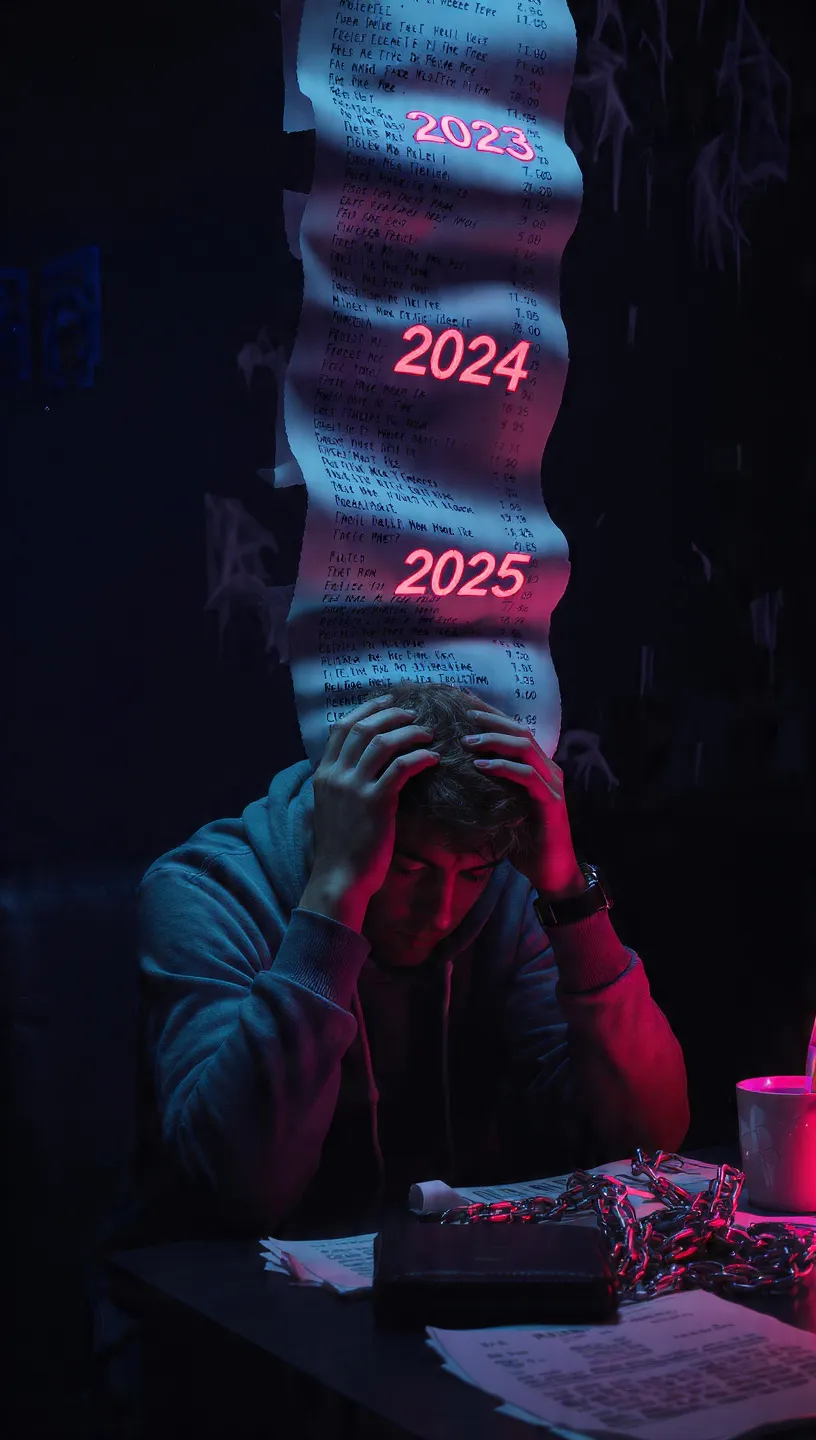
Nobody warned you that your worst year would keep sending you bills long after it ended.
Not your doctor. Not your therapist. Definitely not your bank. But the truth is — every painful chapter of your life leaves behind a financial shadow that follows you for months, sometimes years, without you ever realizing it's there. Most people blame their salary, blame inflation, blame bad luck. Very few ever look at the real culprit hiding in plain sight.
The Moment That Started Costing You Money
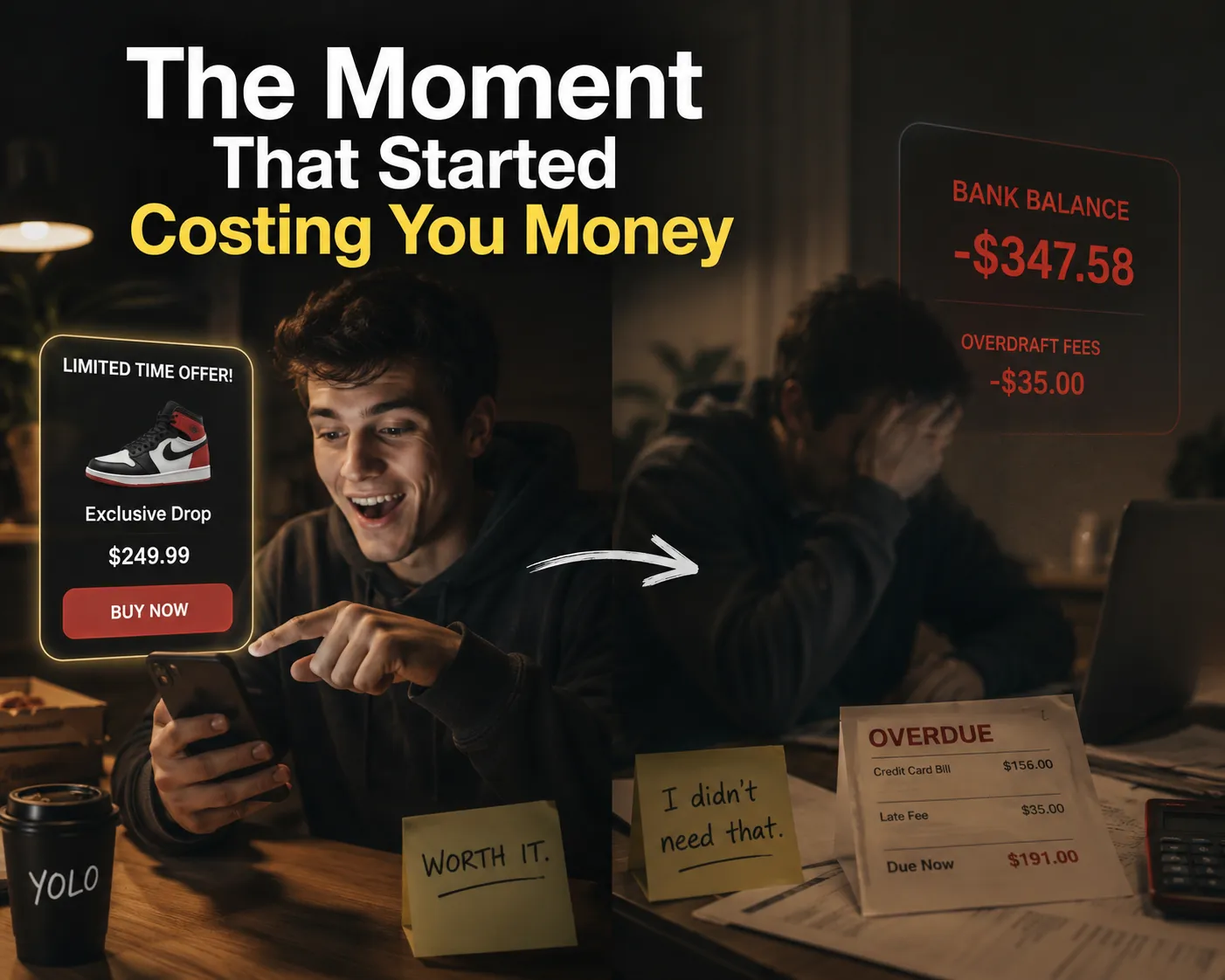
Think back. Was it the breakup? The job that ended without warning? The person you lost? The marriage that fell apart?
You probably remember the pain. What you don't remember — because nobody ever connects these dots — is what happened to your spending in the 12 to 18 months that followed.
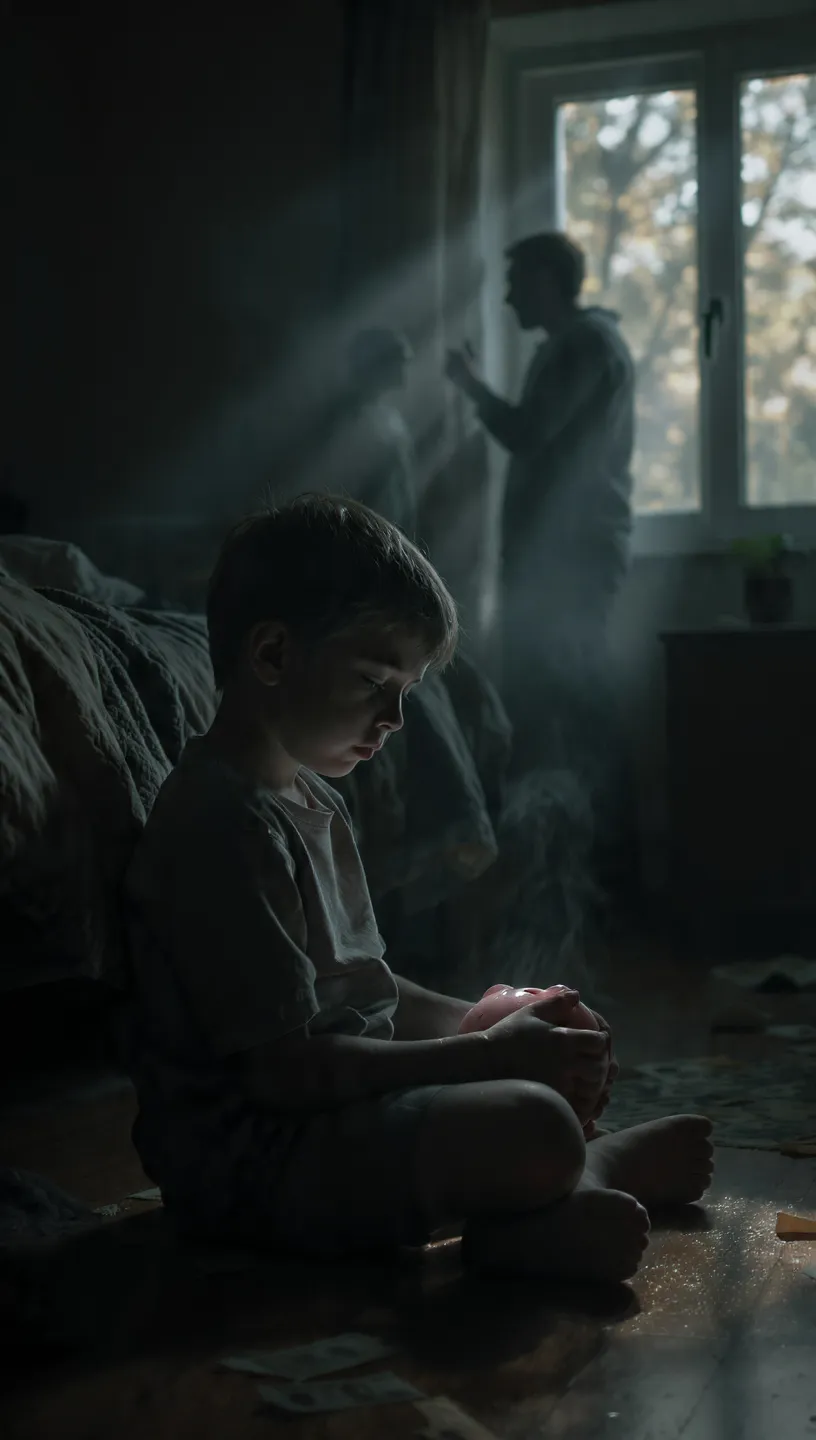
You started buying things that felt like comfort. Small things, mostly. A subscription here. A dinner out there. A purchase you justified because honestly, you deserved it after everything you went through. None of it felt reckless. All of it felt reasonable. And that's exactly the problem.
This is what I call the Financial Hangover Effect.
What It Actually Is
After any major emotional disruption in your life — a loss, a heartbreak, a sudden change, even something that looked like a fresh start — your brain enters a quiet recovery mode. And during that recovery, your relationship with money shifts in ways so subtle you never catch them in the moment.
You spend not because you're careless. You spend because your brain is desperately trying to feel safe again. Buying something new feels like control. Saying yes to plans feels like healing. Upgrading your life feels like moving forward.
It is not emotional spending. It feels nothing like emotional spending. It feels like survival. And that's why it drains your account for so long before anyone notices — including you.
The Number That Changes Everything
Behavioral economics research shows that people who go through a major life disruption spend between 23 and 34 percent more in the year that follows. Not in one dramatic moment. Not in one visible mistake. But spread quietly across dozens of small, completely justifiable decisions over 12 to 18 months.
That is not a bad week. That is not an impulse buy you'll regret tomorrow.
That is a slow, invisible bleed — and it has a name now.
Why You Never Caught It
Your brain is one of the most sophisticated rationalizers on the planet. After a hard season, it reframes everything. Overspending becomes self-care. Impulsive decisions become "starting fresh." Unnecessary upgrades become "I've earned this."
These don't feel like excuses. They feel like facts. And that's what makes the Financial Hangover so uniquely dangerous compared to any other money mistake — it wears the costume of healing while it quietly empties your savings.
The hangover doesn't announce itself. It disguises itself as recovery.
How to Finally Break Free
Step one — Acknowledge the season. If anything painful happened in the last 18 months of your life, admit it openly to yourself. Not to anyone else. Just to you. Financial clarity begins with emotional honesty, and most people skip this step entirely.
Step two — Do a trigger audit. Pull up your bank statements from the last 12 months. Don't judge. Just look. Find the months where spending quietly spiked. Then ask yourself what happened in your life two to four weeks before that spike. The pattern will appear. It almost always does.
Step three — Create a buffer boundary. For the next 90 days, put a personal pause on any non-essential purchase above a set amount. Not a permanent restriction. Just a breathing room rule that gives your decision-making a chance to separate from your emotions.
Step four — Redirect the urge. The real thing your brain wants after trauma is not a new product or a better subscription. It wants stability. So every time the urge to spend appears, redirect it into your emergency fund instead. Give your brain the safety it's actually asking for.
The Thing Every Finance Expert Leaves Out
They will teach you compound interest. They will hand you a budget template. They will explain index funds until your eyes glaze over.
But almost none of them will sit across from you and say what actually needs to be said:
Your bank account is a mirror of your unprocessed pain.
The Financial Hangover Effect is not a character flaw. It is not a failure of discipline. It is a deeply human response to loss — one that costs you money long after the loss itself has faded.
But here is what changes everything: once you see it, you cannot unsee it.
Your worst seasons already cost you enough. It's time to stop letting them charge interest.


















Responses (0)
Sign in to share your thoughts.
Sign in