
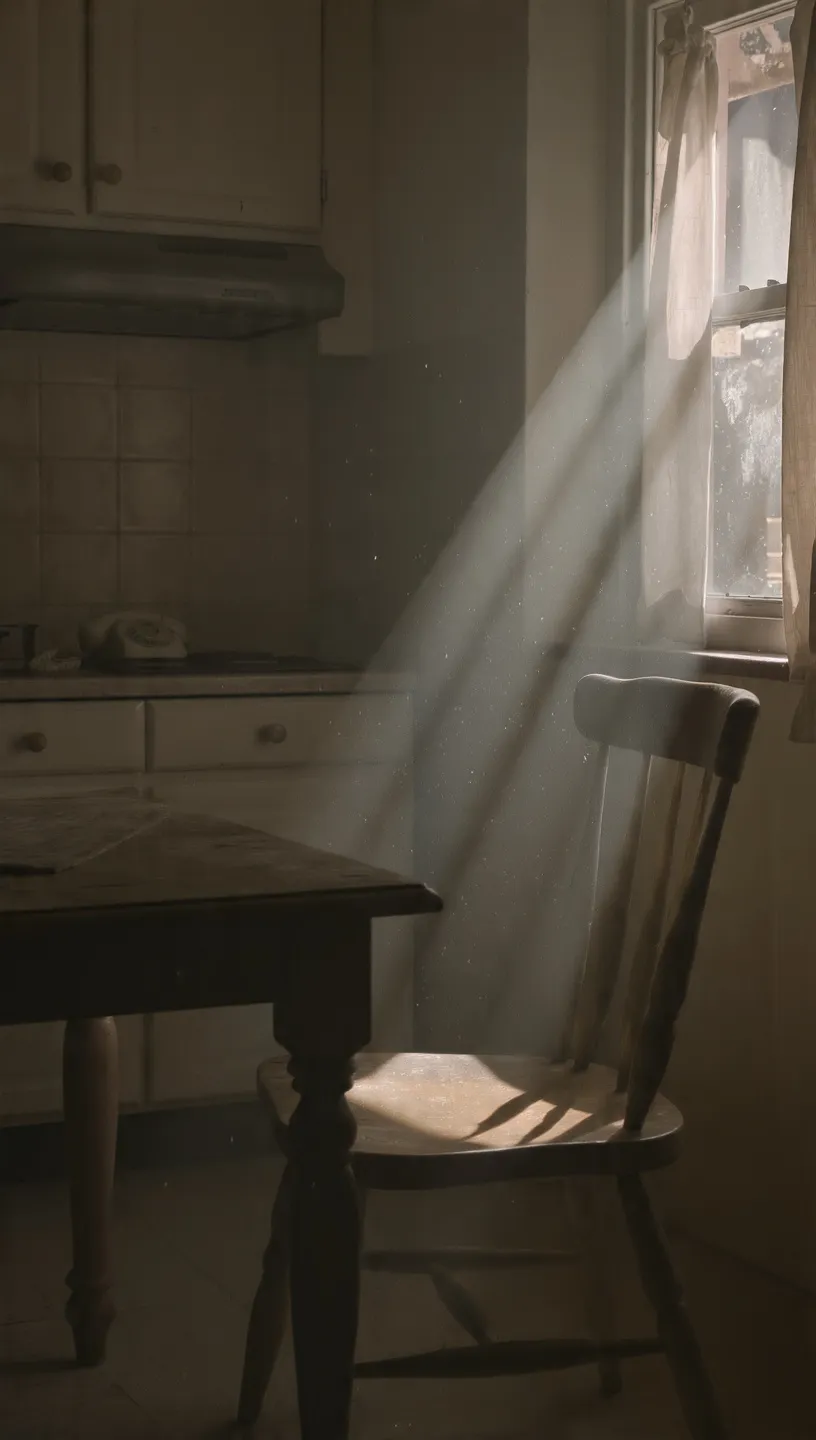
There is a specific kind of silence that follows a mother's death. This was not the silence of an empty room.It is the silence of a phone that no longer rings at the right moment. The silence of a kitchen that smells like her, but will never sound like her again.
I have worked in medicine for over two decades. I have delivered hard news to families more times than I can count. But nothing in my training prepared me for the particular weight of a child — at any age — who has just lost their mother. Not a patient. A child. Because that is what every human being becomes the moment she is gone.
She Was the First Safe Place You Ever Knew
Before you understood the world, you understood its heartbeat. You grew inside her. You learned warmth from her skin, safety from her arms, and comfort from her voice before you ever learned a single word of any language. That is not a small thing. That is everything.
Psychologists call this the primary attachment bond — the very first emotional connection a human being forms. It becomes the internal template for how safe the world feels. For most people, that template is a mother. When she is gone, something foundational shifts. Not just emotionally. Structurally.
The nervous system, which spent years being calmed by her presence, has to learn a new normal. That takes time. Sometimes it takes years. Sometimes, honestly, it never fully completes.
The Body Grieves Too — Not Just the Heart
What surprises people most is how physical grief becomes. They expect sadness. They do not expect the exhaustion that makes getting out of bed feel like climbing a mountain. They do not expect the way food loses its taste, or how sleep becomes shallow and strange, or how a random song in a grocery store can bring them to their knees.
This is not weakness. This is biology.
The brain, under grief, produces elevated stress hormones that affect everything from heart rhythm to immune response. The body is not being dramatic. It is responding to a genuine loss of something it depended on — warmth, safety, a particular kind of love that asked for nothing in return.
In my clinical experience, I have seen otherwise healthy patients fall physically ill in the months following a mother's death. Their bloodwork changes. Their sleep collapses. Their chronic conditions worsen. Medicine can treat the symptoms. But medicine cannot replace what was lost.
Nobody Tells You About the Small Things
People prepare you, in their way, for the big moments of grief. The funeral. The first birthday without her. The first holiday.
Nobody warns you about the small ones.
The moment you cook something and reach for your phone to tell her how it turned out. The reflex to call her when something good happens — because she was always the first person who made good news feel real. The way you will hear a phrase she used and feel her so close, and then feel her absence even more sharply than before.
Grief is not a single wave. It is the tide. It keeps coming back.
What Healing Actually Looks Like
Healing from the loss of a mother is not about moving on. Nobody who has truly loved their mother moves on. They move forward — carrying her with them, learning to integrate the loss into a life that still has to be lived.
It begins with allowing the grief to exist without rushing it.Sadness is not a problem to be solved. It is a sign of love. The deeper the love, the longer its echo endures.
It continues in small acts — doing things she valued, passing on what she taught, showing up for others the way she showed up for you. In those moments, she is not memory. She is method. She is the way you choose to live.
And slowly, the silence she left behind begins to fill — not with her absence, but with everything she gave you that you are still giving to the world.
To Anyone Who Has Lost Her
You are not broken. You are grieving something that deserved to be grieved.
The world is quieter without her. That quiet is real. But so is everything she left inside you — the warmth, the patience, the stubborn love that does not know how to quit.
She is not gone from you. She is you — in the way you speak, the way you care, the way you refuse to give up on the people you love.
That does not end. That never ends.
Written from 25 years of watching human beings grieve — and heal.

















Responses (0)
Sign in to share your thoughts.
Sign in