
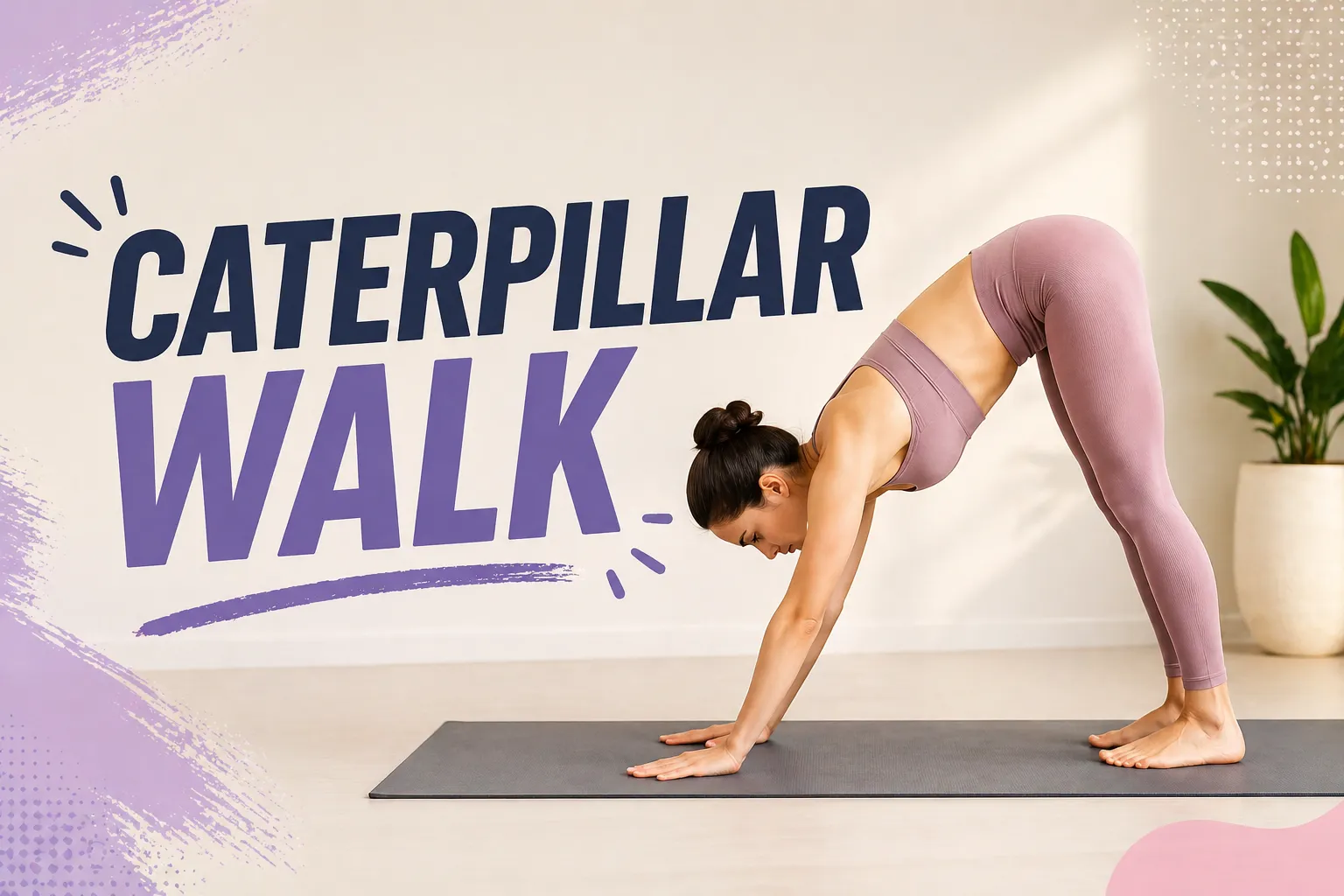
Composition
Let’s be honest.
You’re not 20 presently.
Sit for 2 hours straight and your hips feel like they’ve been fused shut. Bend to pick up your phone from the bottom and your hamstrings scream. Your lower reverse? Do n’t indeed talk about it.
You’ve tried quadrangle stretches. You’ve done toe touches. You’ve indeed copied that yoga roll. Nothing sticks.
The problem is n’t you. The problem is you’re stretching muscles one by one, like they work alone. They do n’t.
Your body is a chain. Hips to hamstrings to pins to back — everything is connected. And when one link gets stiff, the whole chain feels it.
That’s exactly why strength trainers and physios call the caterpillar walk the ‘ gold standard’ for lower body mobility.
So what's it?
Think of it as the stretch that teaches your body how to move again. One inflow that lengthens your hamstrings, opens your hips, fires up your core, and decompresses your chine. All in under 2 twinkles.
No froth comber. No resistance band. No spa class. Just your body and the bottom.
Then’s the exact way to do it
Step 1 launch then
Stand altitudinous. Place your bases right under your hips — not wider, not near. Keep your bases directly under your hips, not too wide.Toes pointing forward. Stand altitudinous like there’s a string pulling the top of your head up. Take one deep breath in.
Step 2 Hinge, do n’t fold
Breathe out and push your hips back first. This is crucial. Do n’t round your reverse and dive down. suppose “ hips back, casket forward. ” Slide your hands down your legs until they touch the bottom.
Can n’t touch? Bend your knees as far as you have to. Zero shame in that. We’re after the stretch, not a slimnastics order.
Step 3 Walk out to plank
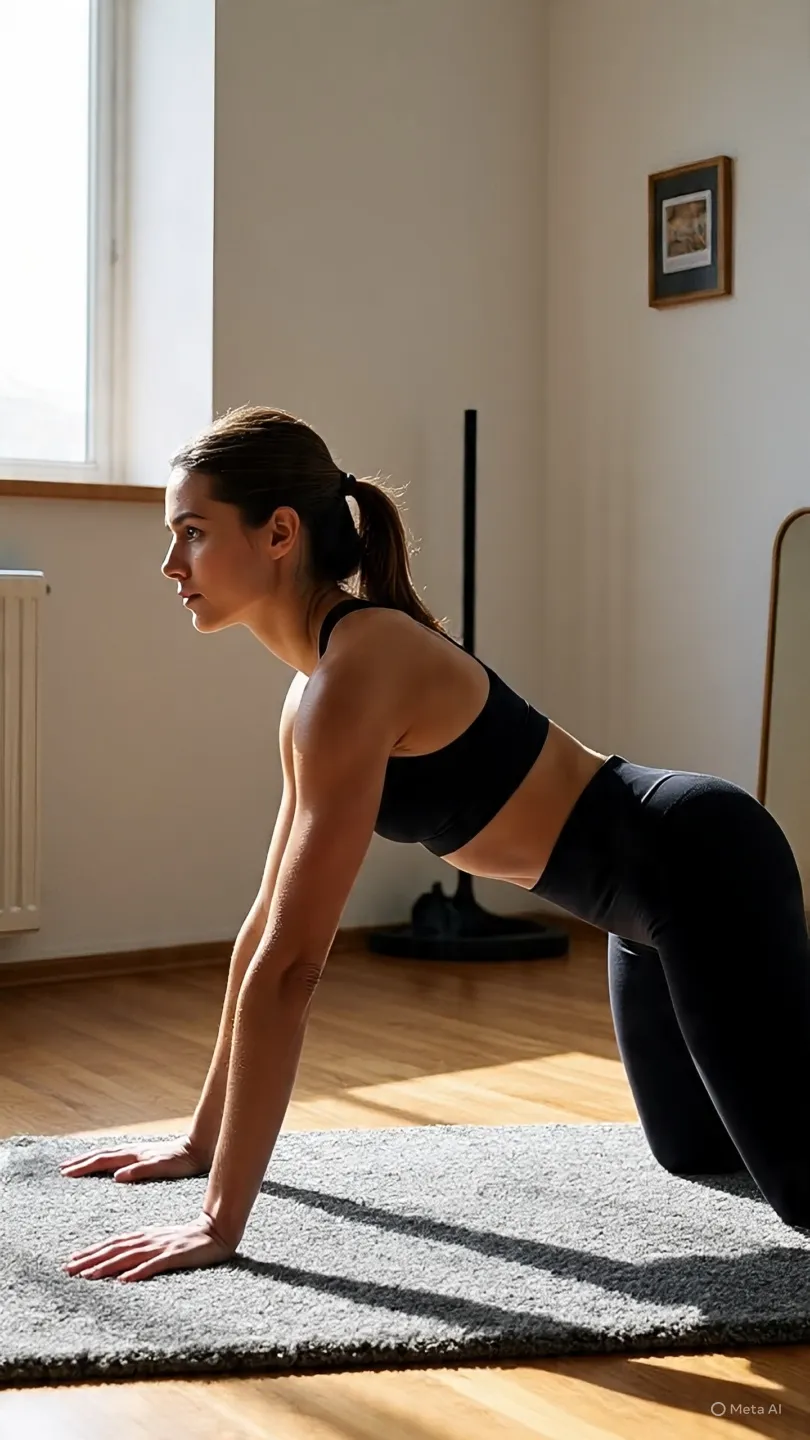
With your hands on the bottom, start walking them forward. bitsy way. Keep your legs straight if possible. Go until your body makes a straight line from head to heels — a high plank.
Pause then for 1 second. Feel the stretch behind your shanks? That’s your hamstrings saying “ eventually. ” Feel your core working? Good. That means your reverse is safe.
Step 4 Walk your bases in
Now comes the magic. Keep your hands planted. Take bitsy way with your bases and walk them toward your hands.
Straighten your legs as much as possible.Your hips will shoot up toward the ceiling. Go only as far as feels okay for your hamstrings. You’ll feel like an inchworm — that’s where the name comes from.
Step 5 Stand up altitudinous
Once your bases are close to your hands, roll up sluggishly. Roll your reverse up sluggishly, one backbone at a time. Head comes up last. That’s 1 rep.
How numerous should you do?
Start with 5 reps daily. Takes lower than 2 minutes.However, do it morning and night, If you’re redundant stiff. In 2 weeks, impinge it to 8 reps.
The 3 miscalculations that kill your results
1. contending through it This is mobility, not cardio. Slow = better stretch = briskly results.However, you did it wrong, If you finish 5 reps in 20 seconds.
2. Bouncing — noway brio to go deeper. You’ll irritate your hamstrings. Move smooth, like you’re moving through honey.
3. Holding your breath — Exhale when you fold, gobble when you walk out. Breathing tells your nervous system it’s safe to relax into the stretch.
But does it actually work?
Then’s what happens when you do this diurnal
After 3 days Touching your toes does n’t feel like discipline. You get there without moaning.
After 1 week Your lower aft stops barking at you when you get out of bed. Walking feels lighter because your hips are n’t fighting you.
After 2 weeks You bend down to tie your shoes and realize you did n’t indeed suppose about it. That’s when you know your body flashed back how to move.
This is n’t magic. It’s just what happens when you move the way your body was designed to move.
Most of us sit for 8 hours every day.Our hips stay at 90 degrees. Our hamstrings noway completely outstretch. Over times, your body thinks “ oh, this is normal now ” and adapts. It shortens stuff that should be long.
The caterpillar walk reverses that. It takes your body through its full range, from folded to extended. It reteaches the pattern.
Who should NOT do this?
still, sharp firing pain, or you’re recovering from cripple surgery, If you have a slipped slice. For 95 of people dealing with normal office- job stiffness, this is safe.
Pro tip to position up
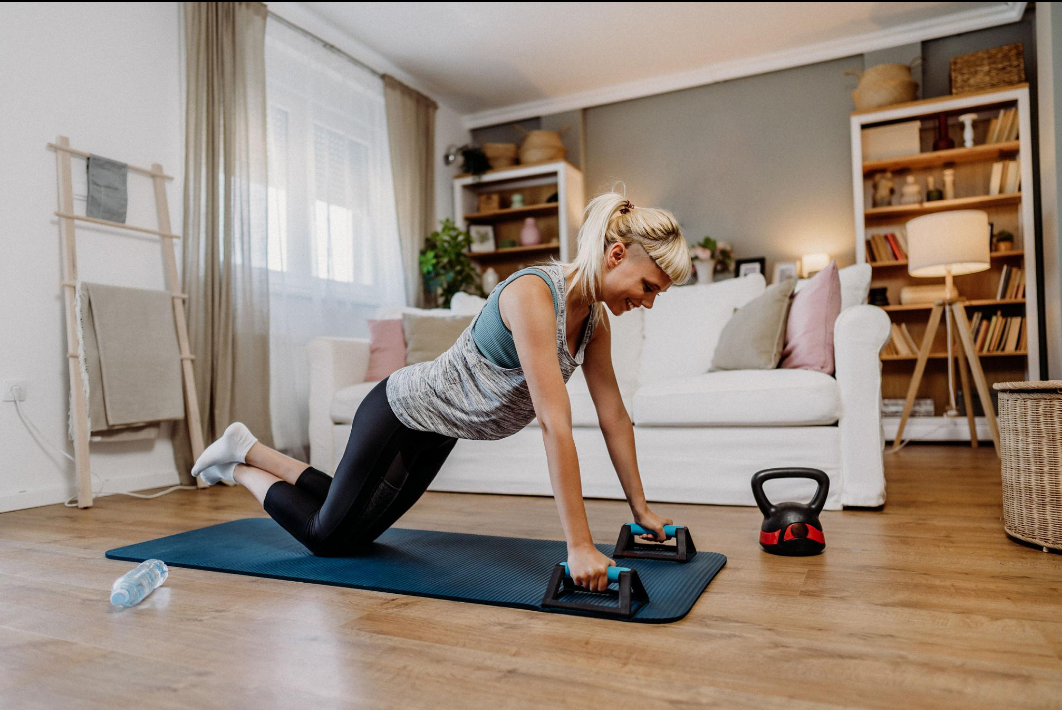
Once 5 reps feel easy, add a drive- up when you’re in the plank position. Now you’ve got mobility strength in one move. But master the introductory interpretation first.
Conclusion
You do n’t need a 30- nanosecond stretching routine. You do n’t need fancy outfit. You do n’t have to step out of your bedroom.
You need 2 twinkles and one move that respects how your body actually works.
The caterpillar walk is n’t flashy. This video won't go viral on Instagram with millions of views.. But it’s the move that physical therapists use with pro athletes. It’s the move they use with 65- time- pasts who ca n’t bend.
Because it works.
Start tonight. Do 5 reps before you sleep. When you wake up tomorrow and your back doesn’t feel like concrete, you’ll know why trainers call this the gold standard.
Your body forgot how to move. This is how you remind it.
Try it for 7 days straight and tell me in the comments — what changed first for you? Was it your hamstrings, your back, or just how easy it felt to bend? I read every reply.



















Responses (0)
Sign in to share your thoughts.
Sign in