Clocking Out of 9-to-5: How Gen Z is Rewriting the Rules of Work

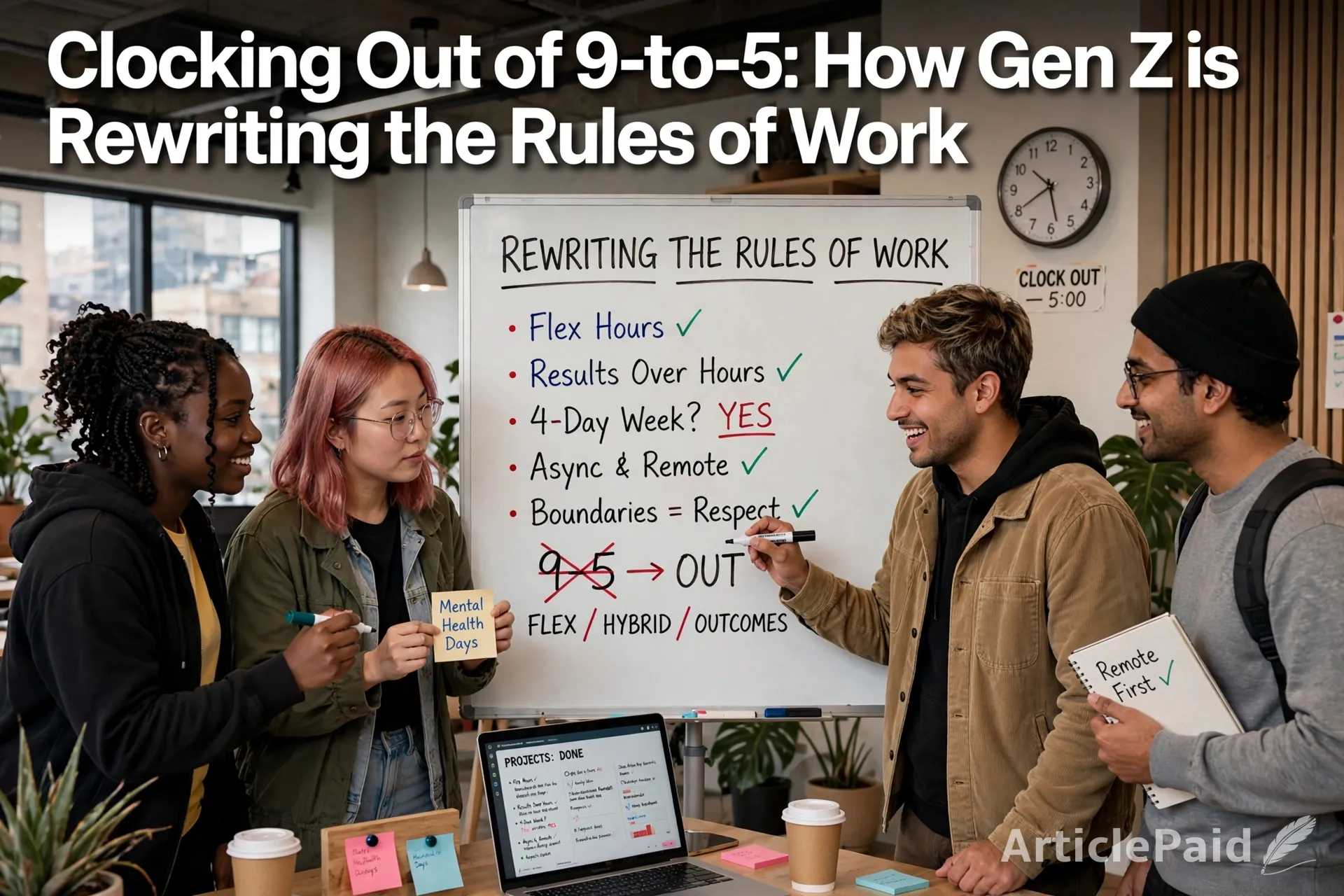
Clocking Out of 9-to-5: How Gen Z is Rewriting the Rules of Work
A new employee walks into an office. They aren't asking about office politics, company cars, or where they’ll be in twenty years. Instead, they ask a very different question: "Does this job make sense for my life, or am I just selling my hours?"
Welcome to the era of Generation Z—the generation that didn't just join the workforce; they brought a sledgehammer to the traditional corporate blueprint.
For decades, career success was simple: sacrifice your sanity, climb the corporate ladder, stay loyal for thirty years, and enjoy retirement.
But Gen Z witnessed their parents burn out, economic recessions wipe out savings overnight, and global crises shift the world on its axis.
Their takeaway? The old rules are broken. So they built new ones.
1. Ditching the "Hustle" for Health
Remember the "hustle culture" glorifying 80-hour workweeks and sleepless nights? Gen Z canceled it.
To them, burnout isn't a badge of honor—it's a system failure. They are fiercely protective of their mental health and demand strict boundaries between work and life. Remote options, flexible hours, and psychological safety aren't luxury perks anymore; they are non-negotiable entry requirements.
2. Purpose > Paycheck

Money matters, especially in a world with skyrocketing living costs, but a high salary isn't enough to buy Gen Z’s loyalty. They want meaning.
If a company preaches sustainability on LinkedIn but pollutes behind closed doors, Gen Z will call it out. They gravitate toward organizations with genuine social ethics, direct diversity, and transparent leadership. If a job feels empty or unethical, no paycheck will keep them in their seats for long.
3. The Death of the Linear Career Ladder
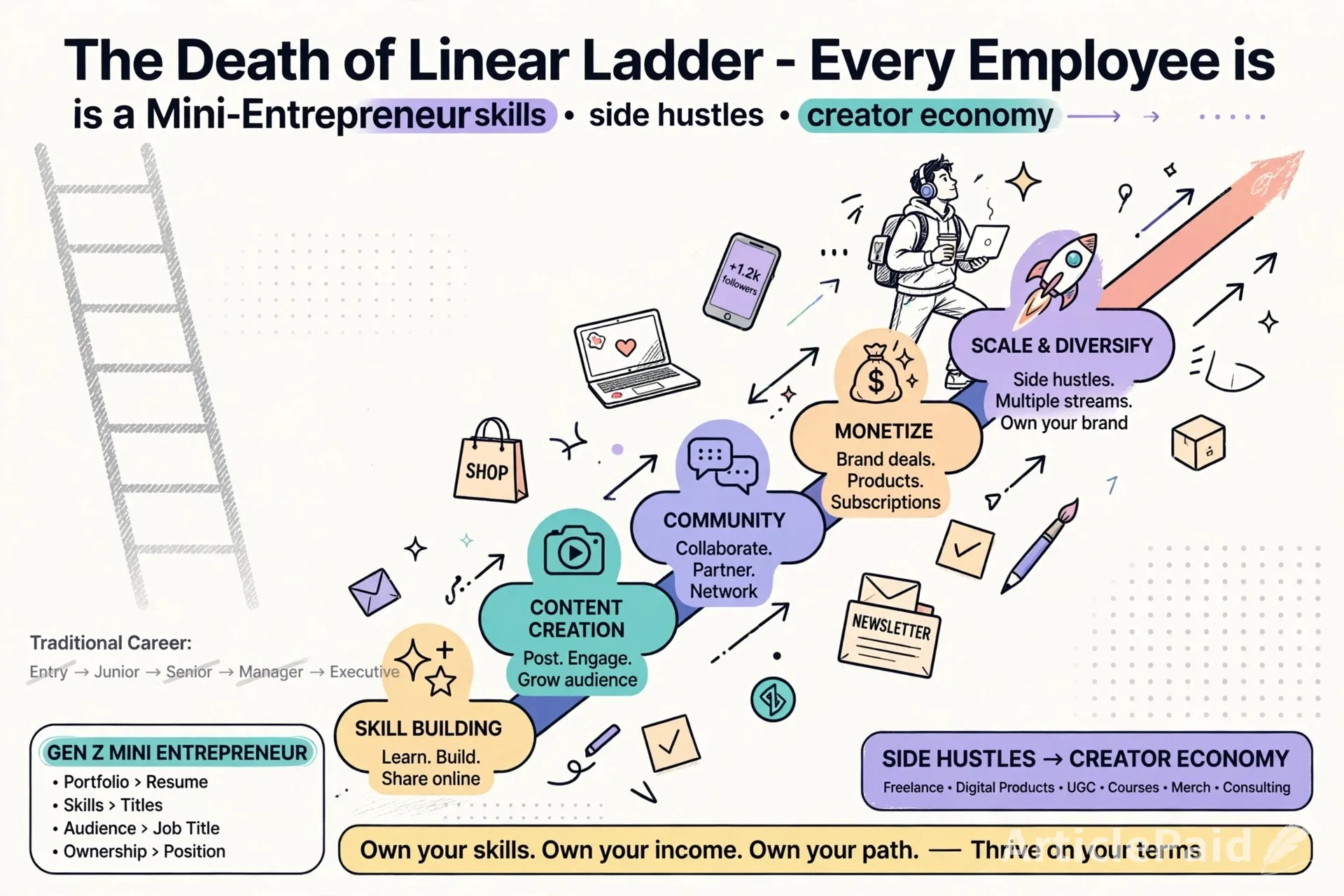
The idea of spending five years as a junior, five as a senior, and waiting for a manager's seat is officially dead. Gen Z moves in diagonal lines, not straight ladders.
They prioritize skill acquisition over job titles. If an employer stops teaching them, they hop to another opportunity without hesitation. Loyalty is earned through continuous growth, strong mentorship, and clear opportunities—not through corporate guilt.
4. Every Employee is a Mini-Entrepreneur
Gen Z is the most digital-native, creative, and resource-savvy generation yet. Having grown up with creator economies and digital platforms, many hold side hustles, freelance clients, or online businesses alongside their main jobs.
They don't put all their eggs in one employer's basket. To them, job security doesn't come from a stable company—it comes from having diversified skills and income streams.
The Verdict: Adapt or Get Left Behind
Older generations often mistake Gen Z’s demands for "laziness." In reality, it’s a long-overdue reality check.
Gen Z isn't refusing to work; they are refusing to let work consume their humanity. By demanding flexibility, authenticity, and work-life harmony, they are forcing companies to build healthier, smarter, and more human-centered workplaces.
The companies that listen will inherit the brilliant minds of tomorrow. The rest? They’ll just be left wondering why nobody wants to apply for their 9-to-5 anymore.













Responses (0)