Could Scientists Really Grow Human Organs in Laboratories?

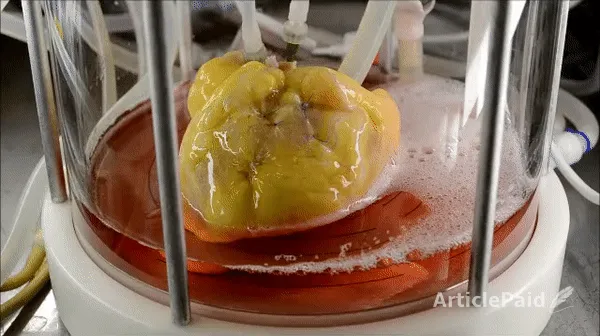
Could Scientists Really Grow Human Organs in Laboratories? The Science Behind Lab-Grown Organs
Imagine a world where you don’t have to wait years for your kidney failure to be treated due to a donor being found. Instead, doctors could take your own cells and create replacement tissue in the lab. This is becoming an increasingly important area of science.
Across the globe, scientists are looking at ways to grow human tissue, small organ-like structures and use various technologies to repair damaged parts of the body. Using stem cells, tissue engineering, organoids and 3D bioprinting, scientists are learning how to understand the growth of human organs and ultimately repair damaged tissue.
Can scientists grow whole human organs in a lab?
While there are many complexities to this question, scientists have created many different types of lab-grown tissue and small organ-like structures. These have already proven to be incredibly useful for studying diseases and testing drugs. However, creating a fully functional, mature human organ that can be used to safely replace a patients natural organ is a huge challenge.
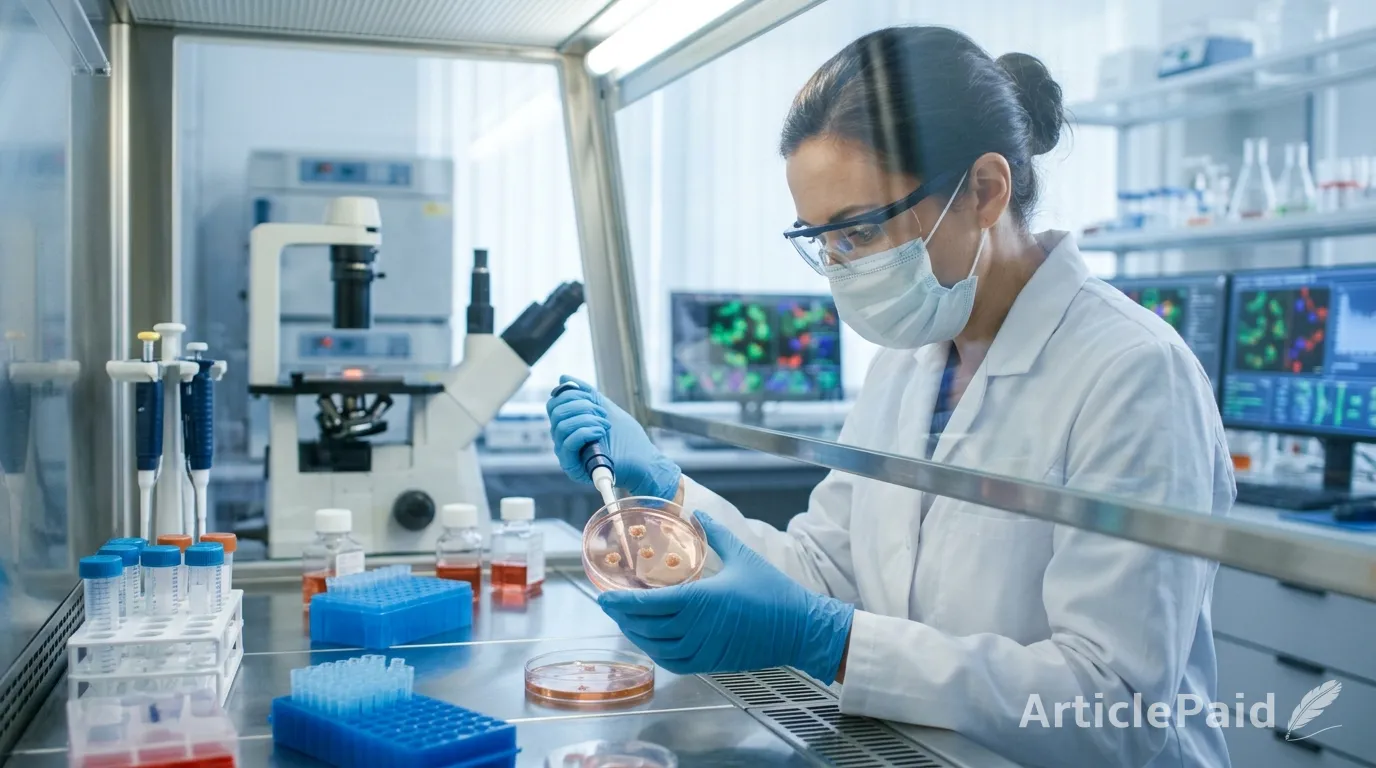
Understanding the differences is key.
1. What Does Growing Human Organs In A Lab Mean?
When people talk about growing human organs in the lab, they often think of scientists putting cells into a machine and simply creating a heart, kidney or liver. In reality, there are many complex techniques involved.
Scientists use living cells and biological materials to help develop cells.
One of the biggest developments is organoids.
Organoids are small 3D structures that are created from either stem cells or tissue samples. They can mimic some of the structure and function of actual organs.
Scientists can create small organ-like models of the intestine, kidney, liver, lung and brain. This helps scientists to study how cells interact, understand how diseases develop and see the effects of different drugs on human tissue.
However, organoids are not mini-organs. They lack many of the complex aspects of natural organs such as mature blood vessels, immune systems and links to other parts of the body.
They are incredibly useful models of human biology but cannot completely mimic the complexity of natural tissues. (Nature Reviews Molecular Cell Biology, 2026)
2. How Do Stem Cells Help With Growing Human Tissue?
Stem cells are one of the most important tools in regenerative medicine.
Unlike many specialised cells, stem cells can develop into different types of cells. Some stem cells can develop into a limited number of specialised cells whilst some (pluripotent stem cells) can develop into almost any type of cell in the human body.
Scientists use two key types of stem cells;
Embryonic stem cells: Cells made from early embryos that can develop into many different types of cells.
Induced pluripotent stem cells: These are adult cells that have been re-programmed to act like pluripotent stem cells. Scientists can take some skin or blood cells and turn them into different types of cells.
If scientists have suitable stem cells they can create special conditions to encourage their development.
They can do this using,
Growth factors, nutrition, signalling molecules and scaffolding.
Scientists can encourage the stem cells to develop into specialised cells such as heart muscle cells, liver cells or intestinal cells. These cells can then be organised to create tissue models.
Cells created from induced pluripotent stem cells taken from patients can be really interesting as they may help scientists understand diseases using the patients own genetic make-up.
However, this doesn’t necessarily mean they can create safe tissue/organs for patients. Further testing is needed.
3. What Are Organoids And Why Are They Useful?
Organoids have become very important in biomedical research as they provide a more accurate model of human tissue.
Traditionally, cells would be grown in 2D. Whilst this can be very useful, it cannot always accurately model the complexity of living organs.
Organoids can create 3D structures with the cells organising themselves into structures that can mimic some aspects of natural tissue.
They can be used for,
Studying diseases: Scientists can create organoids that mimic certain genetic disorders, infections and diseases.
Drug testing: Scientists can see the effect of new drugs on specific tissue models.
Cancer research: Tumour organoids from patients can be used to understand how cancer cells react to treatments.
Human development: Organoids can help scientists understand how tissues develop and how cells become specialised.
Scientists may create intestinal organoids to understand how intestinal cells react to infections or drugs.
Brain organoids can help scientists understand some aspects of early brain development and neurological conditions. However, they are not fully human brains and will not show all aspects of human thought.
Organoids can help answer specific questions.
4. Can Scientists Use 3D Bioprinting To Grow Human Organs?
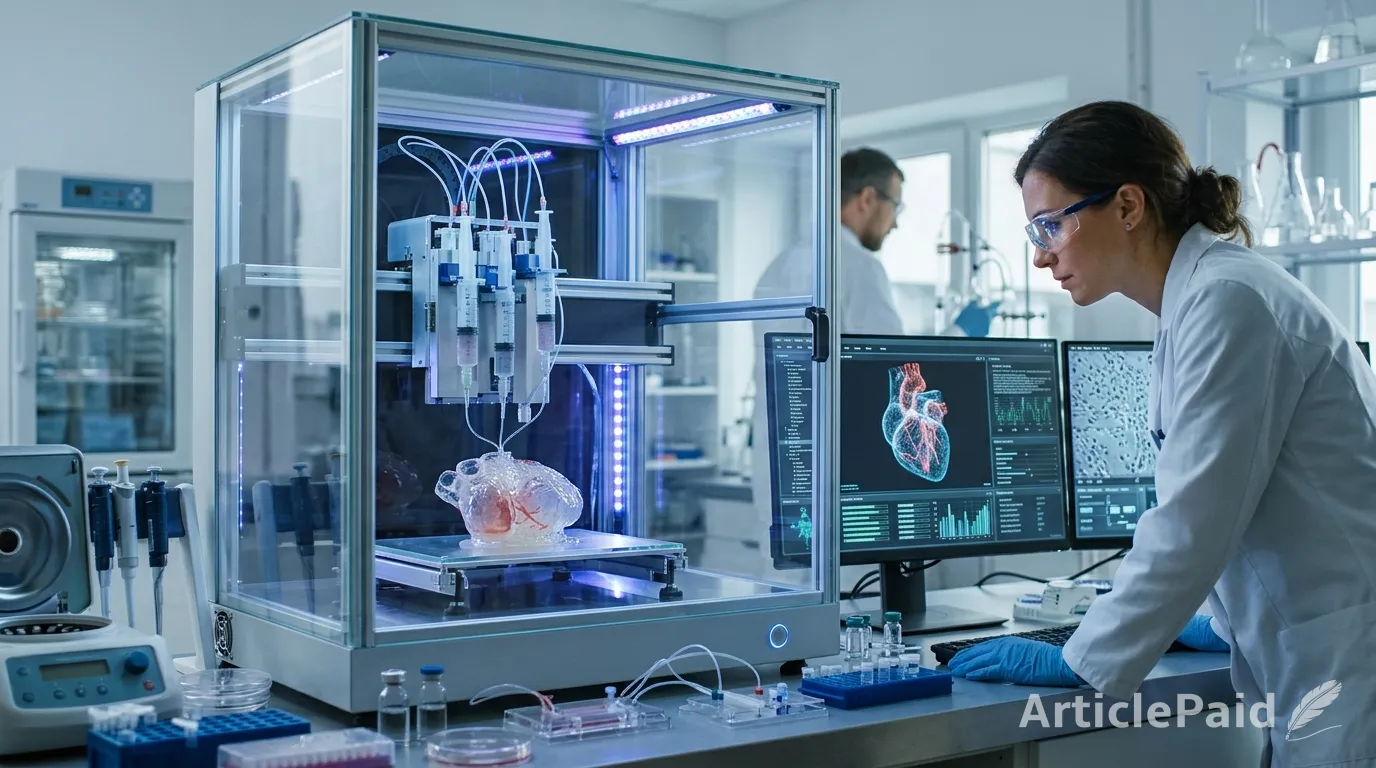
3D bioprinting is one of the most exciting technologies in tissue engineering.
As traditional 3D printing builds objects using layers, bioprinting uses living cells, biological materials and bio-inks.
Bio-inks are printable materials that can support living cells.
Specialised printers can be used to organise the cells and materials.
Scientists can,
Use the correct cells.
Create a suitable bio-ink.
Get Writing Tools
Design the tissue.
Print the biological material.
Provide conditions for the cells to survive and develop.
Test if the tissue has the correct structure and function.
Researchers are looking at ways to create skin, cartilage, bone, blood vessels and more.
Cartilage structures could help scientists develop new ways to repair damaged joints.
However, just because the structure looks like a real organ, doesn’t mean it acts like a real organ.
Fully developed human organs consist of many different cell types, complex blood vessels, nerves, scaffolding and specialised links. This makes it extremely difficult to create.
Whilst combining organoids and 3D bioprinting can help scientists create new techniques, there are still many challenges to overcome such as vascularisation, tissue maturation and clinical validation. (Regenerative Biomaterials (2026)
5. Why Is Vascularisation A Big Problem?
One of the biggest challenges to creating large functional organs is having a good blood supply.
All living tissues require oxygen and nutrients. Blood vessels provide these to the tissue. They will also help remove waste.
Smaller lab-grown structures can have enough nutrients provided from diffusion in the environment. However, this becomes insufficient for larger tissues.
Without an effective vascular system, cells deep in the tissue may not receive enough oxygen and nutrients to survive.
Natural organs have highly organised vascular systems.
Scientists are looking at ways to create vascular systems in lab-grown tissues.
In August 2025, the National Institutes of Health reported some exciting research. Scientists were able to create specialised blood vessels in small lung and intestinal organoids. This showed how scientists can create organ tissue and vascular systems from early stages of development.
Whilst this was an exciting step forward in research, it didn’t mean scientists had created fully functional human lungs and intestines that could be transplanted.
Creating a functional vascular system that can link to a patients existing vascular system is a big challenge.
6. Would Lab-Grown Organs Help With The Organ Donor Shortage?
Transplanting organs can save peoples lives. However, patients may have to wait a long time for a suitable donor organ.
This has lead scientists to look at alternative methods.
In the future, scientists may be able to create lab-grown tissues from patients own cells. This would help avoid some of the issues with rejection.
When organ donors come from another person, the recipient’s immune system may recognise it as foreign and reject it. Doctors carefully match the donor and recipient, monitor them and give immunosuppressant drugs to manage this issue.
Using patients own cells can help reduce some of these issues.
However, this can still cause rejection. Genetic alterations, production, scaffolding and other biological factors can still affect how safe the tissue is.
Scientists are also looking at how organoids can help predict how individual patients would react to certain cancer treatments.
Tumour organoids from patients could help scientists try different drugs on lab-grown models of their cancer.
Whilst this sounds promising, it depends on the disease and treatment. It isn’t a guaranteed way of deciding what treatment to use.
7. What Are The Major Challenges Scientists Face?
Despite all the advances, scientists are facing some challenges to creating fully functional human organs in the lab.
Not fully developed: Many organoids aren’t as mature as natural organs. The cells may look like they’re in development.
Not enough vascularisation: Large tissues require a functional vascular system.
Complex: Natural organs have many specialised cells. It is extremely difficult to recreate this.
Interactions with immune system: Organs interact with immune cells and surrounding tissues. Many lab models don’t fully recreate this.
Functionality over time: Replacement organs need to be functional over time.
Difficult to create and safe: It can be difficult to create consistent quality biological materials. Scientists need to look at contamination, abnormal growth, genetic alterations and other issues.
The US Food and Drug Administration provides guidelines for using human and animal sourced materials when creating certain cellular, gene and tissue engineered medical products.
8. What Could The Future Hold For Lab-Grown Organs?
The future of regenerative medicine may involve combining different technologies.
Combined with stem cells, 3D bioprinting, organoids, microfluidics and genetic engineering scientists may be able to create more accurate tissue models.
Scientists may create more complex tissue structures with improved vascularisation, organisation and maturity.
Artificial intelligence can also help by analysing large amounts of biological data, monitoring cell development and identifying trends.
Scientists may be able to create personalised tissue models for patients with specific diseases.
More advanced tissue patches may also be created to help repair damaged parts of the heart, skin or other organs.
However, this will require a lot of research in the lab, clinical studies and regulation before they become widely available.
It may take many years to move from an experimental tissue model to a safe and reliable transplantable organ. Scientists will need to continue to make progress.
Final Thoughts: Are Lab-Grown Human Organs Possible?
Scientists have already made some amazing progress creating human cells, organoids, engineered biological tissues and experimenting with 3D bioprinting.
This is changing how scientists study diseases, test drugs and look at new ways to repair damaged tissue.
However, there is a big difference between creating a small organ-like structure and a fully functional human organ that can be used to safely replace a natural organ.
Currently, fully functional replacement organs aren’t a common option. There are many challenges to overcome such as vascularisation, tissue maturity, complexity, safety and functionality.
However, there are some exciting possibilities with ongoing research.
Ultimately, the future of regenerative medicine may allow scientists to create more advanced personalised tissues for patients. Perhaps even transplantable biological structures that we currently can’t do.
Lab-grown organs are an exciting area of science. There are real discoveries, challenges and the potential to change medicine in the future.











Responses (0)