
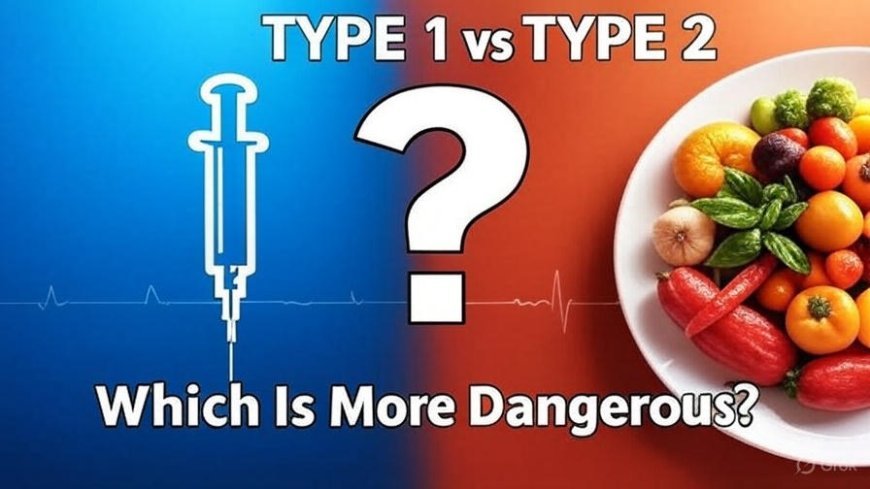
Diabetes is a common but serious health condition where your body can’t properly control blood sugar levels. There are two main types: Type 1 and Type 2. While both are dangerous if not treated, they are different in many ways — from their causes to how they are managed.
Let’s explore the key differences, signs, and treatments in simple terms.
What Is Diabetes?
Your body needs a hormone called insulin to use sugar (glucose) from the food you eat for energy. In diabetes, either your body doesn't make insulin (Type 1), or it can't use it properly (Type 2). Without enough insulin, sugar stays in the blood, leading to health problems.
What Is Type 1 Diabetes?
-
Cause: Type 1 diabetes is an autoimmune disease. This means the body’s immune system attacks the insulin-making cells in the pancreas.
-
Who it affects: Usually starts in children or teenagers, but adults can get it too.
-
Insulin: People with Type 1 must take insulin injections for life.
-
Prevention: There is no known way to prevent Type 1 diabetes.
What Is Type 2 Diabetes?
-
Cause: In Type 2 diabetes, the body becomes resistant to insulin, or doesn’t make enough.
-
Who it affects: Most common in adults over 40, but now also seen in overweight children and teens.
-
Insulin: Not always needed at first; often managed with diet, exercise, or pills. Some may need insulin later.
-
Prevention: Often preventable with a healthy lifestyle.
⚠️ Which Is More Dangerous?
Both types can be dangerous if not managed. However:
-
Type 1 diabetes can be life-threatening quickly without insulin.
-
Type 2 diabetes can be silent for years, causing slow damage to the heart, kidneys, eyes, and nerves.
So, it’s not about which one is more dangerous — it’s about how well it’s managed.
Common Signs of Diabetes (Both Types)
Look out for these warning signs:
-
Excessive thirst
-
Frequent urination
-
Extreme tiredness
-
Blurred vision
-
Slow healing of wounds
-
Weight loss (more common in Type 1)
-
Tingling or numbness in hands/feet (more in Type 2)
How Is Diabetes Diagnosed?
Doctors use blood tests like:
-
Fasting blood sugar test
-
HbA1c test (shows average blood sugar over 3 months)
-
Glucose tolerance test
✅ How Is It Treated?
Type 1 Diabetes:
-
Insulin therapy (daily injections or insulin pump)
-
Healthy diet
-
Regular exercise
-
Monitoring blood sugar several times a day
Type 2 Diabetes:
-
Healthy eating (low sugar, low carb)
-
Exercise (30 mins a day helps a lot!)
-
Weight loss
-
Oral medications (like Metformin)
-
Insulin (sometimes, if needed)
Can It Be Cured?
-
Type 1: No cure yet, but scientists are working on it. With insulin, people can live full lives.
-
Type 2: Not exactly curable, but some people can reverse it with major lifestyle changes (like weight loss, exercise, and healthy eating).




















Responses (0)
Sign in to share your thoughts.
Sign in