

How to Avoid Cramming Before Exams: 7 Smart Strategies
Cramming the night before an exam may seem like a quick fix, but it often leads to stress, burnout, and poor memory retention. Instead of relying on last-minute memorization, adopting better study habits over time can significantly improve your understanding and performance. Here are seven effective strategies to help you avoid cramming:
1. Start Early
Begin studying at least 2–3 weeks before your exam. Break the syllabus into manageable chunks and plan to cover a bit each day. This reduces pressure and allows for deeper learning.
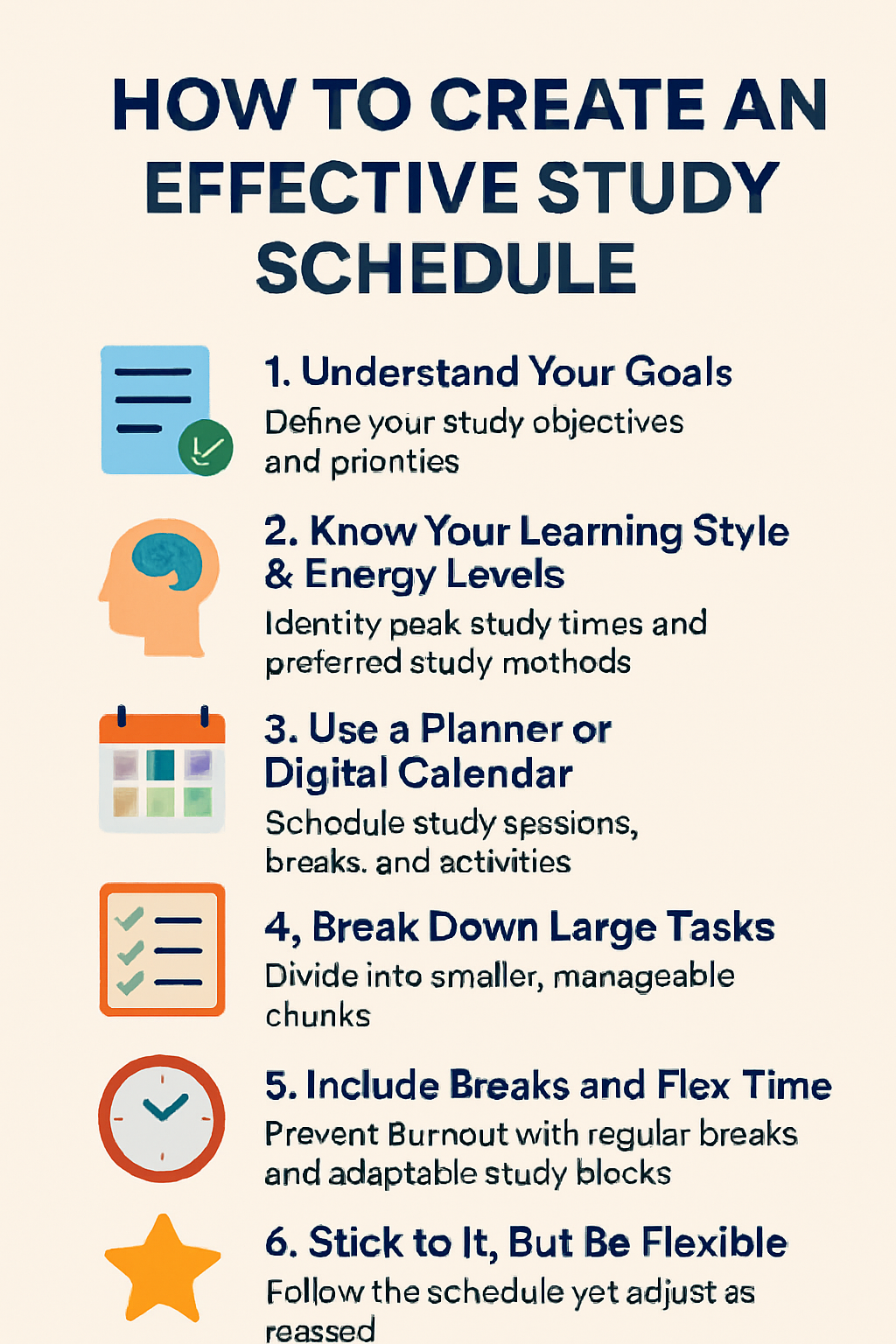
2. Use a Study Schedule
Create a realistic study timetable. Prioritize difficult subjects early in the day and mix in revisions of previously studied topics. Use tools like calendars or apps to set daily goals and track progress.
3. Practice Active Recall
Instead of passively re-reading notes, quiz yourself regularly. Try to recall key concepts from memory without looking. Use flashcards, self-made questions, or teach the topic to someone else.
4. Apply Spaced Repetition
Review material at increasing intervals (e.g., Day 1, Day 3, Day 7). Spaced repetition helps fight the forgetting curve and solidifies long-term memory. Tools like Anki or physical flashcards can help.
5. Avoid Multitasking
Focus on one topic at a time. Switching between subjects or checking your phone while studying can break concentration and reduce efficiency. Study in distraction-free environments.
6. Take Smart Breaks
Use techniques like the Pomodoro method (25 minutes of study + 5-minute break). Short, regular breaks improve focus and prevent fatigue. Use breaks to stretch, hydrate, or relax briefly.
7. Revise Regularly
Don’t wait until the last week to review everything. Schedule mini-revision sessions throughout your study plan. Create summary notes, mind maps, or concept charts to reinforce memory.
Bonus Tip: Sleep and Self-Care Matter
A well-rested brain performs better than a tired one. Avoid all-night study marathons. Prioritize good sleep, nutrition, and stress management as part of your exam preparation.
Final Thought:
Avoiding cramming is all about consistency. Study a little every day, test yourself often, and give your brain time to absorb information. With the right strategies, exam season can be less stressful and more successful.






















Responses (0)
Sign in to share your thoughts.
Sign in