
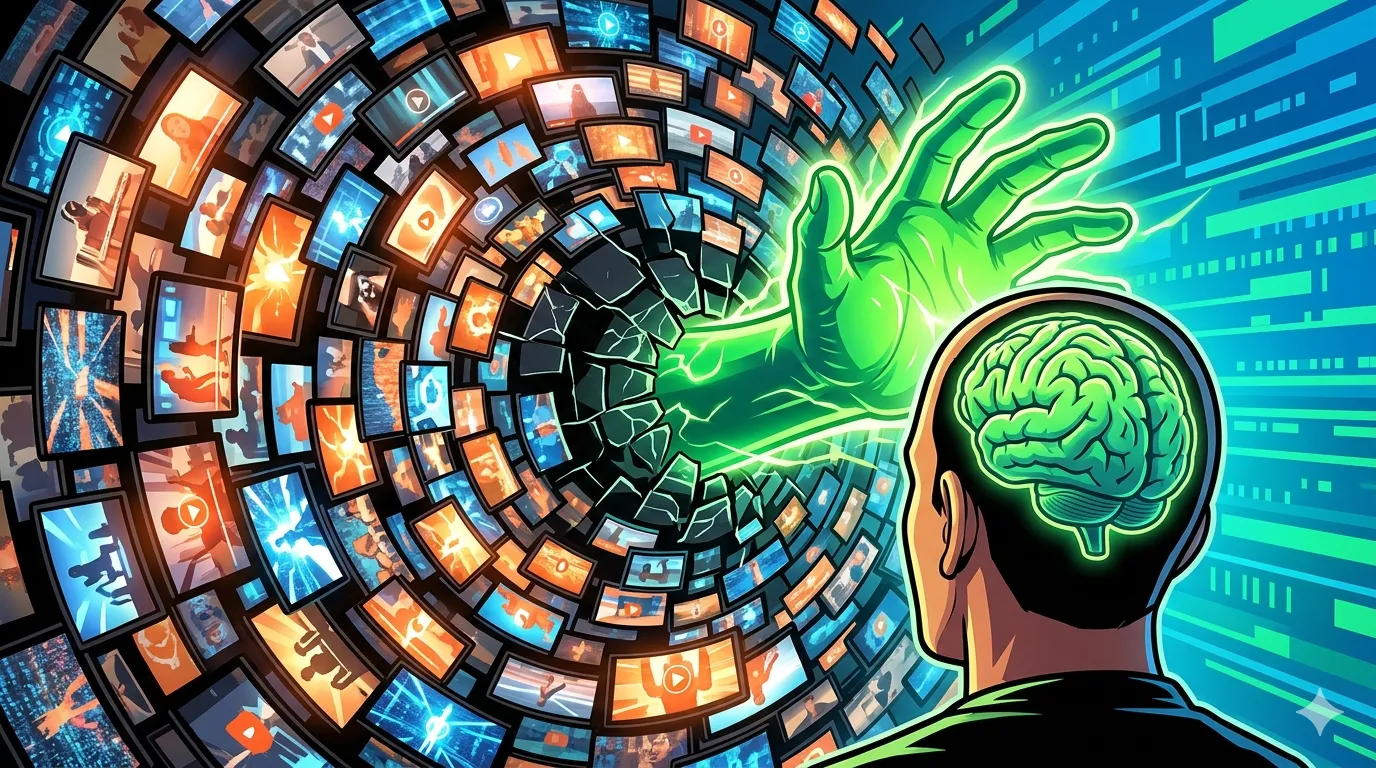
First, let’s get one fact straight: you are not weak, and your attention span isn't broken.
You are bringing a human brain to a fight against multi-billion-dollar algorithms engineered by some of the smartest people on earth. These platforms act like digital casinos, designed to hijack your brain’s reward system. To stop watching unwanted videos, you don't need to yell at yourself to "have more willpower." Instead, you need to outsmart your own neurochemistry.
Here is a unique, science-backed approach to reclaiming your brain.*
1. Understand the "Dopamine Trap"
Your brain doesn't actually release dopamine when you are satisfied; it releases it in anticipation of a reward. When you swipe or click to the next video, your brain gets a hit of dopamine because it thinks, "Maybe the next one will be amazing!"
This creates a compulsion loop. To break it, you have to realize that the urge to watch "just one more" is a neurological trick. Acknowledging, "My brain is just looking for a cheap dopamine hit right now," is the first step to detaching from the screen.
2. Implement the "10-Second Rule"
Algorithms rely on momentum. They want you to move seamlessly from one video to the next without thinking. You can break this momentum by introducing a tiny amount of friction.
The Micro-Pause: When you catch yourself mindlessly watching, don't try to force yourself to close the app immediately. Instead, force yourself to look away from the screen for exactly 10 seconds.
The Reality Check: During those 10 seconds, look at an object in the room and ask yourself: "Am I actually enjoying this, or am I just numb?"
The Result: This brief pause shifts brain activity from the impulsive "lizard brain" (the amygdala) back to your prefrontal cortex, which handles logic and decision-making.
3. Starve the Algorithm
Your feed is a mirror of your past impulses. If you want to change what you watch, you have to ruthlessly train the AI that serves you content.
The "Not Interested" Button is Your Best Friend: Start aggressively tapping "Not Interested" or "Don't Recommend Channel" on junk videos.
Intentional Searching: Stop relying on the home page. If you want to watch something, use the search bar to find a specific topic, watch it, and leave.
Clear Your History: Wipe your watch history clean. This essentially gives the algorithm digital amnesia, forcing it to stop feeding you the same addictive loops.
4. Design an "Escape Route"
It’s incredibly hard to stop a bad habit if you don’t have a good one ready to replace it. When the urge to doomscroll hits, your brain is usually seeking relief from stress, boredom, or fatigue.
Create a list of low-effort, high-reward activities you can pivot to when you catch yourself falling into a video trap.





















Responses (0)
Sign in to share your thoughts.
Sign in