
In Which Season Coconut Water Would Be Bad for Health?
Coconut water, which is loaded with vitamins, minerals, and electrolytes, is frequently praised as a natural energy drink. It is thought to be suitable for people of almost any age because it is energizing and hydrating. However, unlike the majority of natural foods, coconut water is not always beneficial throughout the year. Drinking it too much or at the wrong time or during certain seasons and weather conditions can actually be bad for your health. Let’s explore in detail which season might make coconut water less beneficial or even harmful and why.
1. Understanding the nature of coconut water In modern nutrition and Ayurveda, coconut water is regarded as a refreshing beverage. It naturally lowers body heat, reduces dehydration, and replenishes minerals.While this is excellent during hot summers, the same cooling effect can be a disadvantage in other conditions.
Its cooling nature is mainly due to:
Low fat content and high water content
Potassium, magnesium, and sodium rich electrolytes enzymes and natural sugars that soothe the body But when your body really needs warmth, like when it's cold outside, eating or drinking too much cold can mess up your system.
2. Seasons When Coconut Water May Be Bad for Health
a) The colder months of winter When it gets cold outside, your body has to work harder to keep warm inside. Drinking coconut water frequently in this season can:
Lower body temperature further, making you feel cold and sluggish
Weaken your digestive fire (as per Ayurveda), leading to bloating, indigestion, or loose stools
Cause discomfort for people with cold-related ailments such as sinusitis, cough, and frequent colds
Risk Groups in Winter:
People who aren't as immune Children who are prone to colds and flu Elderly individuals with slower metabolism
Warm herbal teas, lukewarm water, or seasonal fruit juices like orange or pomegranate are better options in the winter.
b) Monsoon Season: High Risk of Infection and High Humidity The monsoon season brings high humidity, sudden temperature drops, and a rise in waterborne diseases. Coconut water, while refreshing, can pose risks if:
Stored improperly or sold by roadside vendors, as bacteria multiply faster in humid conditions
The water comes from old or overripe coconuts, increasing the risk of stomach infections
You drink it excessively, leading to electrolyte imbalance in an already moisture-rich climate.
Risk Factors in Monsoon:
Gastrointestinal infections are common due to contaminated water or unhygienic storage
People with weak digestion may experience diarrhea
Better Alternative in Monsoon: Fresh lime water with a pinch of rock salt or warm ginger water to support digestion.
c) Extremely Cold Climates or Hill Stations
Even outside winter months, traveling to cold destinations can make coconut water less suitable. Drinking a cooling beverage in a chilly environment:
Can give you throat irritation
May slow digestion due to a drop in stomach acid activity
Might make you feel fatigued rather than refreshed
Instead of cooling hydration, the body requires warming foods and beverages in such circumstances for energy.
3. When Coconut Water Can Turn Harmful Regardless of Season
While seasons play a role, certain health conditions can make coconut water unsuitable at any time of year.
a) High Potassium Levels (Hyperkalemia)
Coconut water is naturally rich in potassium. For people with kidney disease or already high potassium levels, drinking it often especially in cooler seasons can worsen the condition.
b) Severe Heart Failure Since it helps lower blood pressure, in cold seasons when blood pressure tends to drop naturally, coconut water might cause dizziness or fainting.
c) The Digestive System Is Sensitive In winter or monsoon, sensitive stomachs may react poorly to coconut water’s cooling effect, leading to diarrhea or cramps.
4. Why Season Matters in Ayurveda
Ayurveda, the ancient Indian science of health, classifies coconut water as “Sheeta” (cooling) in nature.
It suggests:
Best Season: Grishma Ritu (Summer) to balance heat and prevent dehydration
Avoid or Limit in: Hemant Ritu (Winter) and Varsha Ritu (Monsoon) to prevent lowering digestive fire (Agni)
In these cooler seasons, coconut water can imbalance Vata and Kapha doshas, leading to:
Cold, cough, and congestion
Sluggish digestion
Water retention
5. How to Safely Drink Coconut Water in Risky Seasons
If you love coconut water and don’t want to give it up completely, you can still enjoy it with some precautions:
1. Moderate Quantity – Limit to half a glass rather than a full one in winter or monsoon.
2. Room Temperature: In cold weather, coconut water should be served naturally warm rather than chilled.
3.Consumption in the Morning: Consume it during the day, when temperatures are somewhat higher, not in the early morning or late at night.
4. Choose Fresh Sources Always buy from a trusted vendor and consume immediately.
5. Balance with Warming Foods – Pair with ginger, cinnamon, or other mildly warming foods in your diet.
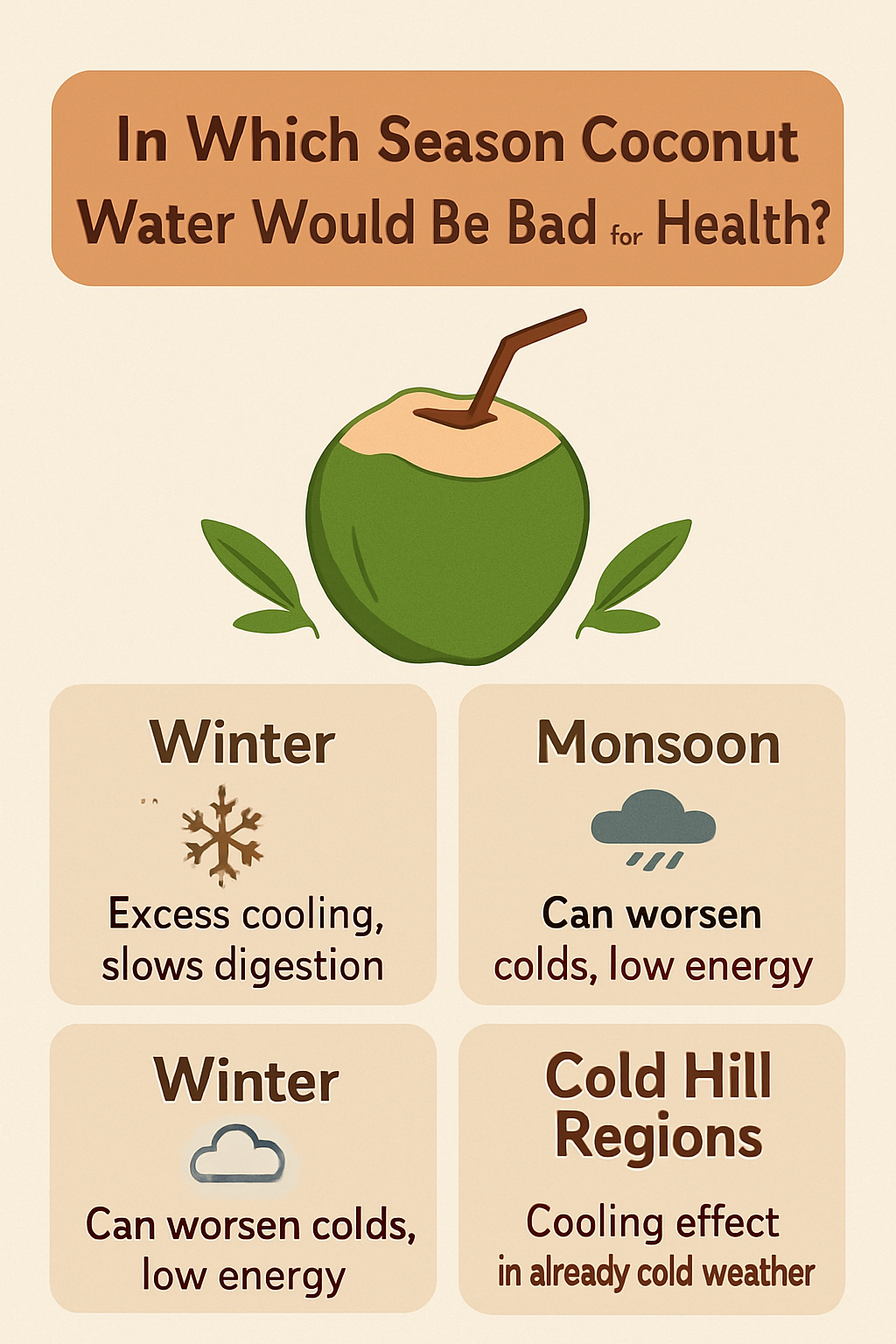
6. Coconut Water's Best and Worst Seasonal Pairings Season Effect on Body Health Impact Recommendation
Summer Cools and hydrates Highly beneficial for heat and dehydration Drink freely in moderation
Monsoon Cooling + humidity risk Risk of infections, digestive issues Drink rarely, ensure hygiene
Winter Excess cooling, slows digestion Can worsen colds, low energy Avoid or limit
Cold Hill Regions Cooling effect in already cold weather Lowers energy, throat irritation Avoid or drink very little
The key takeaway is seasonal wisdom:
Summer Your best friend
Monsoon & Winter An occasional guest
Cold Climates Best avoided
By matching your diet with the season, you not only get the most from coc
onut water but also protect your body from seasonal ailments.






















Responses (0)
Sign in to share your thoughts.
Sign in