
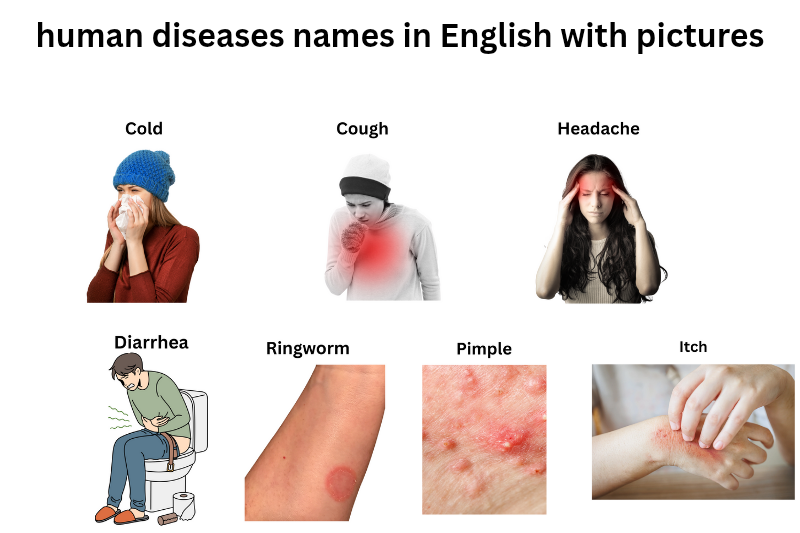
This blog helps readers learn the English names of common human diseases with clear pictures and easy explanations. It’s perfect for students, beginners, or anyone wanting to improve health vocabulary. Each disease is described in a simple, natural way, making the topic easy to understand and useful for everyday knowledge.

No.1 Cold
A cold is a common illness caused by a virus, usually affecting the nose and throat. Symptoms include a runny or blocked nose, sneezing, sore throat, and sometimes mild fever. Colds spread easily through the air or by touching infected surfaces. While uncomfortable, they usually go away in 5–7 days without needing medicine. Rest, drinking warm fluids, and using steam or salt water can help ease symptoms. Most people get colds multiple times a year, especially during the winter. Though not serious, a cold can make you feel tired and slow until you recover fully.

No.2 Cough
A cough is your body’s natural way of clearing the throat or lungs when something irritates them, like dust, smoke, or mucus. It can be dry or wet (with phlegm). Coughs often come with colds, flu, or allergies. Most go away in a few days, but a persistent cough may need medical attention. Drinking warm water, using honey, and avoiding cold drinks can help soothe a sore throat and reduce coughing. A cough is not always harmful, but it can disturb sleep and cause throat pain. Understanding the cause helps in choosing the right treatment.

No.3 Diarrhea
Diarrhea means passing loose or watery stools more often than usual. It can happen due to infections, food poisoning, stress, or certain foods. Along with stomach cramps, it can lead to dehydration, so it’s important to drink water or oral rehydration fluids. Most cases last a day or two and get better with rest and a light diet like bananas, rice, or toast. If it lasts longer, or if there’s blood, fever, or severe pain, a doctor’s visit is needed. Diarrhea is common but manageable when treated early and correctly.

No.4 Headache
A headache is a pain or pressure in the head or neck area. It can feel dull, sharp, throbbing, or steady. Common causes include stress, lack of sleep, eye strain, dehydration, or hunger. Some headaches come with other symptoms like nausea or light sensitivity. Rest, water, and quiet can often help relieve it. Over-the-counter pain relief is also commonly used. Frequent or severe headaches may be migraines or linked to other conditions and should be checked by a doctor. Though usually not serious, headaches can affect focus, mood, and daily comfort.

No.5 Itch
An itch is a tingling or irritating feeling on the skin that makes you want to scratch. It can be caused by dry skin, insect bites, allergies, or infections. While scratching may feel good at first, it can sometimes make the itch worse or break the skin. Mild itching often goes away with moisturizers or cold compresses. If the itching is constant, spreads, or comes with a rash, it’s best to see a doctor. Itching is common but annoying, and finding the cause helps in treating it the right way.

No.6 Ringworm
Ringworm is a skin infection caused by a fungus—not a worm—despite the name. It shows up as a round, red patch with clear skin in the center, often itchy or flaky. It can appear on the body, scalp, feet, or nails. Ringworm spreads through skin contact, shared towels, or infected animals. It’s common in warm, humid areas. Treatment usually involves antifungal creams or medicines. Keeping the skin clean and dry helps prevent it. Though not dangerous, ringworm is contagious and needs quick treatment to stop it from spreading to others.

No.7 Pimple
A pimple is a small bump on the skin that forms when oil, dead skin, and bacteria clog a pore. They often appear on the face, back, or chest, especially during teenage years due to hormonal changes. Pimples can be red, swollen, or filled with pus. While most go away on their own, keeping the skin clean and avoiding greasy products can help prevent them. Squeezing pimples can cause scars or more breakouts. For frequent pimples, gentle skincare and sometimes medical treatment can help. They’re common, harmless, and a part of growing up for many people.























Responses (0)
Sign in to share your thoughts.
Sign in