
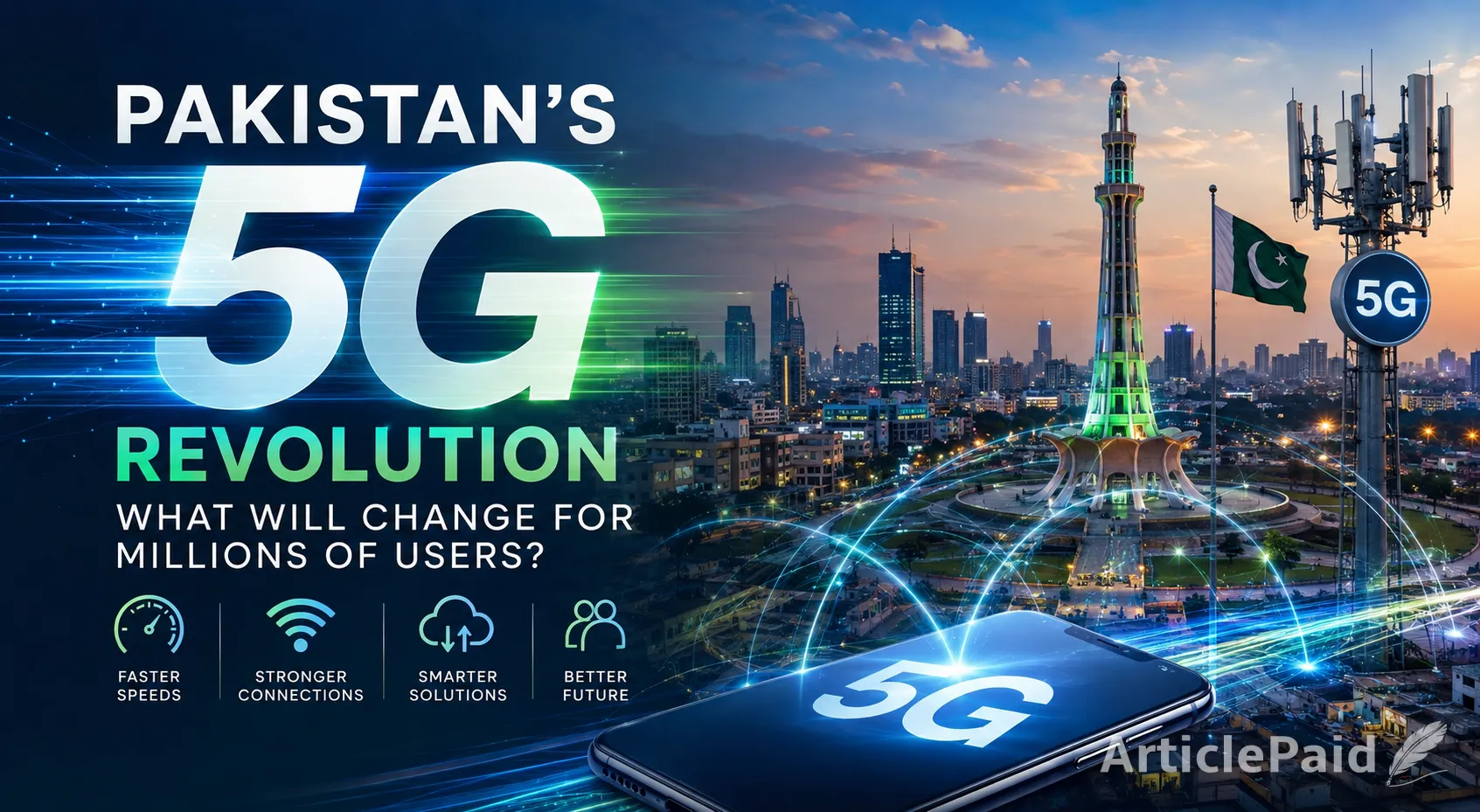
Pakistan’s 5G Revolution: What Will Change for Millions of Users?
For years, 5G in Pakistan was discussed as a future possibility. In 2026, that future finally started becoming reality. Pakistan completed its long-awaited 5G spectrum auction in March, selling 480 MHz of spectrum for about $507 million. Jazz, Ufone and Zong secured spectrum to develop next-generation mobile networks.
But 5G is not simply about making YouTube videos load faster. It could change how Pakistan connects, works, studies and does business.
What Is Different About 5G?
5G is designed to provide much faster data speeds, lower latency and greater network capacity than previous generations. This means users could experience smoother video calls, faster downloads and better performance when many people are using mobile networks at the same time.
For Pakistan, this extra capacity is particularly important. As smartphone use, online education, digital payments, freelancing and streaming continue to grow, existing networks face increasing pressure.
The additional spectrum acquired in 2026 is expected to improve mobile broadband capacity and quality.
Who Is Bringing 5G to Pakistan?
The three operators that participated in the 2026 auction were Jazz, Ufone and Zong. Jazz acquired the largest amount at 190 MHz, followed by Ufone with 180 MHz and Zong with 110 MHz.
Commercial services began appearing in selected locations in March. Jazz initially announced 5G sites in Islamabad, Lahore, Karachi, Peshawar, Quetta, Rawalpindi, Multan and Faisalabad, while Zong announced services in more than 16 cities.
By August, however, the rollout was still gradual. Recent figures reported from PTA-linked updates showed 1,136 sites upgraded to 5G nationwide, with operators investing about $178.6 million in the rollout up to June 2026.
More Than Just Faster Internet
The biggest opportunity may be beyond ordinary smartphone use. Faster and more reliable connectivity can support online learning, remote work, cloud services, smart agriculture, industrial automation and new digital businesses.
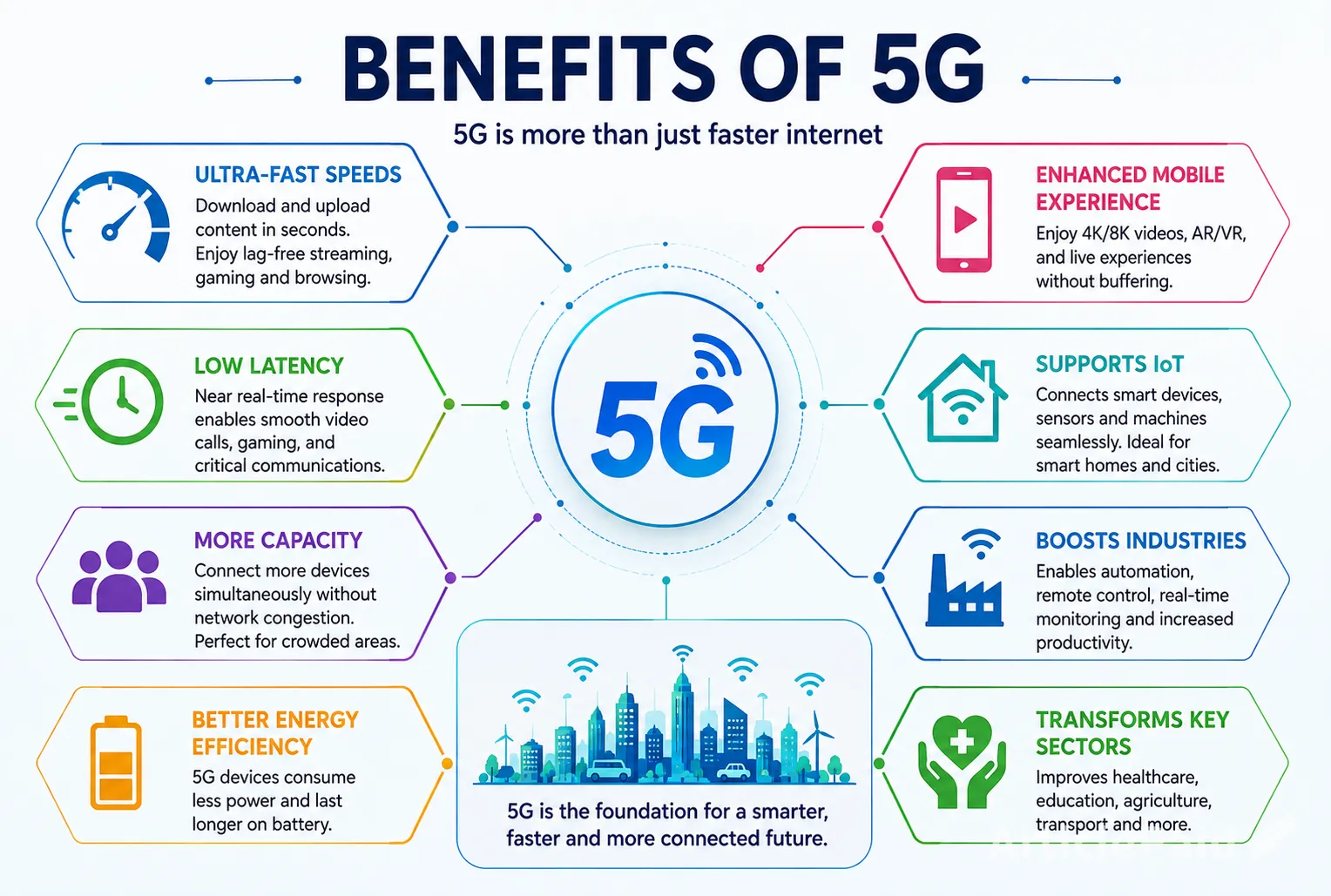
For Pakistan's growing freelance and technology sector, improved connectivity could make it easier for people outside major business centres to participate in the digital economy.
Imagine a student attending a high-quality live class from home, a farmer receiving real-time information about crops, or a small business operating its entire customer service system online.
These possibilities show why 5G matters.
The Challenges Ahead
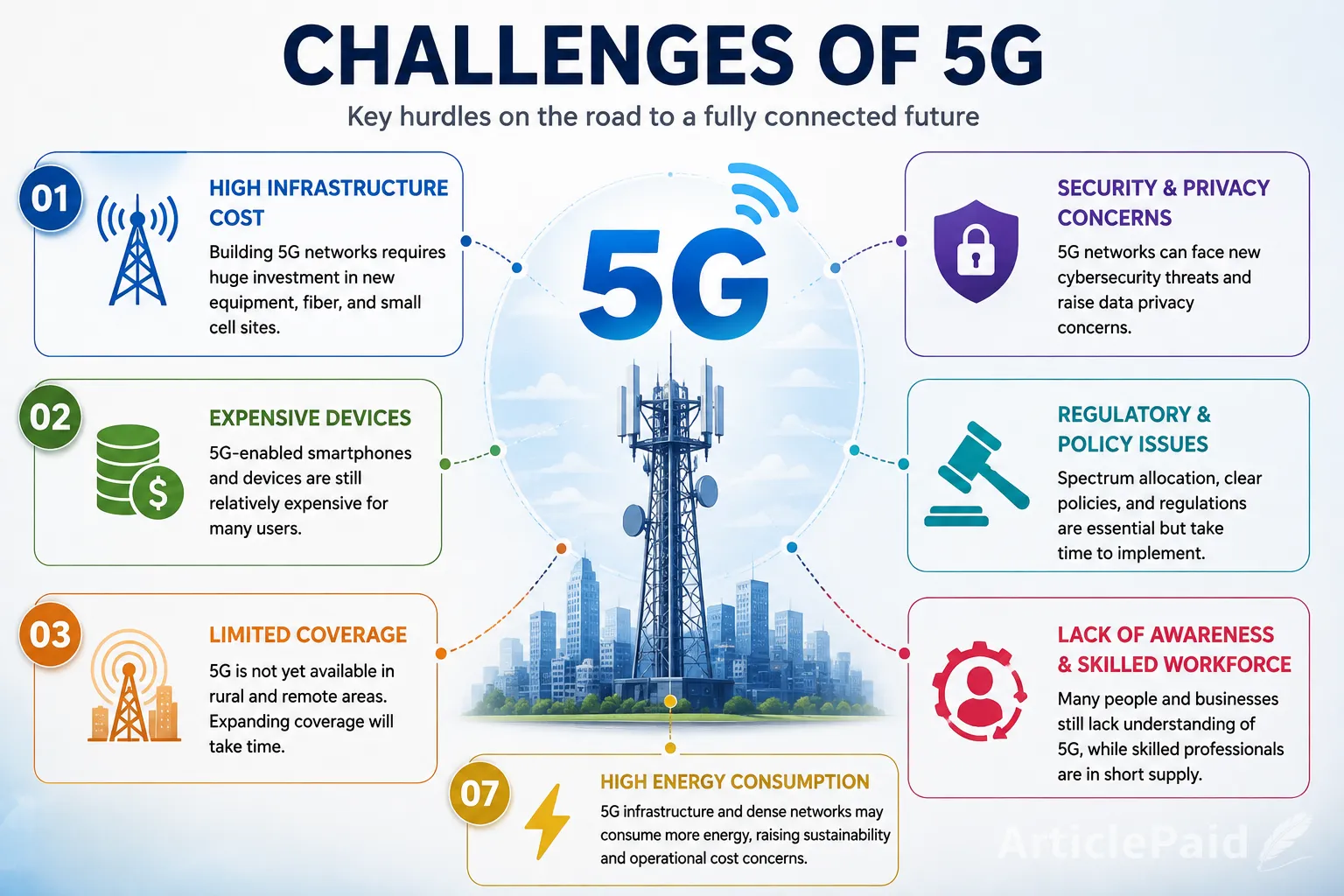
The arrival of 5G does not mean every Pakistani will immediately get extremely fast internet. Coverage is still expanding, infrastructure needs investment, and users need compatible 5G phones.
The biggest question is therefore not “Has 5G arrived in Pakistan?” It has.
The real question is: “How quickly can Pakistan make 5G affordable, reliable and widely available?”
If the rollout continues successfully, 5G could become more than a new mobile technology. It could become an important part of Pakistan's digital transformation—connecting people not only faster, but opening new possibilities for how they learn, work and build businesses.






















Responses (0)
Sign in to share your thoughts.
Sign in