Ten Quiet Minutes: Finding Something Bigger in Ordinary Days

In this article
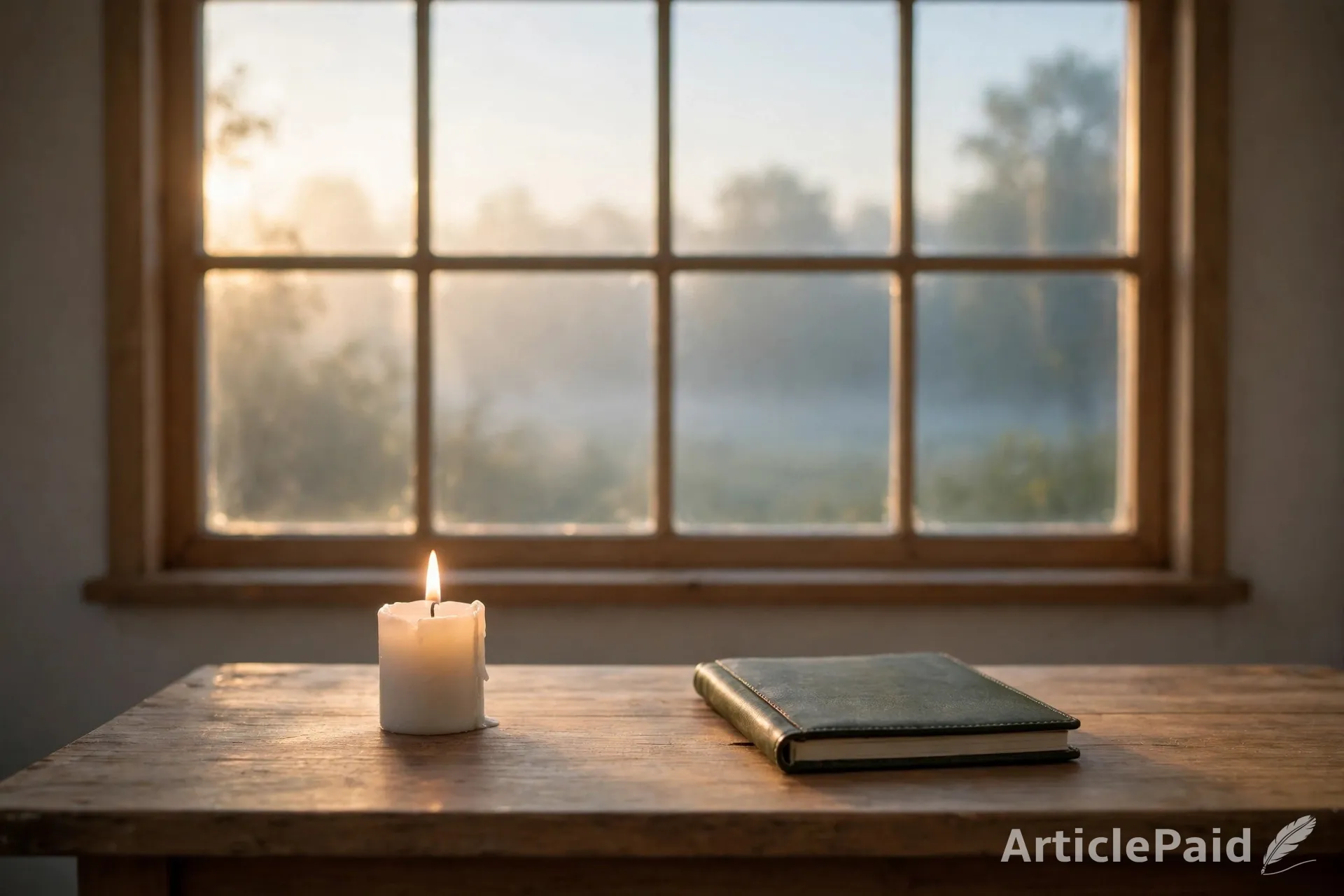
 Nothing special happened on the morning this story starts. No mountain. No miracle. No voice from the sky.
A man woke up before his alarm, made coffee, and sat at his kitchen table while the house was still quiet. He had a lot on his mind — bills, work, a deal that had fallen through the day before.
He did not set out to pray. He did not set out to meditate. He just sat still for a few minutes because he was too tired to start moving, and in that stillness he noticed something he had been missing: the quiet itself felt like a place. Not empty. Full.
That is where this begins — not with an answer, but with a pause.
1. What spirituality means, in plain words
Spirituality is a word people use to mean a hundred different things, so let us keep it simple.
Spirituality is paying attention to the part of life that cannot be measured. Not the price of a house or the number on a scale, but the things that make a day feel meaningful: gratitude, peace, purpose, connection, hope. It is the sense that your life is part of something bigger than your to-do list.
You do not need a special building for it. People have found it in churches, in mosques, in temples, in forests, in kitchens, and in hospital waiting rooms. The place matters less than the attention.
This is not about one religion. It is about the quiet underneath all of them: slow down, pay attention, be grateful, be kind, and trust that the small good things you do matter more than you think.
2. The problem with noise
The problem is not that people have lost their faith. The problem is that they have lost their quiet.
Most days are full of noise. Phones buzz. News shouts. Everyone has an opinion, and every opinion sounds urgent. Even rest has become noisy — music in the car, a show in the background, a screen in the hand while dinner cooks.
Noise fills every gap, and the gaps are where the deeper part of life used to live. When was the last time you sat for ten minutes with nothing to do and no screen to fill it? For most people, the honest answer is: a long time ago.
Here is the fresh idea: you do not need a retreat, a vacation, or a life change to find quiet. You need ten minutes, one chair, and the willingness to do nothing on purpose. The quiet is not far away. It is right underneath the noise, waiting.
3. The quiet hour
The quiet hour is not a full hour. It is a name for a small daily practice, and it works like this:
Pick one time of day — early morning is easiest, before the world wakes up, but any time works. Sit somewhere ordinary. A kitchen chair. A porch step. A parked car. Put the phone in another room. Then do nothing for ten minutes.
Do not try to empty your mind. That is impossible, and trying only makes it louder. Let the thoughts come. Bills, worries, plans, regrets — let them pass through like cars on a road you are watching from the sidewalk. You do not have to stop any of them or follow any of them. Just watch.
Then ask yourself one question: what am I grateful for today? Name one thing. Not ten. One. A roof. A meal. A person who called back. Say it out loud or write it down. Then start your day.
That is the whole practice. Ten minutes of quiet, one thing of gratitude. It sounds too small to matter. That is exactly why it works — it is small enough to actually do.
4. A story about a waiting room
A woman once spent three weeks sitting in a hospital waiting room while her father recovered from surgery. She had never been a person who prayed or meditated. She was a practical person, a fixer, the one who handled things.
On the third day, exhausted, she went down to the hospital chapel — not because she believed anything in particular, but because it was the only quiet room in the building. She sat in the back row and did nothing for twenty minutes. No phone. No book. No talking.
She went back every day after that. Not to ask for anything. Just to sit. And she said something later that this is really about: "I did not find an answer in that room. I found that I could sit with the question without falling apart."
Her father recovered. She kept the practice — ten minutes every morning, one thing she was grateful for — not because it is mystical, but because it keeps her steady.
That is what spirituality looks like when you take away the fancy words. A person sitting still. A question carried gently instead of wrestled to the ground.
5. Gratitude is not pretending
Some people hear the word gratitude and think it means pretending everything is fine. It does not.
Gratitude is not saying a hard day was a good day. Gratitude is finding one good thing inside a hard day and holding onto it — the way you hold onto a railing on a steep staircase. The staircase is still steep. The railing just keeps you from falling.
A man who lost a business once said the only thing he was grateful for that year was that his children still laughed at breakfast. That was enough — one true thing to stand on while he rebuilt everything else.
If your life is hard right now, do not try to feel grateful for the hard part. Find the one small thing that is still good, and start there.
6. Try it tomorrow morning
Let us go back to the man at the kitchen table. He kept sitting there. Ten minutes, most mornings. One thing he was grateful for. He did not become a different person. He did not solve all his problems. The bills were still there.
But something shifted. He started noticing things he had rushed past for years: the morning light through the window, the sound of his own breathing, the fact that he had a table, and coffee, and a quiet house. He started answering people more patiently. He started to feel, in his own words, "like my life was mine again."
Nothing dramatic happened. That is the point. The most important changes in a life are rarely dramatic. They are small, quiet, and repeated.
Try it tomorrow. Sit for ten minutes. Name one thing you are grateful for. Do one kind thing nobody will thank you for. Then notice how the day feels different.
This article is general information about spiritual practice, not religious instruction, medical advice, or professional counseling. Readers are encouraged to follow the practices of their own faith tradition and to seek professional help when they need it.












Responses (0)