

Imagine reading two different sentences:
- “It was cold and scary in the old basement.”
- “My breath hitched in a pale mist as the damp chill crept through my denim jacket, accompanied by the low, groaning scrape of rusty hinges deep in the dark.”Which one pulled you into the scene?The second sentence works because it follows the golden rule of writing: Show, Don’t Tell. Telling gives your reader flat facts, but showing uses sensory imagery—sight, sound, smell, touch, and taste—to make them feel like they are living the moment themselves.
The Trap of "Telling"
 When we draft stories, it’s easy to fall into the habit of listing emotions and states of being. We write that a character was furious, a room was messy, or a meal was delicious.While this gets the plot moving quickly, it robs the reader of the joy of discovery. Telling acts like a summary; it gives away the answer before the reader can experience the puzzle. When you simply state that a character is sad, you are asking the reader to take your word for it rather than letting them witness the grief firsthand.
Unlocking the Five Senses
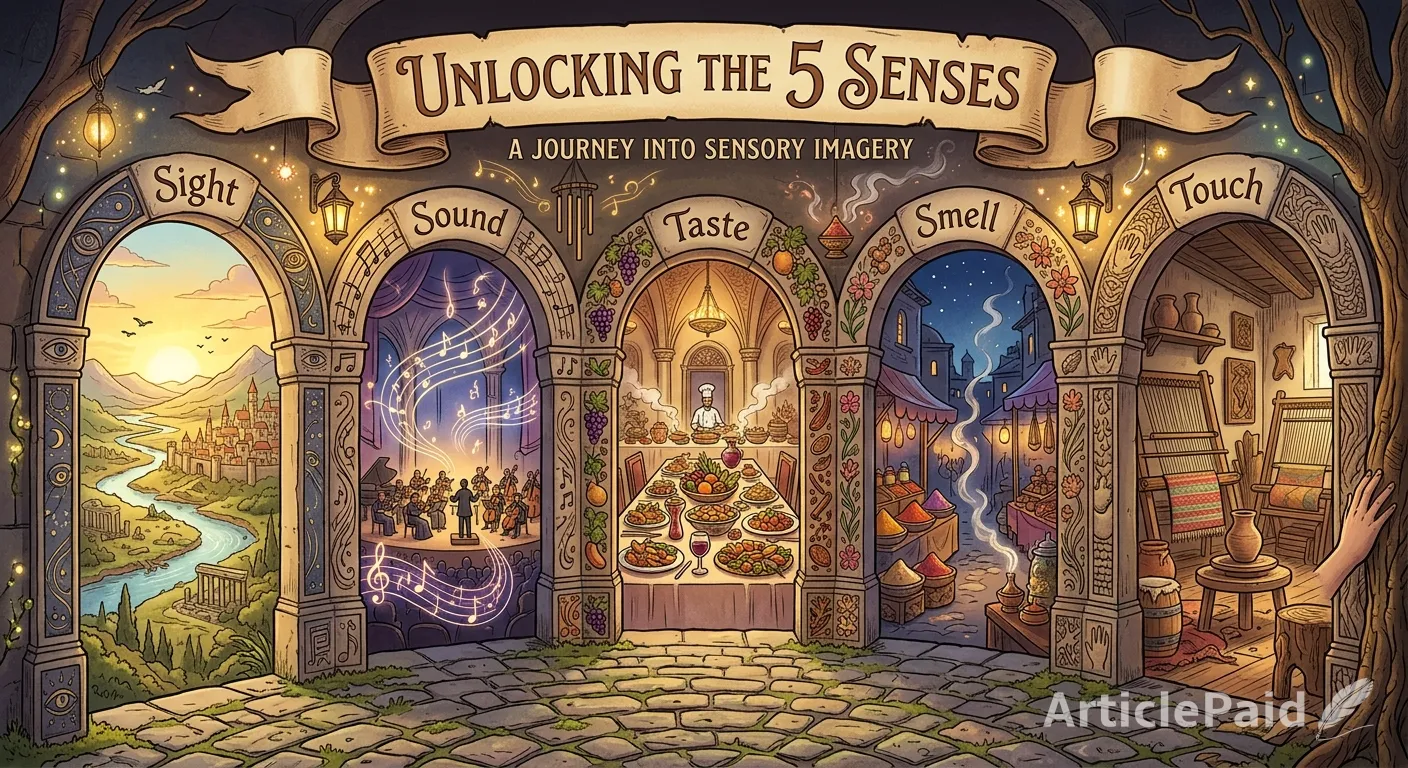 To transform plain text into a vivid experience, engage the five senses:
- Sight: Skip generic descriptions. Focus on specific light, color, and movement. Instead of “She was nervous,” try “Her fingers incessantly twisted the frayed hem of her sleeve.”
- Sound: Audio cues establish atmosphere instantly. The thrum of rain on a tin roof creates a completely different mood than the sharp, rhythmic clack-clack of dress shoes down a silent hallway.
- Touch & Texture: Describe temperature, weight, and texture. Feel the coarse grit of sand, the soothing warmth of a ceramic mug, or the sharp sting of a winter wind.
- Smell & Taste: These are the most emotionally evocative senses. The sharp, metallic scent of ozone before a thunderstorm or the buttery, cinnamon warmth of fresh pastries can trigger instant nostalgic connections.
Trusting Your Reader
 "Showing" requires trust. You must trust that your reader is smart enough to put the pieces together. You don’t need to state that a character is angry if you describe their white-knuckled grip on the steering wheel and the tense line of their jaw.By presenting the sensory evidence, you allow the reader to draw their own conclusions. This subtle mental step is what bridges the gap between passive reading and active immersion.
Practice the Power
The next time you edit your writing, scan for abstract emotion words—like scared, happy, bored, or excited. Challenge yourself to replace them with concrete details. Describe the sudden drop in the stomach, the warm burst of sunlight on a face, or the slow tapping of a pencil against a blank page.Mastering sensory imagery takes practice, but once you unleash its secret power, your stories won't just be read—they will be experienced.























Responses (0)
Sign in to share your thoughts.
Sign in