
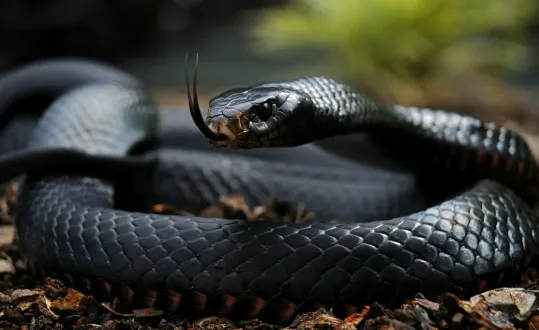
Snakes have fascinated and terrified humans for centuries. Out of roughly 3,000 snake species worldwide, about 600 are venomous, and around 200 can seriously harm or kill people if their bite goes untreated. Yet only a handful earn the title of “deadliest,” based on a combination of venom strength, aggression, frequency of human contact, and recorded fatalities. Here are the five deadliest snakes on Earth.
Introduction: What Makes a Snake “Deadly”?
When ranking the deadliest snakes, experts consider more than just venom potency. Key factors include:
- Venom toxicity:
How little venom is needed to kill (often measured by LD50 values).
- Venom yield:
How much venom a snake can inject in one bite.
- Aggression and behavior:
How likely the snake is to strike when disturbed.
- Human contact:
How often the snake lives near or encounters people.
- Fatality rate:
How many bite victims die without treatment.
A snake with extremely toxic venom but few human encounters may be less “deadly” in practice than a moderately venomous snake that frequently bites people in rural areas.
1. Saw-scaled Viper (Echis carinatus)
Habitat and Distribution
The saw-scaled viper lives in dry regions of Africa, the Middle East, and parts of Asia, including India and Pakistan. It prefers sandy or rocky terrain, deserts, and scrublands.
Why It Is So Dangerous
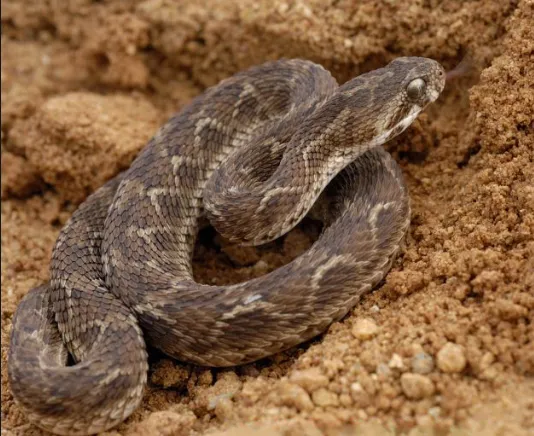
The saw-scaled viper is often called the world’s deadliest snake because it causes more human deaths than any other species. Some scientists believe it is responsible for more fatalities than all other snake species combined.
This small, sandy-colored viper gets its name from the rasping sound it makes by rubbing its serrated scales together when threatened. The saw-scaled viper is extremely irritable and quick to strike, often biting early and repeatedly when disturbed, especially at night.
Venom and Symptoms
Its venom is hemotoxic, meaning it damages blood vessels and tissues. Symptoms include severe pain, swelling, internal bleeding, and organ failure. Although the venom is lethal in less than 10 percent of untreated cases, the snake’s aggressive nature and frequent encounters with humans in rural areas make it extraordinarily dangerous. In places where medical care and antivenom are limited, the fatality rate rises sharply.
2. Inland Taipan (Oxyuranus microlepidotus)
Habitat and Distribution
Native to the arid interior of eastern and central Australia, the inland taipan lives in remote, sparsely populated areas. It is rarely found near large human settlements.
Venom Potency
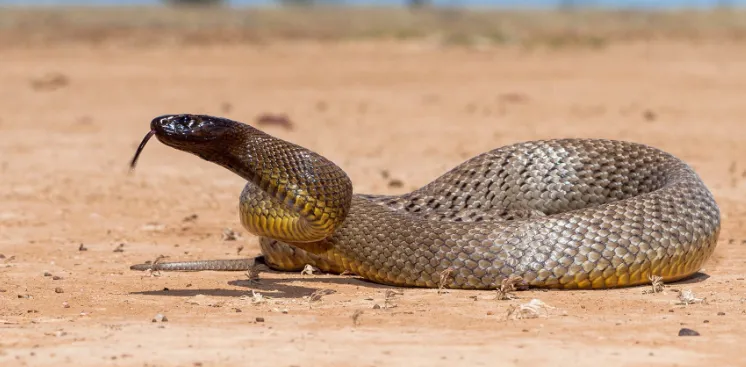
The inland taipan, also known as the “fierce snake,” holds the record for the most toxic venom of any land snake. Laboratory tests show it has an LD50 value of about 0.025 mg/kg, the lowest among all snakes, which means only a tiny amount of venom is needed to kill.
One bite can deliver enough venom to kill more than 100 adult humans. Its venom is a powerful mix of neurotoxins and blood toxins that can cause paralysis, massive internal bleeding, muscle damage, and kidney failure. Without treatment, a bite can be fatal in under an hour.
Human Fatalities
Despite its extreme venom, human deaths from the inland taipan are rare. This is mainly because it avoids people, lives in isolated regions, and antivenom is available in Australia. Still, in terms of pure venom potency, it is unmatched.
3. Black Mamba (Dendroaspis polylepis)
Habitat and Distribution
The black mamba is found across sub-Saharan Africa in savannas, rocky hills, and woodlands. It is large, intelligent, and highly defensive when threatened.
Speed and Behavior
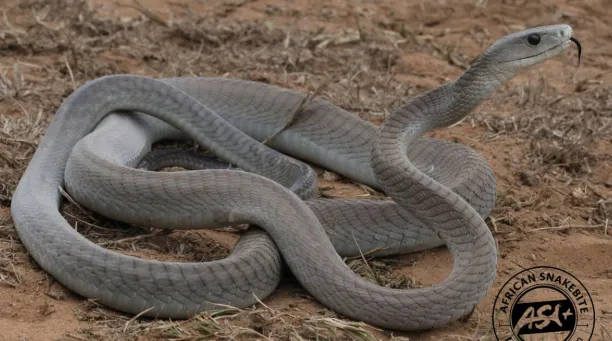
The black mamba is Africa’s most feared snake and one of the fastest-moving snakes in the world. It can grow over 4 meters long and reach speeds of up to 20 km/h in short bursts.
Venom and Fatality Rate
Its venom is primarily neurotoxic, attacking the nervous system and causing rapid paralysis. Symptoms include dizziness, difficulty breathing, drooping eyelids, and eventually respiratory failure. Without antivenom, a bite can kill within 20 minutes to a few hours, depending on the amount of venom injected. Death rates in untreated cases exceed 80 percent.
The black mamba’s reputation comes from its speed, size, willingness to strike repeatedly, and the speed at which its venom acts. It is a major cause of snakebite fatalities in rural Africa, where access to medical care is often limited.
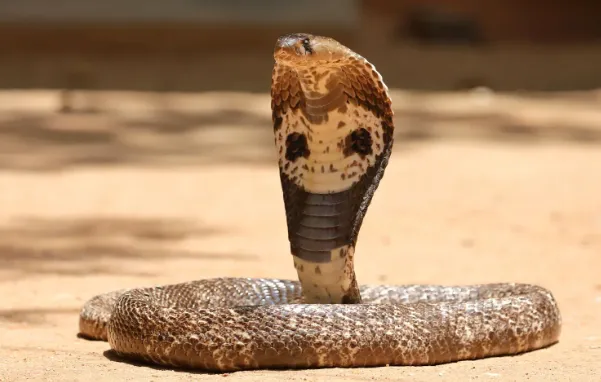
4. Indian Cobra (Naja naja)
Habitat and Distribution
The Indian cobra is widely distributed across India, Pakistan, Bangladesh, Sri Lanka, and parts of Southeast Asia. It often lives near human settlements, including farms, villages, and even urban areas.
Role in the “Big Four”
The Indian cobra is one of the “Big Four” snakes responsible for most snakebite deaths in the Indian subcontinent, along with the common krait, Russell’s viper, and saw-scaled viper.
Human Contact and Cultural Factors
Its presence in fields, grain stores, and around homes increases the chances of accidental encounters. The Indian cobra’s venom is mainly neurotoxic, leading to respiratory failure if antivenom is not administered in time.
Cultural factors also play a role in its danger. Snake charmers, religious rituals, and superstitions bring people into close, often risky, contact with cobras. In South Asia, where millions of people work barefoot in fields and sleep on the floor, cobra bites remain a serious public health issue, causing thousands of deaths and disabilities each year.
5. Russell’s Viper (Daboia russelii)
Habitat and Distribution
Russell’s viper is found throughout India, Pakistan, Sri Lanka, Myanmar, and parts of Southeast Asia. This stout, heavily built viper prefers open grasslands, agricultural fields, and scrub forests, bringing it into frequent contact with farmers and laborers.
Medical Importance
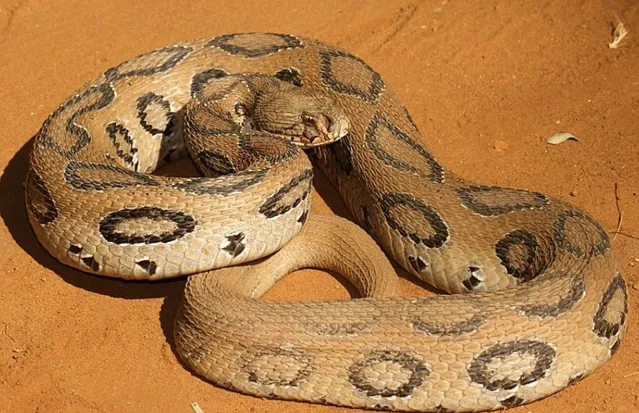
Russell’s viper is another member of the “Big Four” and one of the most medically important snakes in Asia. It accounts for a large share of snakebite deaths in South Asia and is a major focus of antivenom production and public health campaigns.
Venom and Symptoms
Its venom is a complex mix of hemotoxins and neurotoxins. A bite causes intense pain, swelling, blistering, internal bleeding, kidney damage, and sometimes permanent disability or death. In untreated cases, fatality rates are high, and even with treatment, survivors may suffer long-term complications such as kidney failure or tissue loss.
Because it is common in farmlands and active at night, many people are bitten while sleeping or working in fields.
Why These Snakes Are So Dangerous
Deadliness in snakes is not only about venom strength. A snake like the inland taipan has the most potent venom, but saw-scaled vipers, Indian cobras, and Russell’s vipers kill far more people because they live close to humans, are easily disturbed, and often bite. Limited access to hospitals and antivenom in rural areas further increases the death toll.























Responses (0)
Sign in to share your thoughts.
Sign in