
What Is Freelancing?
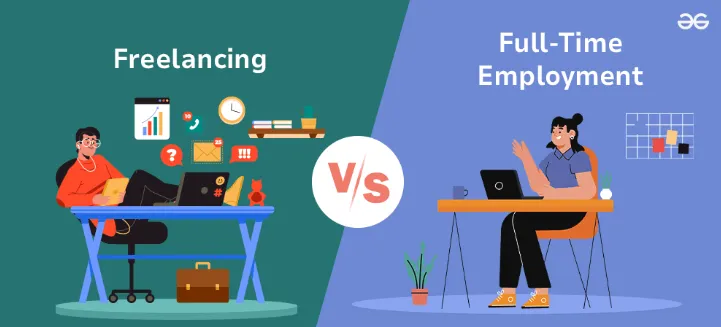
Freelancing is a form of job in which people provide their skills or services to clients on a project or a contract. Freelancers can choose the projects they want to work on and often work remotely from anywhere with an internet connection. Popular freelancing jobs include content writing, graphic design, web development, digital marketing, and virtual assistance.
What Are Traditional Jobs?
Traditional jobs include working for an employer on a full-time or part-time basis. Employees receive a fixed salary, work according to company schedules, and enjoy benefits such as health insurance, retirement plans, and job security.
Advantages of Freelancing
One of the biggest benefits of freelancing is flexibility. They can work from anywhere, set their own schedules, and can choose projects that match their interests and skills. There is also no fixed limit on income. Freelancing also allows continuous learning. They often develop skills to stay competitive and meet changing client demands.
Advantages of Traditional Jobs
Traditional jobs offers financial stability. Employees receive a regular paycheck. Many companies also provide benefits including healthcare, retirement plans, and professional development opportunities. It also allows employees to collaborate with colleagues, receive mentorship, and follow a structured career path.
Challenges of Freelancing
Despite its flexibility, freelancing comes with uncertainty. Earning may vary from month to month, and finding clients can be challenging at first. Freelancers often miss the social interaction found in traditional workplaces. Freelancers are also responsible for marketing and retirement plans on their own.
Challenges of Traditional Jobs
Traditional jobs offer less flexibility than freelancing. Employees follow fixed schedules and have limited control over their daily tasks. Salary may also be slower, depending on company policies and promotion opportunities.
What To Choose?
Freelancing is suitable for individuals who value flexibility, independence, and the opportunity to increase their income. Traditional jobs are better suited for those who prioritize predictable income, employee benefits, and structured career growth. Freelancing and traditional jobs each offer valuable opportunities, but they serve different needs and lifestyles. The best choice is the one that matches with your long-term ambitions and helps you achieve both professional success and personal satisfaction.


















Responses (0)
Sign in to share your thoughts.
Sign in