
Hantavirus Outbreak on MV Hondius Cruise Ship: Deaths, Quarantines, and Global Health Alarm
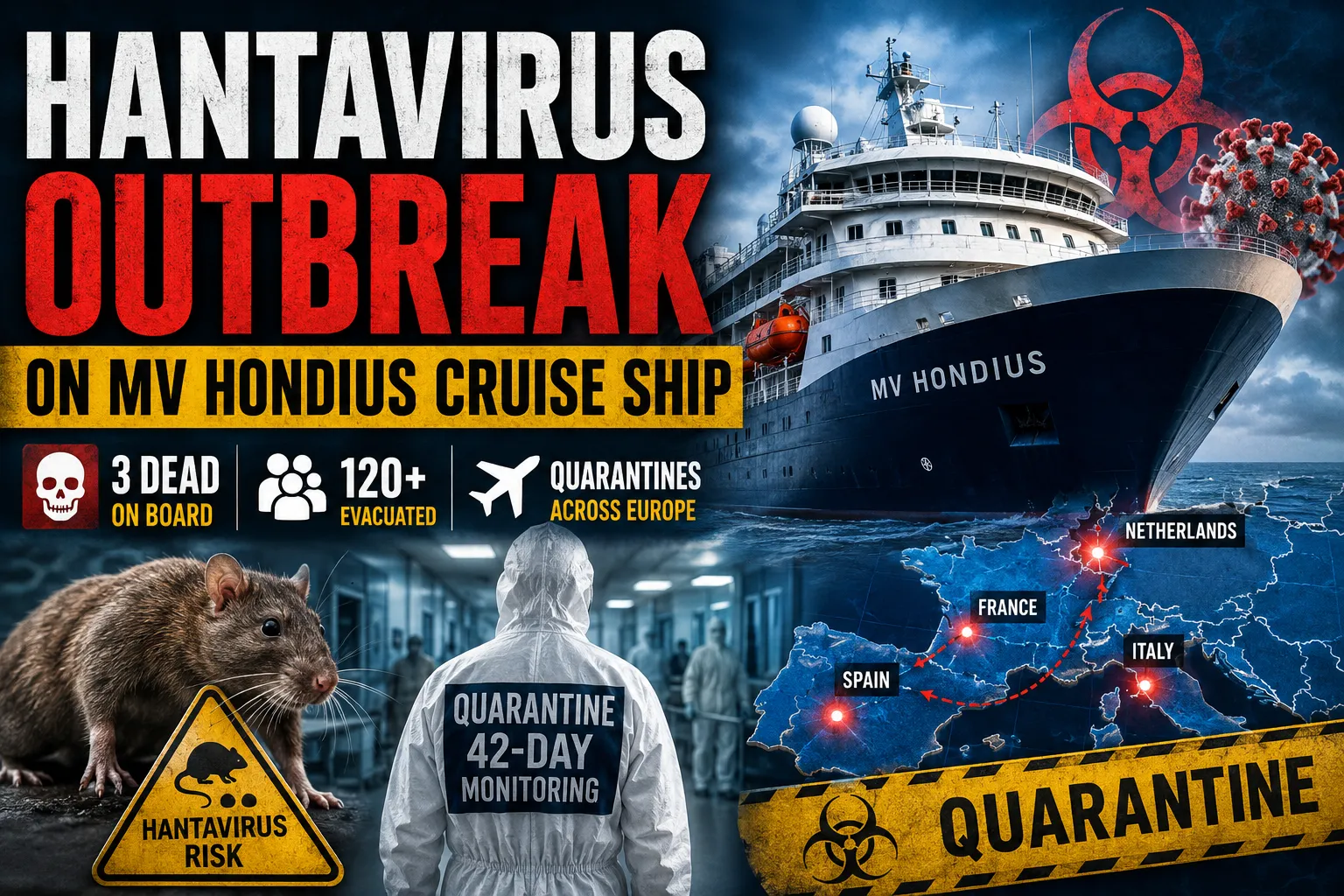
A deadly hantavirus outbreak aboard the Dutch-flagged cruise ship MV Hondius has sent shockwaves across Europe and drawn urgent attention from the World Health Organization (WHO). Three passengers have died, dozens have been evacuated and placed in quarantine, and new cases are still being confirmed in multiple countries. As health authorities scramble to contain the situation, the incident has raised serious questions about how hantavirus spreads, how dangerous it truly is, and what the world should be doing to respond.

Here is a full, detailed breakdown of everything that has happened, what experts are saying, and what this outbreak means for global public health.
What Is Hantavirus? A Quick Overview
Hantavirus is a serious viral infection that primarily spreads through contact with infected rodents — their droppings, urine, or saliva. It is not a new virus. Health officials note that hundreds to thousands of hantavirus cases are recorded globally every year, particularly in regions where the virus is endemic, such as parts of South America.
Key Facts About Hantavirus
Primary transmission: Contact with infected wild rodents or their waste materials
Person-to-person transmission: Rare, but possible in cases of very close contact
Incubation period: Up to six weeks — meaning symptoms may not appear for over a month after exposure
Symptoms: Fever, fatigue, muscle aches, difficulty breathing, and in severe cases, respiratory or kidney failure
Mortality rate: Can be high depending on the strain and speed of medical intervention
The long incubation window is one of the most alarming aspects of this outbreak. Because a person can carry the virus for weeks without showing any signs, tracking and containing its spread becomes significantly more difficult — especially when those exposed have already traveled to different countries.
The MV Hondius: How It All Started
The MV Hondius is an expedition cruise ship operated by Oceanwide Expeditions. On April 1, 2026, it departed from Ushuaia, Argentina — a city in a region where hantavirus is considered endemic — on a transatlantic voyage toward Cape Verde and eventually the Netherlands.
According to WHO investigators, the first infection is believed to have occurred before the voyage even began. Once the virus entered the confined environment of the ship, human-to-human transmission took place among passengers living in close quarters — an unusual but documented characteristic of certain hantavirus strains under the right conditions.
Timeline of the Outbreak
April 1, 2026: MV Hondius departs Ushuaia, Argentina
Early May 2026: Passengers begin falling ill; deaths reported on board
May 7, 2026: A Hondius passenger is admitted to Radboudumc hospital in Nijmegen, Netherlands
May 11, 2026: Ship docks at the Canary Islands; over 120 passengers and crew are evacuated
May 12, 2026: Last group of Dutch passengers flown home; Spain confirms a positive case; WHO holds press conference in Madrid
May 17, 2026 (expected): MV Hondius set to arrive in the Netherlands
Three people have died as a result of the outbreak — a Dutch couple and a German national. Their deaths have made this one of the most significant hantavirus events in recent European history.
International Response:
Evacuations and Quarantines Across Europe
Once the scale of the outbreak became clear, a multinational response was launched to evacuate and monitor passengers from the MV Hondius. Over 120 people — a mix of passengers, crew members, and medical staff — were removed from the vessel and transported to their home countries for monitoring and quarantine.
Spain
A military hospital in Madrid placed 14 Spanish nationals under quarantine following their evacuation from the ship. Of those, all but one tested negative for hantavirus. The single confirmed positive case — a Spanish man — began showing symptoms, prompting immediate concern from Spain's health ministry. The ministry confirmed the positive result publicly but did not release further identifying details about the patient.
Spanish Prime Minister Pedro Sanchez addressed the situation directly at a joint press conference with WHO Director-General Dr. Tedros Adhanom Ghebreyesus. Sanchez emphasized that the world's response to this crisis should be driven by solidarity rather than fear or self-interest.
Italy
A 25-year-old Italian man from the southern region of Calabria was placed in quarantine after traveling on a Dutch KLM flight alongside a woman who subsequently died from hantavirus. The young man was transferred to the Spallanzani Infectious Disease Hospital in Rome — one of Italy's leading centers for handling serious and rare infections — for testing and monitoring. His case highlights how quickly the virus can cross borders through ordinary travel routes.
The Netherlands
Two chartered planes carrying the final group of passengers from the MV Hondius landed at Eindhoven Airport in the early hours of May 12. The eight Dutch nationals on board were the last to leave the Canary Islands, with passengers of other nationalities continuing onward to their home countries from the Netherlands.
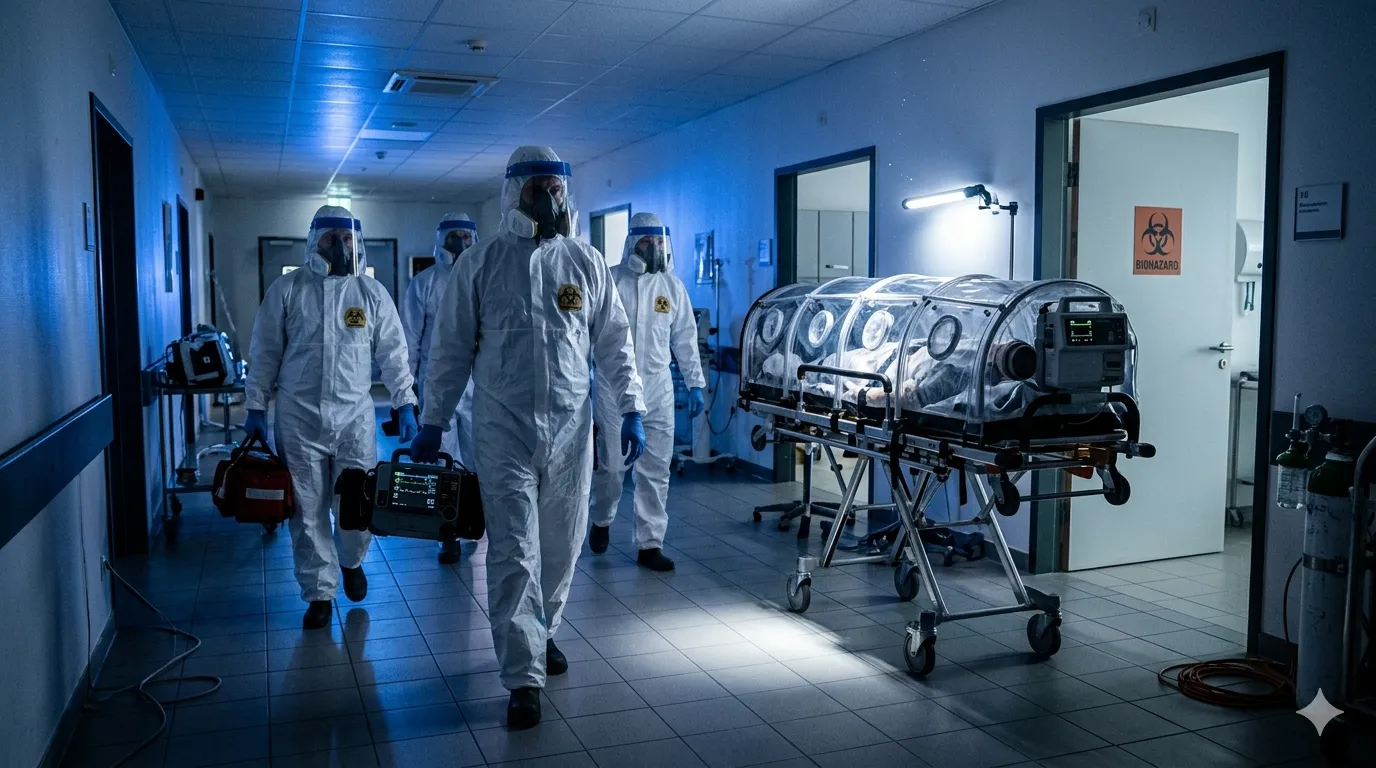
At the Radboudumc hospital in Nijmegen, a concerning incident added to the alarm. Twelve hospital staff members were placed in preventive quarantine for six weeks after blood and urine samples from a hantavirus patient were reportedly handled without the updated and more stringent safety protocols that had since been introduced. The hospital stated that the infection risk for those workers was very low and that patient care was continuing without interruption. Hospital executive board chair Bertine Lahuis said the incident would be thoroughly investigated to prevent similar situations in the future.
France
A French passenger who tested positive after the ship docked in the Canary Islands was receiving treatment in intensive care. French Prime Minister Sebastien Lecornu confirmed the patient's condition had briefly deteriorated but that they were in a stable condition at the time of reporting. French authorities confirmed that appropriate infection prevention and transmission control measures had been applied.
WHO Declares: No Sign of a Larger Outbreak — But Caution Remains
The WHO has been closely monitoring the situation since the outbreak was first reported. As of May 12, 2026, nine confirmed cases of hantavirus were connected to the MV Hondius, with two additional suspected cases under investigation. WHO officials were candid that further cases are expected given the long incubation period of the virus and the number of passengers who have already dispersed to their home countries.
At the Madrid press conference, WHO Director-General Dr. Tedros Adhanom Ghebreyesus offered both reassurance and a clear warning against complacency.
"There is no sign that we are seeing the start of a larger outbreak. But of course the situation could change, and given the long incubation period of the virus, it is possible we might see more cases in the coming weeks." — Dr. Tedros Adhanom Ghebreyesus, WHO Director-General
He added that the organization's work was far from over, and urged all countries to follow WHO guidelines on quarantine and monitoring of high-risk contacts.
WHO's Recommended Guidelines
A mandatory 42-day quarantine period for all high-risk contacts
Quarantine to be observed either in a designated health facility or at home
Constant monitoring and regular health checks throughout the quarantine period
The 42-day window covers the entire potential incubation period, starting from the moment a person last stepped off the ship
Nyka Alexander, WHO's Head of Communications on Emergencies, explained the reasoning behind the lengthy quarantine window in an interview with RTÉ's Morning Ireland program. She noted that the incubation period of hantavirus can run as long as six weeks from initial exposure to the first visible symptoms. The quarantine period is therefore designed to account for the very worst-case scenario.
Alexander also sought to place the outbreak in broader context for the general public: "This isn't a new virus. It's one that we are familiar with. There are hundreds to thousands of cases of hantavirus every year. When it's not in a closed environment like a ship — where people are in such close contact — when it's back in a wider, open setting where people can stay away from others, it doesn't spread."
Controversy: The United States Breaks From WHO Guidelines
Not all countries agreed to implement the WHO's recommended 42-day quarantine. In a notable departure from international consensus, Jay Bhattacharya, the acting director of the US Centers for Disease Control and Prevention (CDC), indicated that American passengers from the MV Hondius would not necessarily be subject to mandatory quarantine.
This position drew a pointed response from Dr. Tedros, who expressed hope that all countries — including the United States — would follow the organization's recommendations. The move raised concerns among global health observers about the potential for American passengers to unknowingly spread the virus during the incubation period if proper monitoring was not in place.
Prime Minister Sanchez weighed in on the broader philosophy of the global response, stating clearly that the world does not need more selfishness or more fear — but rather countries that are willing to show solidarity and take responsible steps forward.
Where Did the Outbreak Originate? Argentina Under the Spotlight
The origin of the outbreak has become a point of discussion between international health authorities and Argentine officials. The WHO's current position is that the first infection most likely occurred before the voyage departed — possibly in Ushuaia, the southern Argentine city from which the MV Hondius set sail on April 1.
However, Argentine health officials have pushed back on this assessment. They have raised doubts about whether the outbreak genuinely started in Ushuaia, citing the virus's known incubation period and other epidemiological factors as grounds for their skepticism. The debate over the precise origin of the outbreak remains open, and investigators continue to trace the chain of transmission.
What is agreed upon is that once the virus entered the ship's closed environment, conditions were ideal for rare human-to-human transmission. Cruise ships, by their nature, concentrate large numbers of people in tight spaces — dining halls, cabins, shared corridors — over extended periods, making them unusually conducive to the kind of close contact that can allow hantavirus to move from person to person.
The MV Hondius: What Happens Next
After evacuating more than 120 of its passengers and crew, the MV Hondius departed the Canary Islands and began its return journey to the Netherlands. The ship is traveling with a reduced crew of 25, accompanied by a doctor and a nurse for medical oversight during the voyage. Oceanwide Expeditions has confirmed the ship is expected to reach Dutch waters by May 17, 2026.
The vessel's arrival will likely be managed under strict health protocols, with authorities carefully monitoring all remaining personnel on board. Investigators will also need to examine the ship itself — its ventilation systems, surfaces, and any evidence of rodent activity — to better understand how the initial infection was introduced.
What the General Public Needs to Know
For people who were not aboard the MV Hondius, the risk posed by this outbreak is considered very low. WHO officials have been consistent in emphasizing that hantavirus does not spread easily outside of close-contact situations, and that the passengers who have been evacuated are either quarantined at home or in medical facilities — meaning their contact with the general population is being strictly controlled.
Should the Public Be Concerned?
For the general public: Risk is very low. Those exposed are in quarantine and not mixing with the wider community.
For travelers: No specific travel restrictions have been issued, but those who were on the MV Hondius or in close contact with confirmed cases should follow national health authority guidance immediately.
For healthcare workers: The incident at Radboudumc hospital underlines the importance of strict biosafety protocols when handling samples from hantavirus patients.
The WHO has made clear that while the situation demands continued vigilance, there is currently no indication that this outbreak will escalate into a broader public health emergency. The key variables going forward are the number of additional cases that emerge during the remaining incubation window, and whether all countries continue to enforce appropriate quarantine and monitoring measures.
Final Thoughts: Lessons From the MV Hondius Outbreak
The hantavirus outbreak on the MV Hondius is a stark reminder that infectious disease does not respect borders or travel plans. A virus endemic to remote regions of South America found its way onto a cruise ship, spread in the close-contact environment of that vessel, and within days had triggered quarantine measures across Spain, Italy, France, the Netherlands, and beyond.
Several important lessons are already emerging from this event. The first is the critical importance of biosecurity awareness for expedition and cruise operators sailing through or departing from regions where vector-borne diseases are endemic. The second is the value of rapid international coordination — the WHO's swift press conference in Madrid and clear communication of quarantine guidelines helped prevent confusion and encouraged consistent action across multiple governments.
The third, perhaps most politically charged lesson, is that global health crises require global cooperation. When individual countries opt out of internationally recommended safety measures — as the US appeared to do — it weakens the collective ability to monitor and contain a virus that has already demonstrated its capacity to travel across continents undetected.
As the MV Hondius makes its way back to the Netherlands and health authorities continue to monitor those in quarantine, the world will be watching to see whether this outbreak remains contained — or whether more cases emerge in the weeks ahead. For now, the situation is serious but manageable. The message from global health officials is clear: stay informed, follow guidance, and do not underestimate a virus simply because it is familiar.























Responses (0)
Sign in to share your thoughts.
Sign in