How Cybercriminals Manipulate Human Psychology to Steal Money
Imagine receiving a message saying that your bank account will be blocked within the next ten minutes unless you verify your details. Your heart starts…

In this article
- 1. The Psychology Behind Online Scams
- 2. Creating Fear and Urgency
- 3. The Power of Trust and Fake Identities
- 4. Phishing: The Trap Hidden Inside Your Inbox
- 5. Why People Fall for Free Offers
- 6. Social Media: A Goldmine of Personal Information
- 7. Artificial Intelligence Is Making Scams More Convincing
- 8. How to Protect Yourself From Psychological Manipulation
- Conclusion: Your Mind Is Your First Line of Defence
The Biggest Security Weakness Isn't Always Your Password. Sometimes, It's Your Mind.
Imagine receiving a message saying that your bank account will be blocked within the next ten minutes unless you verify your details. Your heart starts beating faster. You become worried about losing access to your money. Without thinking twice, you click the link and enter your personal information.
A few minutes later, you discover that money has disappeared from your account.
How did it happen?
You might assume that hackers used sophisticated technology to break into your bank account. But the truth is often much simpler. They manipulated your emotions, created fear and convinced you to make a decision without thinking carefully.
Welcome to the world of social engineering, where cybercriminals don't always need to hack computers because they can manipulate the people using them.
1. The Psychology Behind Online Scams
Cybercriminals understand something important about human behaviour: people don't always make decisions logically.
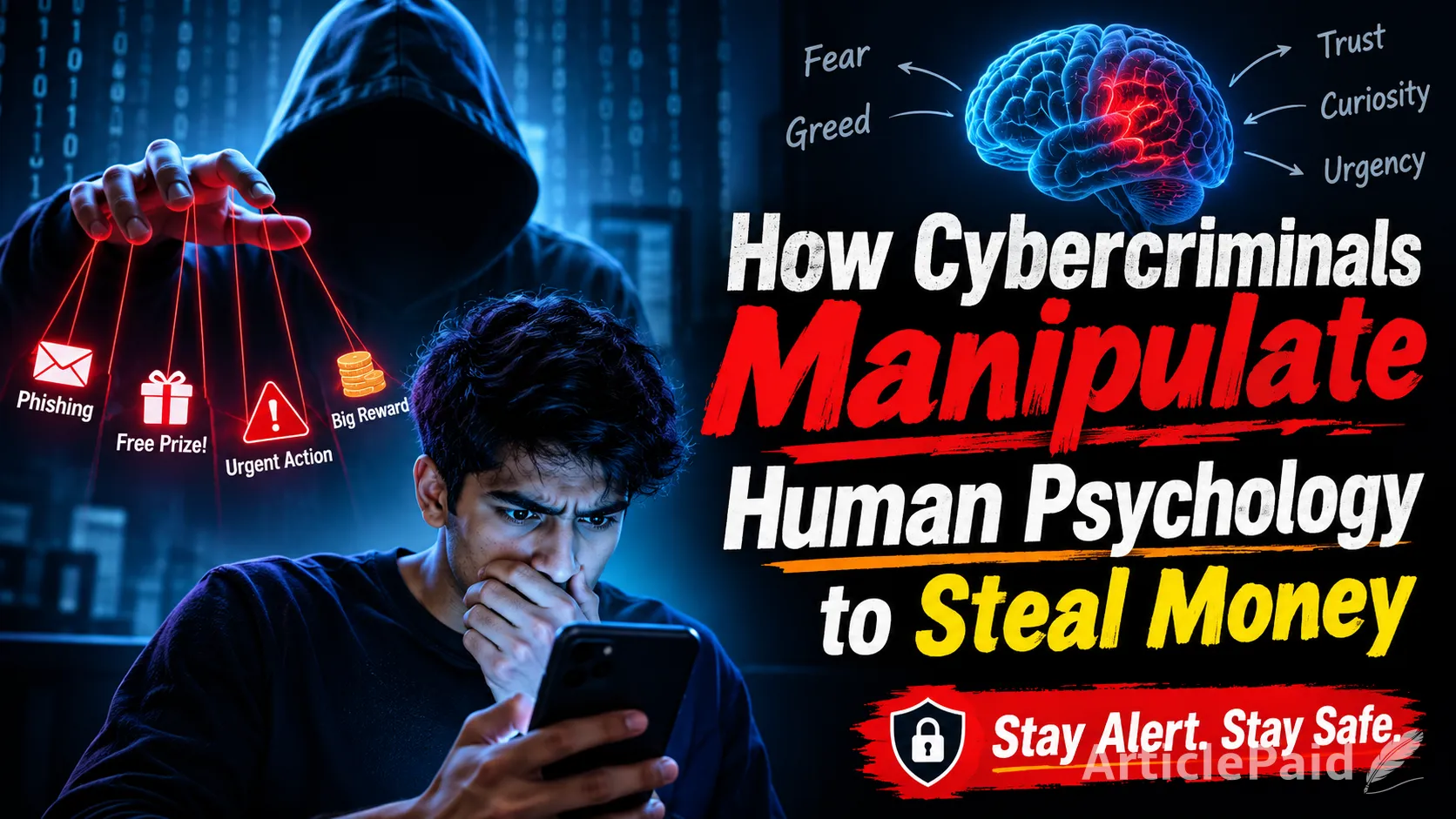
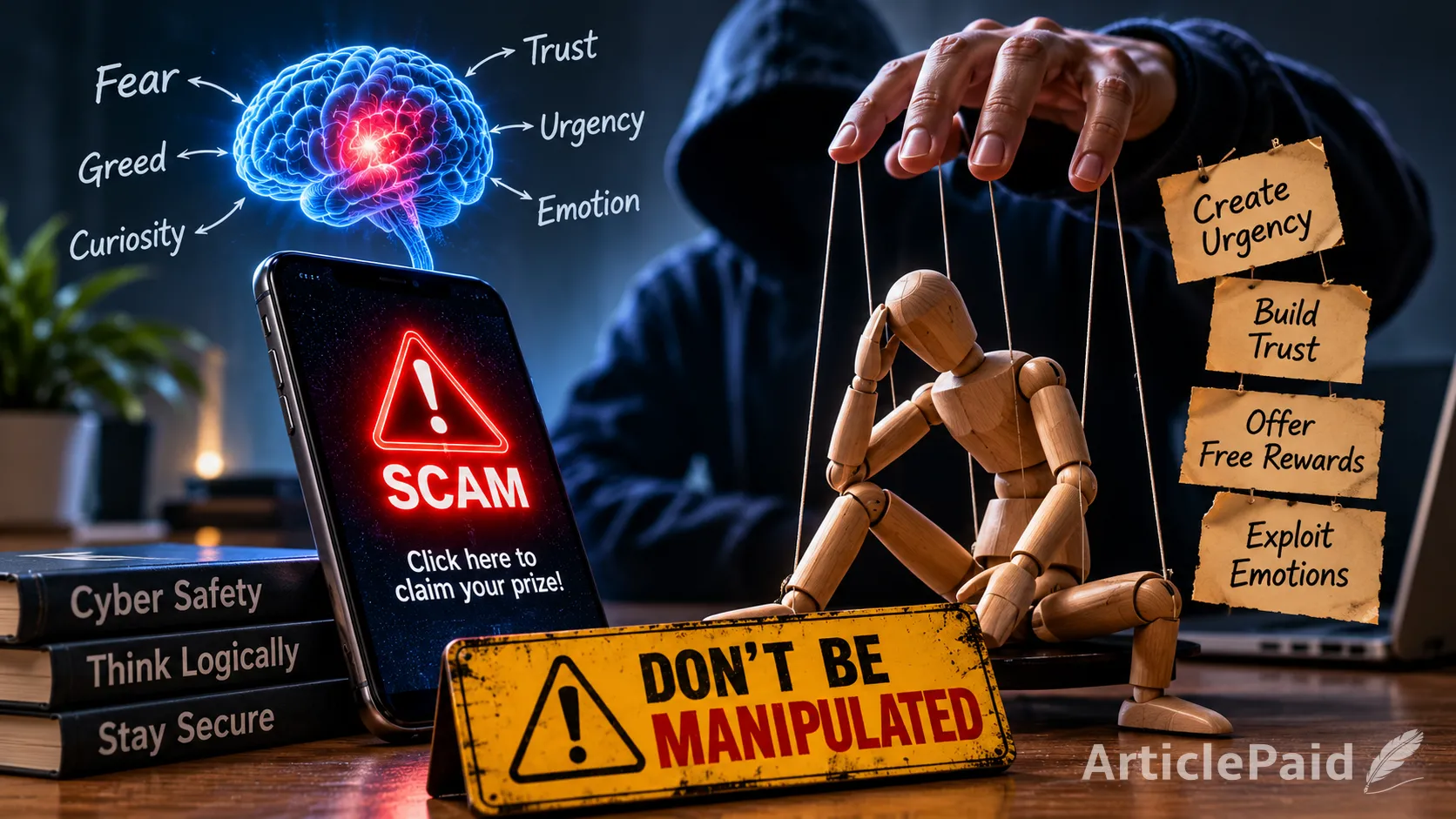
Fear, excitement, curiosity, trust and urgency can influence our decisions. Scammers take advantage of these natural emotions to convince victims to share sensitive information or transfer money.
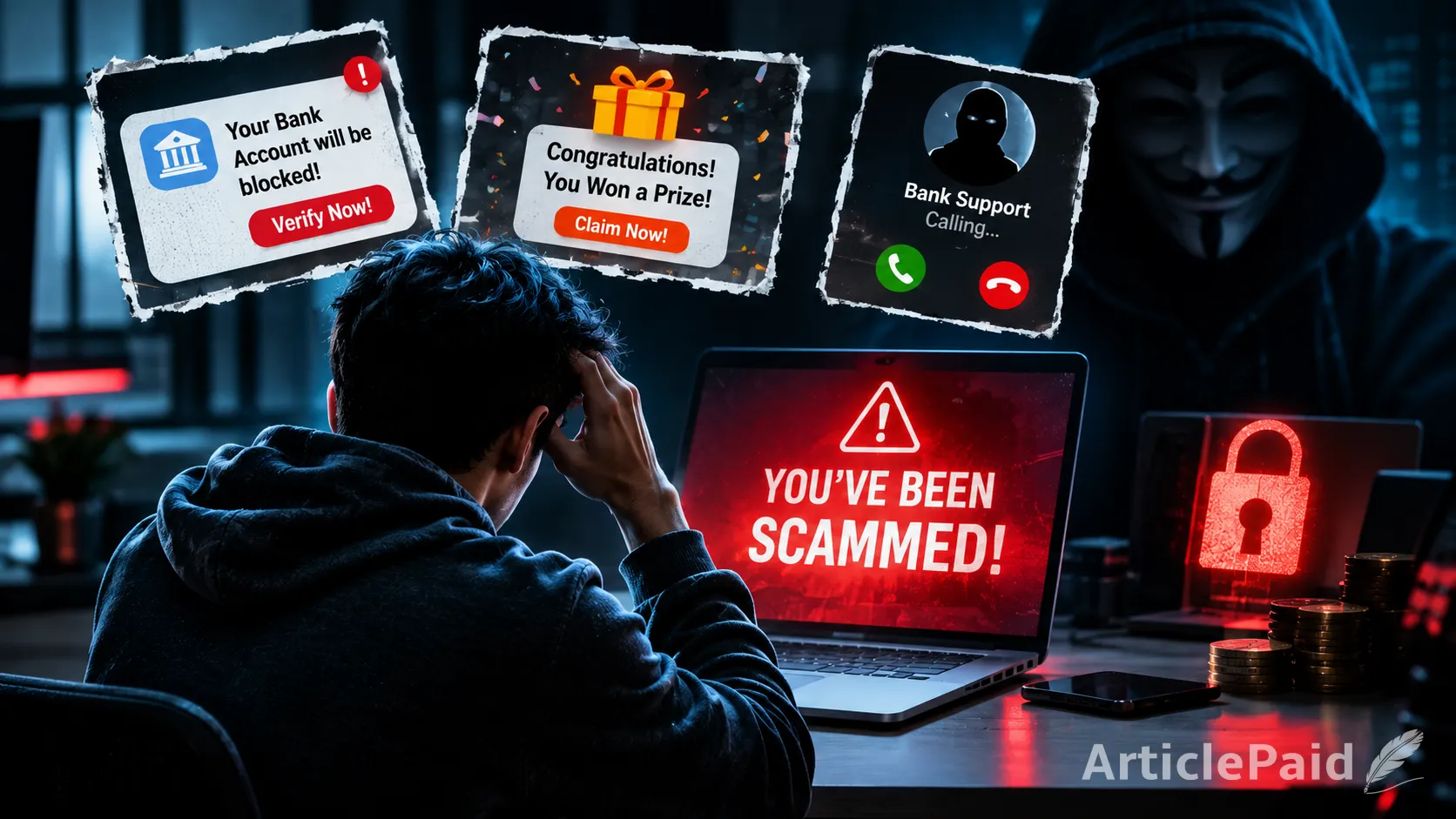
For example, a person might receive a message claiming they have won a valuable prize. The excitement of receiving something for free can make them ignore warning signs.
Another person might receive a fake security alert. Fear of losing access to an account can encourage them to follow instructions immediately.
These attacks are known as social engineering. Instead of targeting weaknesses in computer systems, attackers target weaknesses in human decision-making.
2. Creating Fear and Urgency
One of the most effective tricks used by cybercriminals is creating a feeling of urgency.
You might receive messages such as:
Your bank account will be suspended today.
Your package cannot be delivered unless you update your information.
Your account has been accessed from an unknown location.
Immediate action is required to avoid a financial penalty.
These messages are designed to make people panic.
When someone feels pressured to act quickly, they may forget to verify whether the message is genuine.
Cybercriminals deliberately create situations where victims believe they have no time to think.
The best defence is simple: slow down. Legitimate organisations do not require you to disclose passwords or OTPs through suspicious links or messages.
3. The Power of Trust and Fake Identities
People naturally trust familiar names, faces and organisations.
Cybercriminals exploit this behaviour by pretending to be bank employees, customer support representatives, government officials or even friends and family members.

At NikahNoor.com, discover a platform dedicated to helping Muslims find a compatible life partner and build a future rooted in love, respect, and shared values.
Learn moreFor example, someone might receive a phone call from a person claiming to be a bank representative. The caller speaks professionally, knows some basic information about the victim and creates the impression that everything is legitimate.
Eventually, the caller asks for an OTP or other confidential information.
The victim may share it because they believe they are speaking to someone trustworthy.
This technique is called impersonation.
Remember that knowing your name, phone number or other basic personal details does not prove that someone is genuine.
4. Phishing: The Trap Hidden Inside Your Inbox
Phishing is one of the most common methods used to steal personal and financial information.
In a phishing attack, criminals send fake emails, text messages or website links designed to look legitimate.
For instance, a victim might receive an email that appears to come from an online service. It claims that their account requires verification.
The provided link leads to a fake website that looks almost identical to the original one.
When the victim enters their username and password, the information is collected by the attacker.
The frightening part is that victims may not realise anything has happened until they notice suspicious account activity.
To avoid phishing attacks:
Check the sender's actual email address.
Avoid clicking unexpected links.
Visit websites by entering their official addresses yourself.
Never share passwords or OTPs.
Be suspicious of messages demanding immediate action.
5. Why People Fall for Free Offers
Everyone enjoys receiving something valuable without paying for it.
Cybercriminals understand this and frequently use fake giveaways, investment opportunities, job offers and prize announcements.
Imagine receiving a message claiming that you have won an expensive smartphone. However, to receive the prize, you must first pay a small registration fee.
The amount might seem insignificant compared with the promised reward.
But after making the payment, the supposed organiser disappears.
Some scammers use a similar technique with fake investment opportunities. They promise unusually high returns and encourage people to invest quickly.
The desire to earn money can make people overlook obvious warning signs.

Looking for a Muslim marriage partner? Discover NikahNoor, a Muslim matrimonial platform dedicated to meaningful connections, halal matchmaking and finding a compatible life partner.
Find Your Life PartnerA useful rule is to remember that unrealistic rewards often hide unrealistic risks.
6. Social Media: A Goldmine of Personal Information
Many people share details about their lives online without considering the possible consequences.
Birthday celebrations, family photographs, workplace information, travel plans and personal interests can reveal more than expected.
Cybercriminals may use publicly available information to create convincing scams.
For example, someone might create a fake social media account using photographs and information taken from another person's profile. They could then contact that person's friends or relatives and request emergency financial assistance.
Because the account appears familiar, people may trust the request.
This is why protecting personal information online is important.
Avoid publicly sharing sensitive details, review your privacy settings and verify unusual financial requests through another communication channel.
7. Artificial Intelligence Is Making Scams More Convincing
Technology has given cybercriminals new ways to manipulate people.
Artificial intelligence can help criminals create convincing messages, imitate voices and produce realistic images or videos.
One concerning example is voice cloning.
Imagine receiving a phone call that sounds exactly like someone you know. The caller claims to be in an emergency and urgently needs money.
You might believe the voice because it sounds familiar.
However, the voice could have been artificially generated.
This makes verification more important than ever.
If someone calls requesting money urgently, disconnect and contact them through a previously known phone number. Establish a family verification phrase for emergency situations.
Never rely on a familiar voice alone as proof of identity.
8. How to Protect Yourself From Psychological Manipulation
Understanding how scammers think is one of the best ways to protect yourself.
Here are some practical precautions:
Think Before You Click: Never open suspicious links simply because a message creates urgency.
Protect Your Personal Information: Avoid sharing passwords, OTPs, banking information and sensitive personal details.
Use Multi-Factor Authentication: Add another layer of security to important accounts.
Verify Before Sending Money: Confirm unusual payment requests directly with the person involved.
Be Careful With Unknown Calls: Never trust someone simply because they claim to represent a bank or government organisation.
Keep Your Devices Updated: Security updates help protect against known vulnerabilities.
Question Unrealistic Offers: Free prizes, guaranteed profits and unbelievable opportunities deserve extra scrutiny.
Most importantly, remember that scammers want you to react emotionally rather than think logically.
Conclusion: Your Mind Is Your First Line of Defence
Cybersecurity is often associated with firewalls, encryption, antivirus software and complicated technical systems.
However, technology alone cannot prevent every cyberattack.
A person can use strong passwords, secure devices and modern security tools but still become a victim if they are manipulated into sharing confidential information.
Cybercriminals understand human emotions and use them as weapons. They create fear, build false trust, exploit curiosity and promise rewards to influence decisions.
The next time you receive an unexpected message promising money, demanding immediate action or requesting confidential information, take a moment to question it.
Ask yourself three simple questions:
Who is really contacting me?
Why do they need this information?
Have I verified that this request is genuine?
In the digital world, being careful is not a sign of fear. It is a sign of intelligence.
Because sometimes, the easiest way for a criminal to hack your account is to convince you to open the door yourself.











Responses (0)