Navigating with in-laws can feel like walking through a minefield blindfolded.


Navigating conflicts with in-laws can feel like walking through a minefield blindfolded.
You love your partner, you want peace, but somehow a simple comment about dinner, parenting, or weekend plans turns into a tense silence that lasts for days.
The hardest part is that you aren't just dealing with two people.
You’re navigating decades of family history, unwritten rules, and deep emotional bonds that were formed long before you came into the picture.
But the good news is that you can protect your peace and stick up for your needs without burning down the family bridge.
You and Your Partner Are the Core Team
Before you react to anything an in-law says or does, pause and get on the same page with your spouse.
If you two are divided, the conflict will bleed into your marriage, which is the exact opposite of what you want.
Sit down together when things are calm and use warm, joint phrasing. Instead of blaming their family, talk about how situations make you feel and figure out how to handle them together as a unit.
When in-laws see that you present a unified, loving front, it naturally reduces space for interference.
Don't Mistake Clumsiness for Cruelty
It’s easy to assume the worst when a comment stings, but often in-laws don’t even realize they’re overstepping.
A mother-in-law giving unsolicited advice might not be trying to criticize your parenting—she might just be trying to stay relevant and feel needed in a role she held for thirty years.
A father-in-law talking over you might just come from a loud family dynamic where everyone competes to be heard.
Assuming good intent, or at least lack of awareness, keeps your heart warm and prevents you from jumping straight into defense mode.
Draw Fences, Not Brick Walls
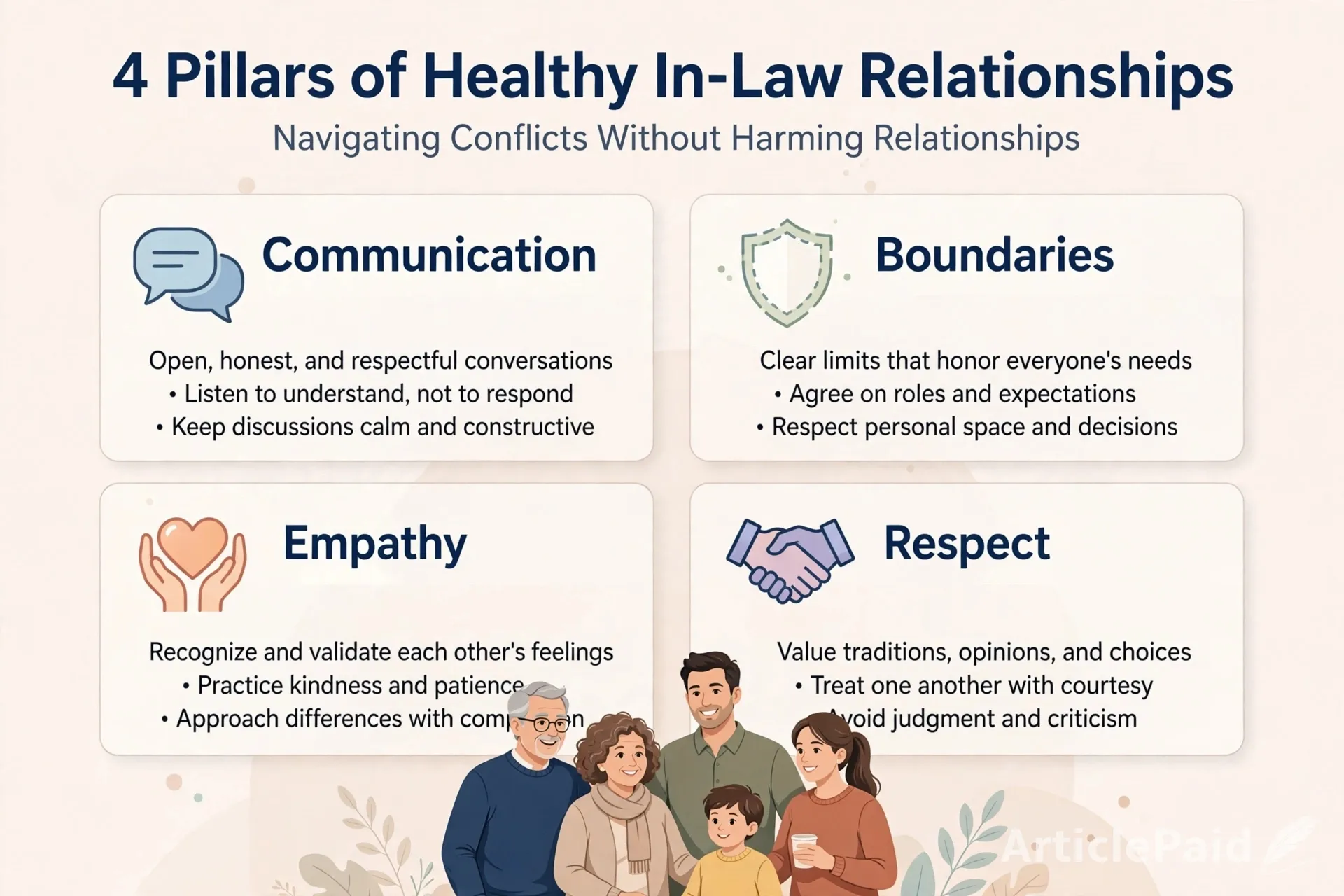
Boundaries aren't meant to punish people; they’re meant to teach people how to love you safely.
A brick wall cuts people off completely, but a fence has a warm gate that opens and closes deliberately. You don't need a big, dramatic confrontation to set a boundary.
Clear, soft phrasing works wonders—like letting them know how much you love seeing them, while asking for a quick heads-up before visits so you aren't caught in the middle of a chaotic day.
If they push back, just stay calm and repeat the boundary kindly without spiraling into long excuses.
Let Your Partner Handle Their Own Parents

As a general rule, it's always better for your partner to deliver tough feedback to their own parents, while you handle yours.
Blood relatives tend to forgive each other much faster. If your partner tells their parents that you've both decided to spend a holiday at home, they might be disappointed, but they’ll get over it.
If you say it, it can easily be misconstrued as you keeping their child away.
Pass the baton to your partner when it comes to setting hard limits with their side of the family.
Build Small Bridges Every Day
When a relationship feels strained, every single interaction starts feeling heavy.
You can break that tension by looking for tiny ways to connect that have nothing to do with family drama.
Ask them about their favorite old stories or hobbies, send a quick text with a photo of the kids, or compliment them genuinely on something they do well.
When people feel respected and appreciated, they naturally soften up.
You don't have to become best friends overnight, but building small pockets of warmth makes future tough conversations so much easier.
Play the Long Game
Relationships don't change overnight.
Old habits take time to unlearn, and family dynamics are deeply rooted over decades.
When an awkward moment happens—and it definitely will—take a deep breath, brush it off if it’s minor, and address it gently with your partner if it really matters.
Protect your marriage, keep your boundaries clear, and keep your heart open.















Responses (0)