
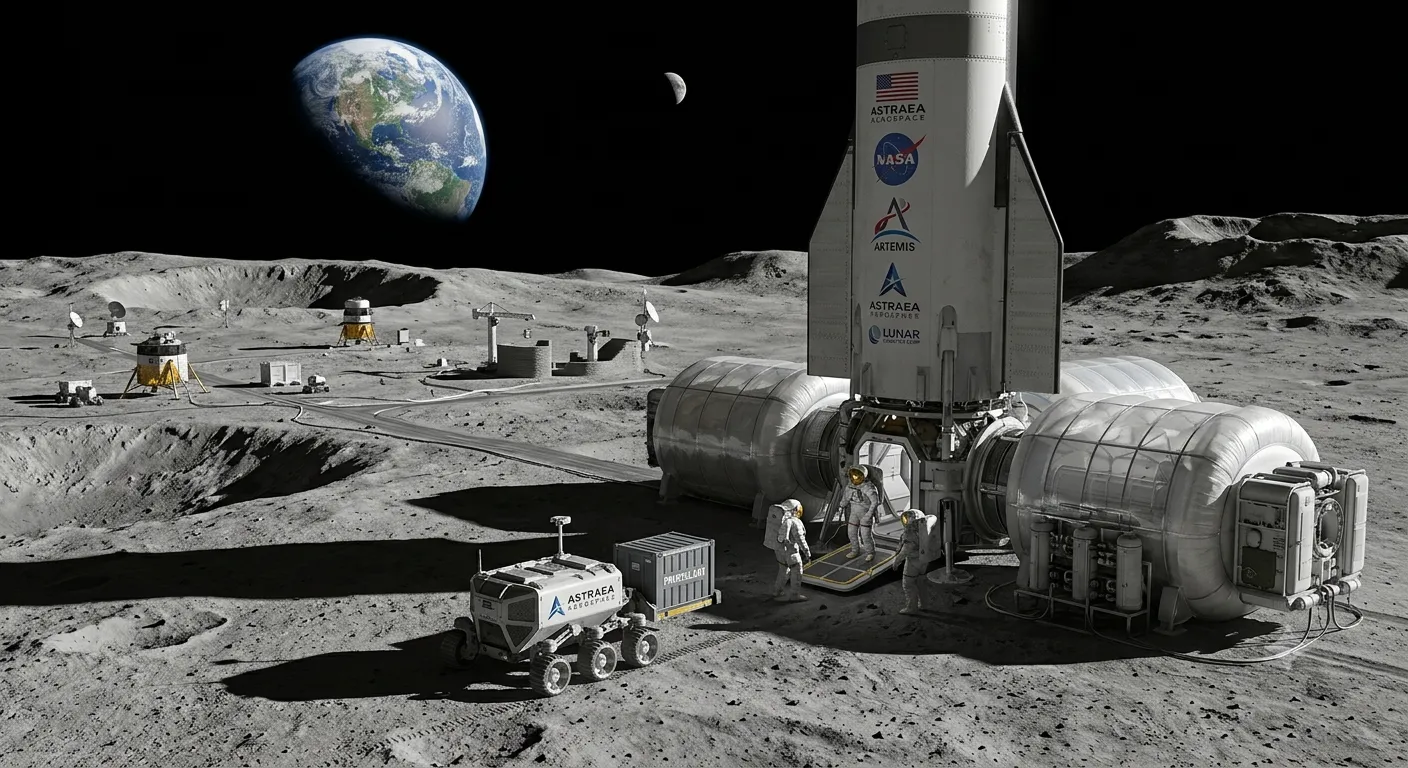
The Dawn of the Commercial Lunar Economy: Inside NASA’s Bold New Strategy
The race back to the Moon is no longer just a government passion project. In 2026, NASA’s Artemis program is fundamentally shifting how humanity approaches deep-space exploration. By aggressive leveraging of commercial space partnerships, the agency is transforming the lunar surface from a distant scientific outpost into a bustling, trillion-dollar economic frontier.
From robotic servicing missions to infrastructure scaling, the latest developments coming out of Cape Canaveral reveal a highly strategic blueprint for sustainable space travel.
1. Commercial Partnerships are Driving Down Costs
Historically, space exploration was entirely funded and executed by state entities. Today, NASA is acting more like a primary anchor customer, outsourcing massive infrastructure tasks to agile private aerospace firms. Major industry players and rising public space tech entities are reporting record-breaking revenues and massive contract backlogs driven by NASA's lunar ambitions.
By shifting from custom-built government hardware to commercial landing systems and cargo payloads, NASA is maximizing its budget efficiency. This commercialization is precisely what will make the upcoming Artemis III lunar landing—and the long-term moon bases that follow it—financially viable over the next decade.
2. Infrastructure First: Building a Sustainable Presence
NASA's latest milestones focus heavily on orbital maintenance and surface survival. The agency's aggressive focus on satellite servicing, robotic life-extension missions, and modular lunar habitat designs proves they aren't looking for a "one-and-done" flag-planting mission.
Instead, the goal is to build a reliable network of communications, power grids, and orbital tugs. By proving that we can actively maintain and upgrade hardware in space rather than abandoning it, NASA is laying down the physical framework required for an permanent human presence.
3. The Multiplier Effect on the Global Tech Economy
The investments made into the Artemis program are actively bleeding into everyday consumer technology. The massive push for direct-to-device satellite broadband and real-time lunar telemetry is forcing rapid innovation in automation, AI, and telecommunications. What begins as a navigation system for a lunar rover today will likely optimize autonomous logistics networks on Earth tomorrow.
Key Takeaways for Tech Investors and Enthusiasts
The Lunar Market is Real: The commercial space sector is seeing rapid sector-wide financial growth, proving space tech is a viable public-market theme.
Sustainability Over Speed: NASA is prioritizing deep-space infrastructure over hasty timelines, ensuring our return to the Moon lasts.
Public-Private Synergies: The blueprint established by NASA and its commercial partners will dictate how future Mars missions are funded and executed.























Responses (0)
Sign in to share your thoughts.
Sign in