The Hidden Costs Behind Your Favorite Free Apps Today
Free apps have become part of everyday life, but there is often a hidden price behind the convenience. Here's what users
In this article 2 sections
Free apps have become part of everyday life, but there is often a hidden price behind the convenience. Here's what users should understand before tapping "Download."
We live in a world where almost everything seems to be available for free. You can edit photos, communicate with friends, watch videos, organize your schedule, and even use advanced artificial intelligence tools without paying a monthly subscription.
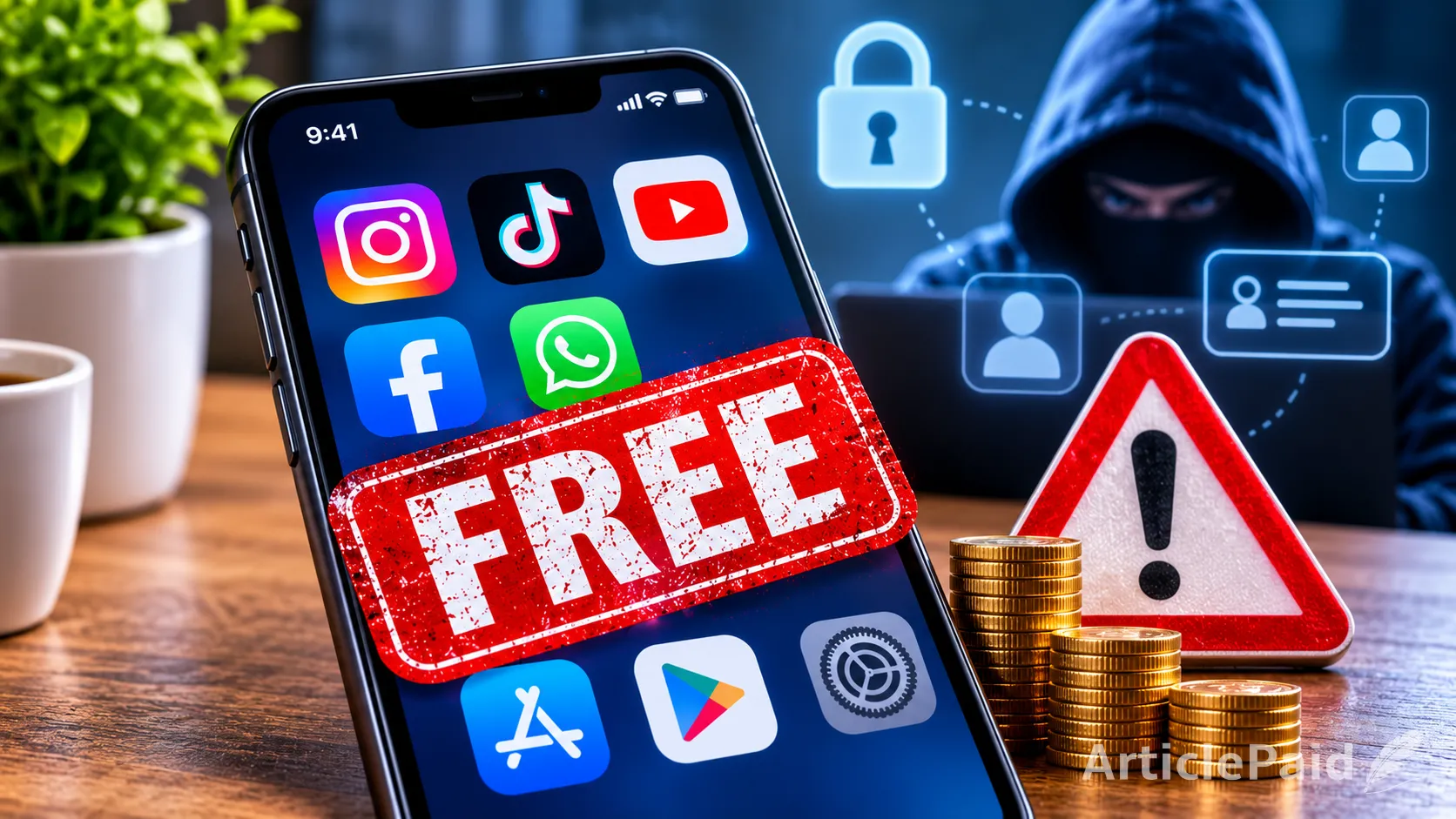
At first glance, this sounds like an incredible deal. Why pay for something when a free alternative is just one download away?
However, there is an important question that many people rarely ask: If an app is free, how does the company behind it make money?
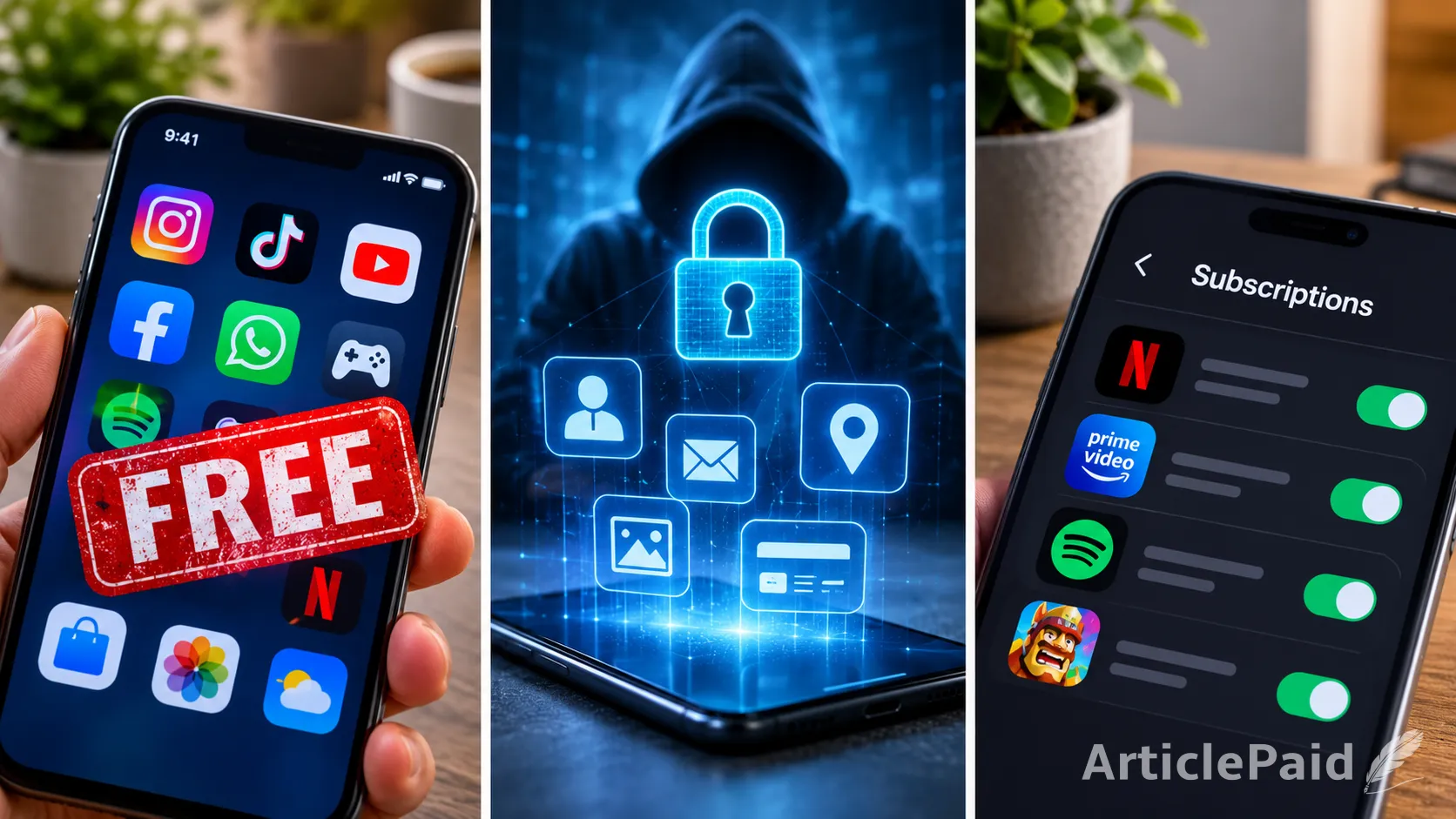
The answer is not always straightforward. Some applications rely on advertising, others offer premium subscriptions, while many collect information about how people use their services.
Understanding these business models can help users make better decisions about which applications deserve a place on their phones.
Your Attention Is a Valuable Product
One of the most common ways free applications generate revenue is through advertising.
Social media platforms, entertainment applications, and mobile games often display advertisements between posts, videos, or different activities.
The longer users stay inside an application, the more opportunities the platform has to show advertisements.
This explains why many popular apps are designed to encourage continuous engagement. Notifications, recommended content, automatic video playback, and personalized feeds can make it surprisingly difficult to put your phone down.
For users, this may seem like a small inconvenience. For businesses, however, attention is an important part of their commercial model.
The next time you open an application just to check one notification and find yourself scrolling twenty minutes later, remember that your time has economic value.
Personal Data Can Be Part of the Business Model
Another important aspect of free applications is data collection.
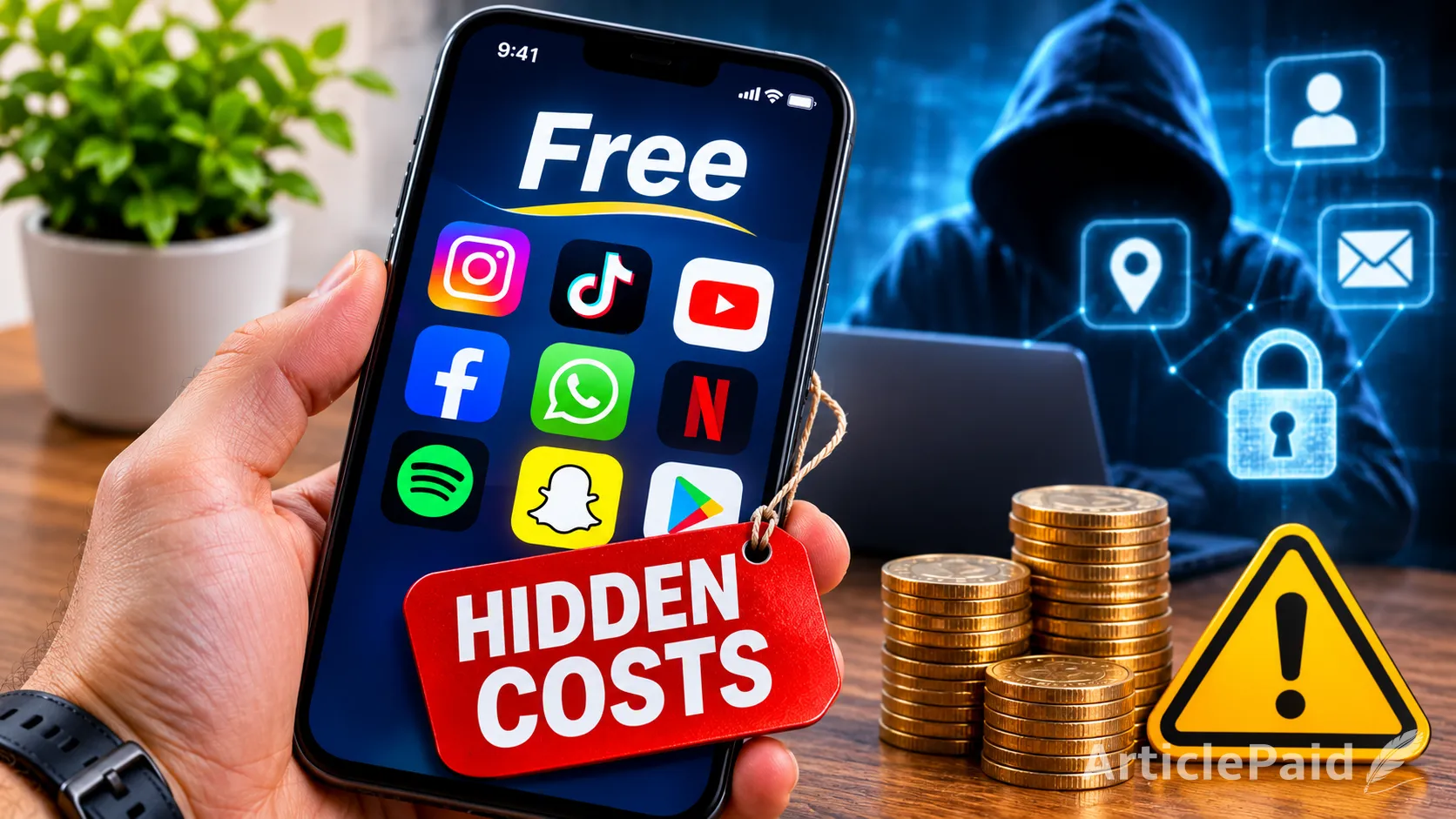
Depending on the service and its privacy settings, an application may collect information such as:
- Device information and technical details.
- General location information.
- Search history and interactions.
- Preferences and content engagement.
- Information about how frequently the app is used.
Not every application collects all these categories, and collecting information does not automatically mean that a company is selling personal data.
In many cases, information is used to improve services, understand user behavior, personalize recommendations, or make advertisements more relevant.
Nevertheless, users should understand what they agree to when creating an account or installing a new application.
Privacy policies are not always exciting reading, but checking the permissions an application requests can reveal a lot about how it operates.
The Subscription Trap: When Free Becomes Expensive
Have you ever downloaded an application, enjoyed its free features, and suddenly discovered that the most useful options require a subscription?
This is becoming increasingly common.
Many developers use a freemium business model. The basic version is available without payment, while advanced features are reserved for paying customers.
There is nothing inherently wrong with this approach. Developers need revenue to maintain their products, pay employees, and introduce improvements.
The problem appears when users forget about subscriptions or do not notice that a free trial automatically converts into a paid plan.
A few small monthly payments can eventually become a significant expense.
A practical solution is to review active subscriptions regularly, cancel services that are no longer useful, and check the renewal date before accepting a free trial.
Why Some Free Apps Are Actually Worth Using
Despite these concerns, free applications can provide enormous value.
Many developers offer genuinely useful products without requiring users to spend money immediately.
Students can access educational platforms, small business owners can use productivity tools, and independent creators can edit videos or design graphics without investing in expensive software.
Some applications also offer open-source alternatives, where users can access software developed by communities rather than relying entirely on commercial companies.
The important distinction is not whether an application is free.
It is whether the benefits justify the information, attention, permissions, or money that users give in return.
Five Simple Ways to Protect Yourself
You do not need to stop using free applications to become more careful online.
A few simple habits can make a meaningful difference:
1. Review app permissions: A basic calculator probably does not need access to your contacts or microphone.
2. Disable unnecessary notifications: Keep alerts that are genuinely useful and remove those designed mainly to bring you back into an application.
3. Check subscriptions: Review your payment history and identify services you no longer use.
4. Use privacy settings: Limit unnecessary tracking and location access whenever possible.
5. Download from trusted sources: Official app stores and verified developers are generally safer choices than unknown download websites.
These steps take only a few minutes but can help you maintain better control over your digital life.
The Real Question Is What You Are Giving in Return
Free applications are not necessarily bad, and paid applications are not automatically better.
The digital economy works through different business models, and each comes with advantages and disadvantages.
Some companies offer free products because advertising supports their business. Others use free versions to introduce users to premium services. Some provide tools that are genuinely valuable without charging anything.
The responsibility of users is to understand the exchange.
Before downloading your next application, take a moment to consider what it offers, what permissions it requests, and how its developers generate revenue.
Because in today's digital world, the most expensive product is not always the one with a price tag.
Sometimes, the real cost is hidden in the small details we never bother to check.











Responses (0)