

Top 3 Vegetables with More Fiber for Better Health.
A healthy diet must include dietary fiber. Not only does it aid in digestion, but it also aids in weight management, blood sugar control, and lowering the risk of chronic conditions like diabetes, heart disease, and some cancers. Vegetables are among the best natural sources of fiber, and incorporating high-fiber vegetables into your daily meals can significantly improve your overall health.
In this article, we will discuss the top three vegetables that are high in fiber, their advantages, their nutritional value, and how to incorporate them into your diet.
Why Fiber is Important for Health?
Before discussing the vegetables, let's examine the significance of fiber: Healthy digestion: Fiber gives the stool more bulk, which makes bowel movements easier and prevents constipation. Helps you lose weight because foods high in fiber make you feel fuller for longer, which means you consume fewer calories overall. Regulates Blood Sugar Levels: Fiber slows down the absorption of sugar, preventing sudden spikes in blood glucose.
Reduces Cholesterol: In the digestive tract, soluble fiber binds to cholesterol and aids in its elimination. Supports Gut Health: Fiber feeds the good bacteria in the gut, improving digestion and immunity.
According to health guidelines, women should consume 25 grams of fiber per day and men should consume 38 grams. Let's examine the vegetables that can assist you in meeting these requirements.
1. Broccoli – The Fiber Powerhouse
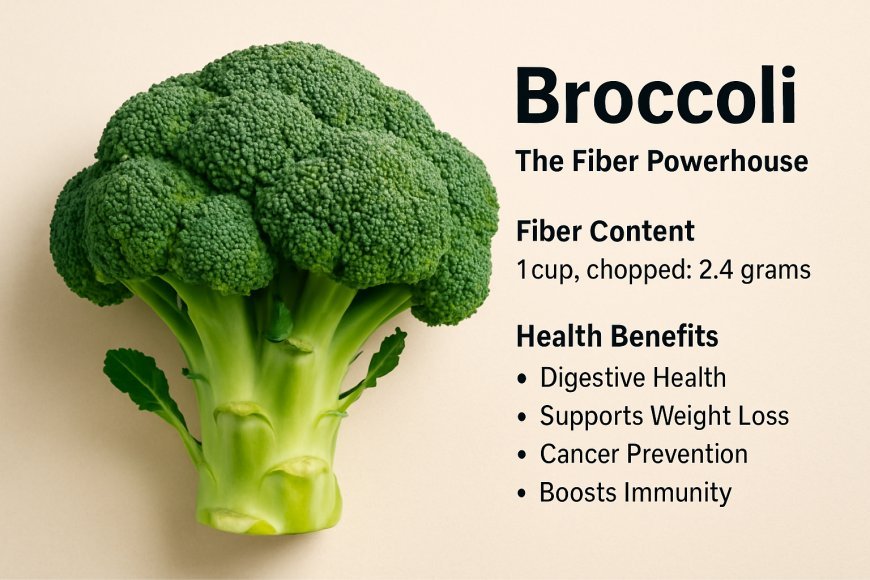
In addition to being loaded with vitamins, minerals, and antioxidants, broccoli is also high in fiber. The health benefits of this green vegetable, which belongs to the cruciferous family, are well-known. Fiber Content
There are approximately 2.4 grams of fiber in 91 grams of chopped broccoli in 1 cup. Health Benefits of Broccoli
Digestive Health: Broccoli's fiber prevents constipation and helps regulate bowel movements. Broccoli helps you lose weight because it is low in calories and high in fiber, so it makes you feel fuller for longer. Antioxidants and compounds with anti-cancer properties, like sulforaphane, are found in broccoli, which can help prevent cancer. Stimulates Immunity Broccoli's high vitamin C content boosts immunity. How to Consume More Broccoli Steamed Broccoli: Lightly steam to retain nutrients and serve as a side dish.
Broccoli Soup: A warm, creamy soup can be a healthy meal that is also comforting. Salads: Add raw or lightly steamed broccoli to your salads for a crunchy texture.
2. Green peas: tiny but powerful Green peas are often considered a starchy vegetable, but they are also a fantastic source of fiber. They are versatile and can be added to various dishes.
Fiber Content
One cup of cooked green peas (160 grams) contains approximately 8.8 grams of fiber, or nearly one third of the recommended daily allowance for women. The Health Advantages of Green Peas Improves Digestion: The high fiber content aids in smooth digestion and prevents bloating.
Controls Blood Sugar Peas are a good choice for diabetics because they contain protein and fiber, which help keep blood sugar levels in check. Heart Health: Because they contain soluble fiber, green peas lower levels of bad cholesterol (LDL). Rich in Plant Protein: Peas are a good source of plant-based protein, which helps in muscle repair and growth.
How to Add Green Peas to Your Diet
Curries and Stews: Peas blend well in Indian curries, soups, and stews.
Salads and Stir-Fries: Add boiled peas to salads for extra fiber and sweetness.
Snacks: A healthy, crunchy snack is roasted green peas.
3. Carrots – The Sweet Fiber-Rich Root
Carrots are one of the most popular root vegetables worldwide. They are a great source of dietary fiber in addition to being high in beta-carotene, which the body converts into vitamin A. Fiber Content
1 medium raw carrot (61 grams) contains about 1.7 grams of fiber.
There are approximately 3.6 grams of fiber in 128 grams (1 cup) of chopped carrots. Carrot Health Benefits Supports Digestive Health: Fiber in carrots helps maintain regular bowel movements.
Eye Health: Carrots' beta-carotene helps keep the eyes healthy and clear. Weight-Friendly: Low in calories but high in fiber, carrots are perfect for weight-loss diets.
Heart Health: Carrots contain antioxidants and fiber that reduce cholesterol levels and improve heart health.
How to Add Carrots to Your Diet
Raw Snack: Enjoy raw carrot sticks with hummus or dip for a healthy snack.
Drinking carrot juice or a smoothie is a refreshing way to get more fiber into your diet. Cooked Dishes: Add carrots to soups, stews, stir-fries, and curries.
Tips for Increasing Fiber Intake
Eat vegetables with their skins whenever possible (e.g., carrots).
Incorporate a variety of high-fiber vegetables into your meals daily.
Drink plenty of water when increasing fiber intake to avoid digestive discomfort.
Combine high-fiber vegetables with whole grains and
legumes for a balanced diet.



















Responses (0)
Sign in to share your thoughts.
Sign in