

Then you hear the news: the internet has disappeared—and it may be gone for the next 24 hours.
At first, it might sound exciting. No emails, no online classes, no endless notifications. But after a few hours, we would probably realize just how much of our daily lives depend on the internet.
People would restart their Wi-Fi routers, switch mobile data on and off, and check their phones again and again. Some might even call their internet provider to find out what happened.
Then the confusion would spread.
You might message a friend to ask if their internet is working, only to discover that they cannot receive your message either. News websites would be unavailable, social media would stop updating, and people would have very little idea about what was happening.
For a few minutes, everyone might assume it was just a small technical problem. But once people realized that the whole world was affected, the situation would become much more serious.
No Instagram stories. No Tiktok videos. No Facebook posts. No WhatsApp messages. No YouTube videos.
At first, some people might actually enjoy the silence. There would be no notifications constantly demanding attention. But after a while, many people would start checking their phones out of habit.

Imagine picking up your phone ten times and finding absolutely nothing new.
For people who spend hours scrolling every day, 24 hours without social media could feel strangely long. Some might become bored, while others might finally realize how often they reach for their phones without even thinking about it.
And there would probably be one sentence heard everywhere:
“When is the internet coming back?”
The internet is not just used for entertainment. Millions of businesses depend on it every day.
Online shops could stop receiving orders. Websites could become unavailable. Companies might struggle to communicate with customers and employees. Digital payment systems and other online services could also be affected.
A person running a small online business could suddenly find themselves unable to contact customers or check new orders.
Large companies would have their own problems too. Employees who normally communicate through email, online meetings, cloud platforms, or other internet-based systems might suddenly have to find another way to work.
For businesses, those 24 hours could be extremely stressful.

Students are also heavily dependent on the internet.
Think about how often students use Google to find information, watch educational videos, download notes, submit assignments, attend online classes, or communicate with teachers.
Without the internet, a student searching for an answer would have to return to something much older: a book.
Libraries, printed notes, textbooks, and handwritten work would suddenly become much more useful.
Some students might complain at first, especially those who are used to finding almost any answer within seconds. But it could also be a reminder that we knew how to learn before search engines existed.
This would be one of the more serious effects.
Modern hospitals and emergency organizations use digital systems and networks for many different tasks. Communication, records, scheduling, and other services can depend on connected technology.
However, an internet outage would not automatically mean that every hospital would stop functioning. Many critical systems have backup arrangements and can continue operating without the public internet.
Still, a major worldwide outage could create serious difficulties, especially for services that depend on online communication and connected systems.
This is when the internet would stop feeling like a luxury and start looking more like an important part of modern infrastructure.
Here comes the funny part.
After spending several hours without social media, people might start looking around and asking:
“So... what are we supposed to do now?”
Families might sit together and talk. Friends might visit each other instead of sending messages. Someone might finally finish the book sitting on their bedside table for months.
Children could play board games. People might go for walks, cook something, clean their rooms, or simply sit outside.
Of course, some people would probably still complain that they were bored.
But perhaps that boredom would not be such a bad thing. Sometimes we are so busy filling every quiet moment with a screen that we forget how to simply do nothing.
The Biggest Surprise: We Would Adapt
The internet disappearing for 24 hours would certainly cause confusion and problems, but humans are surprisingly good at adapting.
People would start using older methods of communication. Businesses would rely more heavily on offline systems. Students would use books and printed material. Families and friends would find ways to communicate without social media.
The first few hours might feel chaotic, but eventually people would find a new routine.
And when the internet finally returned, millions of people would probably reach for their phones at exactly the same time.
Notifications would flood in.
Messages would arrive.
Emails would appear.
Social media feeds would suddenly come alive again.
And after all that excitement, some people might quietly put their phones down and think:
“Maybe I didn't miss the internet as much as I thought I would.”
Losing the internet for 24 hours would be inconvenient, stressful, and sometimes serious. Our work, education, communication, shopping, entertainment, and even some essential services have become closely connected to the digital world.
But it could also give us something we rarely get these days:
More from ArticlePaid
How iPhone 13 Pro Max Colors: A Guide to Elegance and Sophistication
The iPhone 13 Pro Max stands out not just for its performance but also for its premium aesthetics. Apple offers a stunning range of colors to match diverse tastes and personalities. Let’s dive into the available hues and what makes each one special.

Gaming Phones of 2024: Ultimate Performance Devices in 2024
This article investigates the top gaming telephones of 2024, featuring their high level elements and uncommon execution. From the strong Asus ROG Telephone 7 to the adaptable Samsung Universe S24 Ultra, these gadgets offer state of the art innovation, high-revive rate shows, and imaginative cooling frameworks. Intended to give an unmatched gaming experience, these telephones are ideally suited for both easygoing and serious gamers searching for a definitive exhibition in a hurry.

Google Pixel 11: Expected Features, Price and Release Date
Google has steadily transformed the Pixel lineup from a niche Android alternative into one of the most innovative smartphone serie...

Advantages of devices onyx boox For electronic ink
Onyx Boox devices are among the best in the e-reader category, offering many features that make them an ideal choice for book lovers. Here are some of the

10 Technology Trends That Will Change Everyday Life by 2030
Technology is evolving at a pace that would have seemed impossible just a decade ago. Artificial intelligence is becoming part of ...
How Artificial Intelligence is Shaping the Future of Work the Hidden Powers of AI
Artificial Intelligence (AI) is not just about machines taking over jobs. It's transforming industries and creating new opportunities for human collaboration and innovation, reshaping how we work and live.

What to Know About Sony's New Wireless Joystick
Discover everything about Sony’s new FlexStrike wireless fight stick controller for PS5 and PC—from its features and design to custom options and release detail
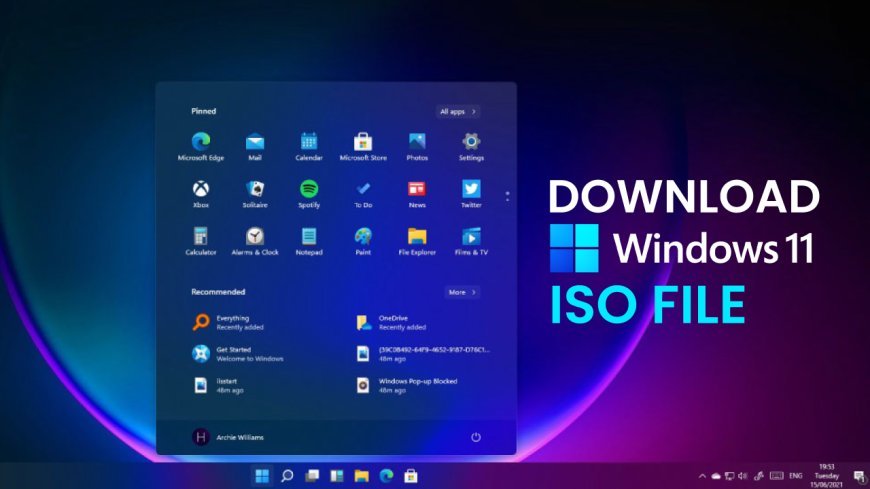
How to Download and Install Windows 11 Pro (Step-by-Step Guide)
Learn how to download and install Windows 11 Pro with this step-by-step guide. Discover its features, benefits, and all available versions to choose the best one for your needs. Get started with the download link provided!

iPhone 16 Leak Unveils Groundbreaking AI Upgrades
New iPhone 16 leaks point to powerful AI upgrades—discover the next-gen features Apple may launch in 2025.
Weekly Top Articles
What Happens When You Let AI Make Every Decision for a Day?
Imagine waking up in the morning and deciding that you are not going to make any decisions today.What should you eat? AI decides.W...
10 AI Features You Probably Didn’t Know Existed
Artificial intelligence has become part of our everyday lives, but most people only use a small portion of what modern AI tools ca...

5 Best Low Calorie Foods to Eat Every Day to Stay Full and Fit
5 Best Low Calorie Foods to Eat Every Day If you have ever struggled to lose weight without feeling constantly hungry, you ar...

Mastering Interview Preparation: How to Be Confident
IntroductionInterview preparation is a crucial phase in landing a desirable job. It empowers the candidate as they know what to sa...

Thyroid Problems in Women: Pregnancy, Postpartum and Menopause
Thyroid symptoms in women are easy to miss because they look like normal life changes. Here is how thyroid problems show up during...

How to Write a Resume With No Work Experience
Writing a resume with no work experience can feel challenging, but a strong resume does not depend entirely on previous employment...







Responses (0)
Sign in to share your thoughts.
Sign in