
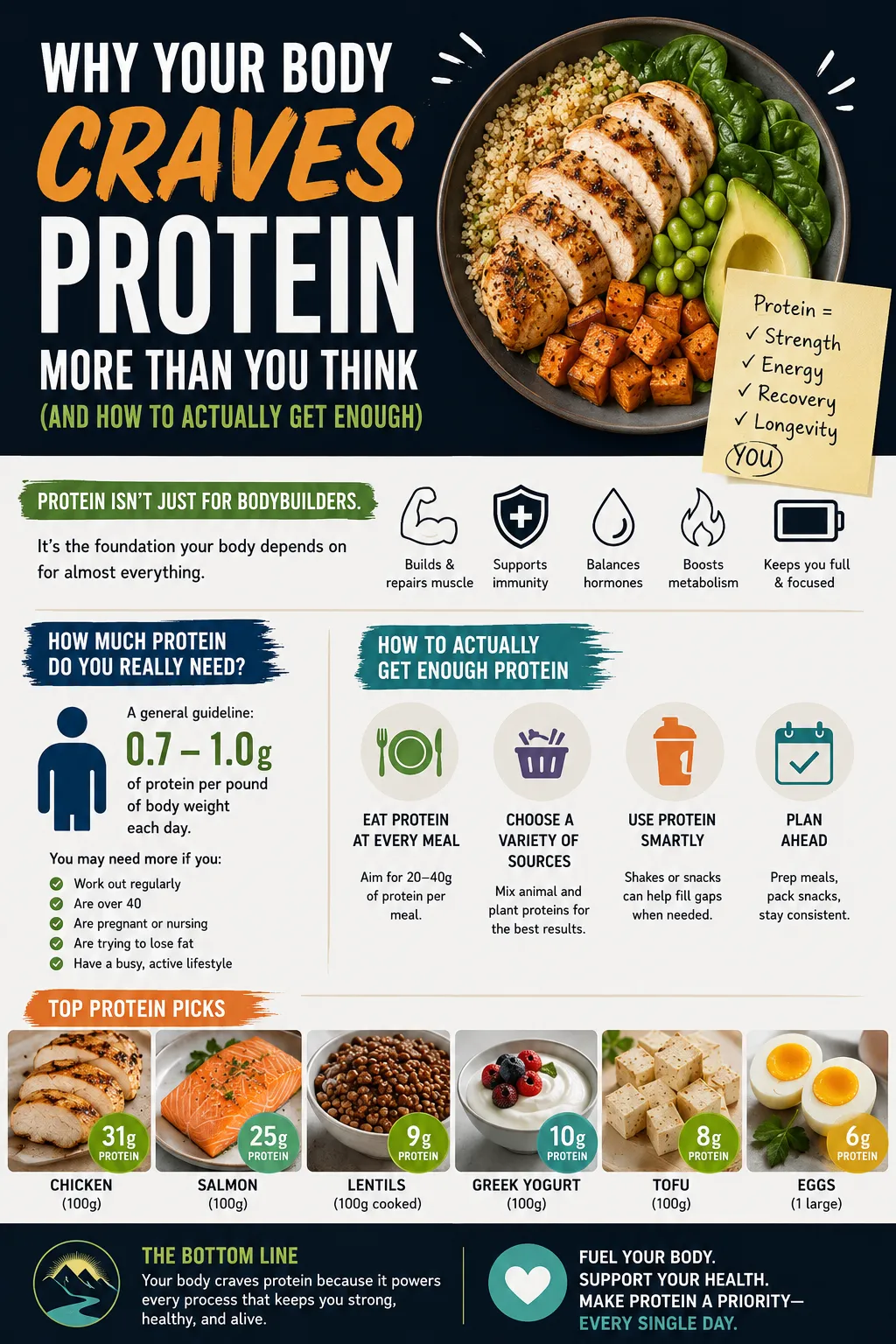
Most of us hear “protein” and instantly picture someone at the gym with a shaker bottle. But honestly, it has way less to do with workouts and way more to do with just feeling normal every day.
Your body is always rebuilding itself. Skin cells turn over, muscles fix themselves after small strains, your immune system makes new cells, and your hormones keep your sleep, mood, and hunger in check. Protein is what makes all that possible.
The catch is, a lot of people run low on it without realizing. That’s usually why they’re tired, hungry an hour after eating, or take forever to bounce back after being sick or working out.
What does protein actually do?
Carbs give you energy, fat keeps you warm and stores nutrients. Protein does the building and repairing. When you eat it, your body breaks it down into amino acids — think of them as tiny repair workers. Nine of these amino acids are essential meaning you have to get them from food. So where your protein comes from matters.
How much do you need?
If you don’t work out much, about 0.8g per kg of body weight is the bare minimum. For a 70 kg person that’s around 56g a day — roughly two chicken breasts.
But that’s just enough to avoid getting sick. If you want to feel good and keep muscle as you get older, bump it up:
Active? Aim for 1.2–1.6g per kg
Over 50? Go a bit higher. Your body doesn’t use protein as well anymore, and eating more helps with strength, balance, and even memory.
Easy protein foods most people skip
Forget just chicken breast. Try these:
Cottage cheese: A cup gives you 25g and digests slowly, so it’s great before bed.
Lentils: One cooked cup has ∼18g plus fiber and iron. Mix with rice and you’ve got a full protein meal.
Greek yogurt: 15–20g per serving, plus calcium and good bacteria for your gut.
Eggs: Two eggs = ∼12g, and the protein quality is about as good as it gets.
Signs you might be low
You’re always hungry, losing more hair than usual, catching colds often, healing slowly, or feeling foggy in the afternoon. Those are classic red flags. Usually, adding some protein to every meal fixes it within a couple weeks.
Quick Q&A
Can I get enough without meat?
Yep. Lentils, chickpeas, tofu, tempeh, eggs, yogurt, cottage cheese, and quinoa all work. Vegetarian and vegan diets can cover it easily.
Do I need protein powder?
Only if it’s convenient. It’s not required. If your meals have enough whole foods, you’re fine.
Will more protein make me gain weight?
Not by itself. Protein actually keeps you fuller longer. Weight gain happens when you eat more calories than you burn, period.
Should I spread it through the day?
Yes. Your body uses protein better when you eat it in smaller amounts across meals instead of all at once.
Does cooking ruin protein?
Nope. Heat changes the shape a bit but doesn’t kill the nutrition.This often makes it easier to absorb information.
How soon will I notice a change?
Energy and hunger usually improve in 2–3 weeks. If you’re training, recovery and muscle tone show up around a month or so.
Bottom line
Protein isn’t hype. It’s just what your body uses to stay together and function. You don’t need to obsess over numbers or buy fancy powders. Just add real protein foods to your meals and keep it consistent.
Start small — toss an extra egg in breakfast, swap biscuits for roasted chickpeas, pick Greek yogurt instead of dessert yogurt. Do that daily and you’ll feel the difference.
Want me to cut this down to a 150-word version you can post on Instagram or WhatsApp status?













Responses (0)
Sign in to share your thoughts.
Sign in