
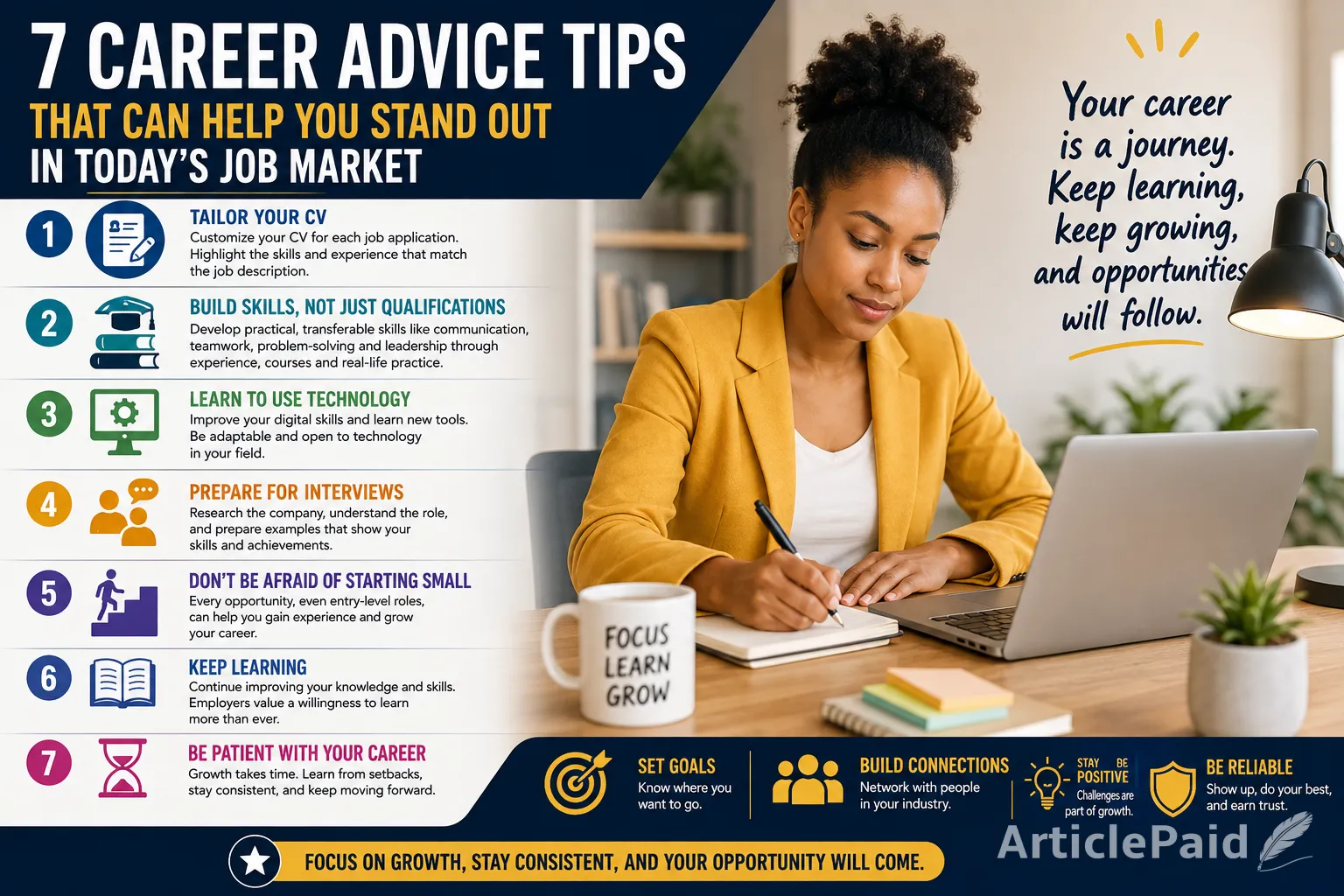
Finding a job can feel frustrating, especially when many people are applying for the same positions. However, getting noticed by an employer is not only about having qualifications. Your skills, attitude, preparation, and ability to show what you can contribute can make a significant difference.
Recent career guidance highlights the growing importance of communication, adaptability, problem-solving, teamwork, digital skills, and a willingness to keep learning.
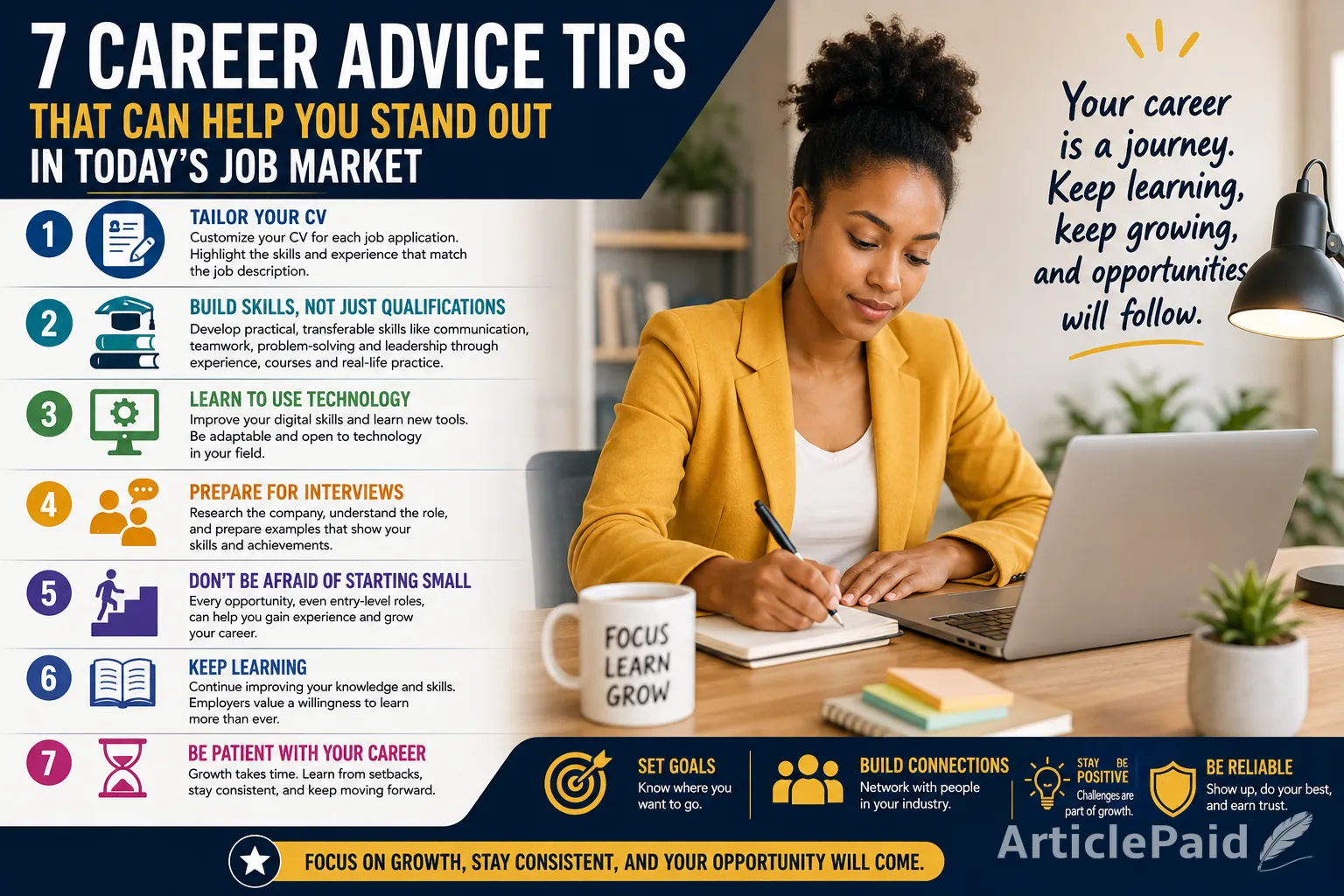
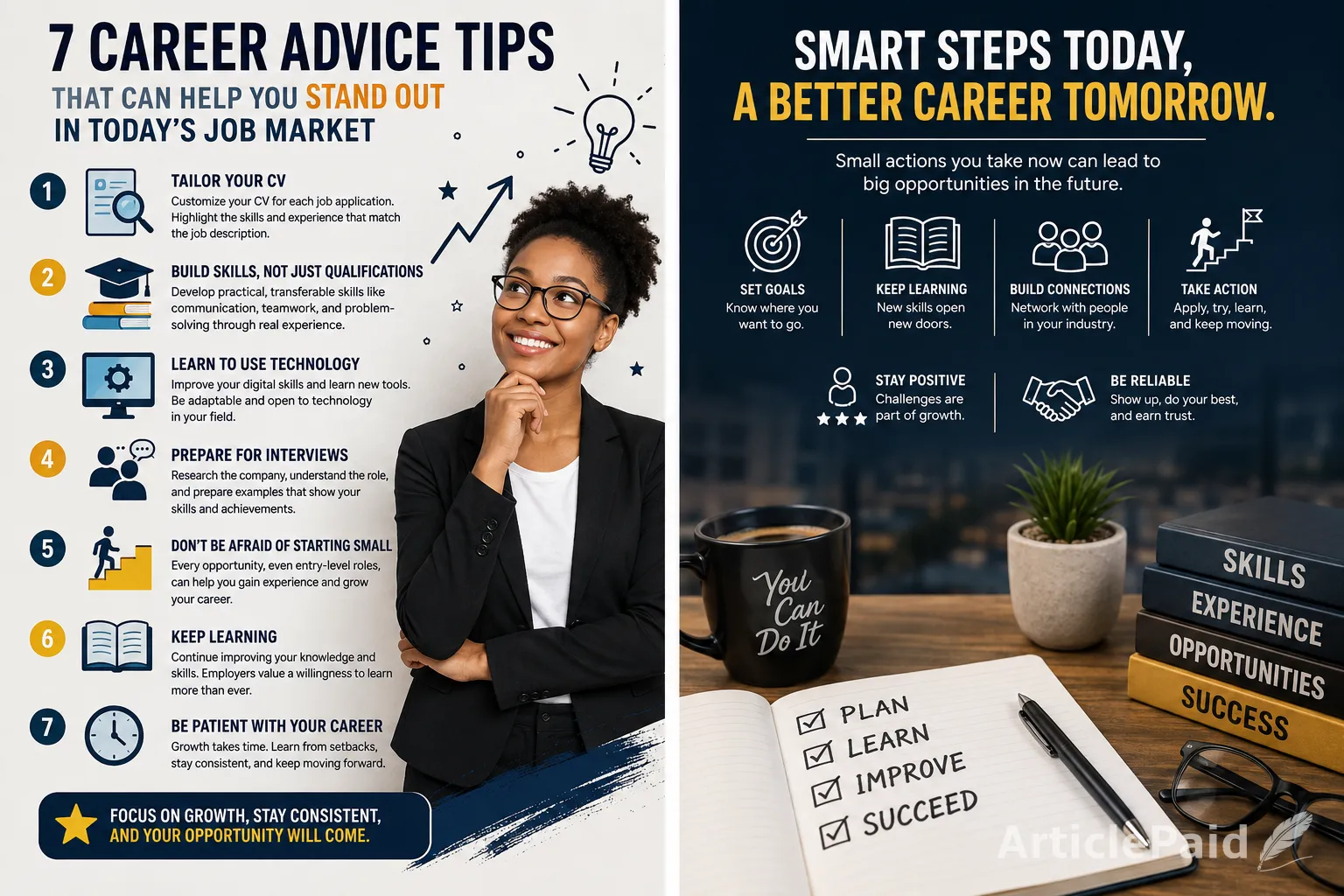
Here are seven practical career tips that can help you become a stronger candidate.
1. Stop Sending the Same CV Everywhere
One common mistake is using exactly the same CV for every application.
Instead, read the job description carefully and identify the skills and experience the employer is asking for. Then adjust your CV so that your most relevant abilities are easy to find.
For example, if a position requires customer service, communication, and computer skills, make sure your CV clearly demonstrates those abilities.
A targeted application can be more effective than sending dozens of identical applications.
2. Build Skills, Not Just Qualifications
A qualification can open a door, but practical skills can help you perform once you enter the workplace.
Employers commonly value transferable skills such as communication, teamwork, problem-solving, organisation, adaptability, and leadership.
Look for opportunities to develop these skills through volunteering, short courses, personal projects, school or college activities, and practical experience.
You don't have to wait until you have a full-time job to start building experience.
3. Learn to Use Technology
Technology continues to change the workplace, making digital literacy increasingly important.
Depending on your career interests, useful skills may include spreadsheets, online collaboration tools, presentation software, data analysis, or responsible use of AI tools.
The goal isn't to become an expert in every technology. Instead, develop the ability to learn new tools quickly and use them effectively.
4. Prepare Properly for Interviews
Getting an interview is an opportunity, but preparation matters.
Before the interview, research the organisation and understand the position you're applying for. Think about examples from your experience that demonstrate your communication, teamwork, problem-solving, and ability to handle challenges.
Instead of simply saying, "I am a hard worker," explain a situation where your effort produced a positive result.
Specific examples can make your answers more convincing.
5. Don't Be Afraid of Starting Small
Your first job does not have to be your dream job.
An entry-level position, internship, temporary opportunity, volunteer experience, or part-time role can help you develop workplace skills and learn what type of career suits you.
Every experience can teach you something valuable if you approach it with a willingness to learn.
6. Keep Learning
The workplace doesn't stay the same forever. New technologies, processes, and expectations continue to emerge.
Hays' 2026 career research found that many employers place strong value on willingness to learn, with 74% saying it is more important than an applicant's existing skill set.
This means you should not think of learning as something that ends when you finish school or college.
Keep improving your knowledge through courses, reading, practice, and real-world experience.
7. Be Patient With Your Career
Career development rarely happens overnight.
You may receive rejection emails. You may apply for positions without getting interviews. You may even discover that your first career choice isn't right for you.
These experiences don't automatically mean you're failing.
Use rejection as an opportunity to improve your CV, interview technique, skills, or job-search strategy.
Final Thoughts
Building a successful career is not simply about finding a job as quickly as possible. It is about developing skills, gaining experience, learning from setbacks, and becoming someone who can create value in the workplace.
Focus on what you can control: improve your skills, prepare properly, communicate clearly, keep learning, and apply for opportunities that match your strengths.
Your career may not develop exactly according to your original plan—and that's okay. Sometimes the opportunity that helps you move forward is the one you didn't expect.
**The most important career investment you can make is investing in your ability to learn and adapt.**


















Responses (0)
Sign in to share your thoughts.
Sign in