
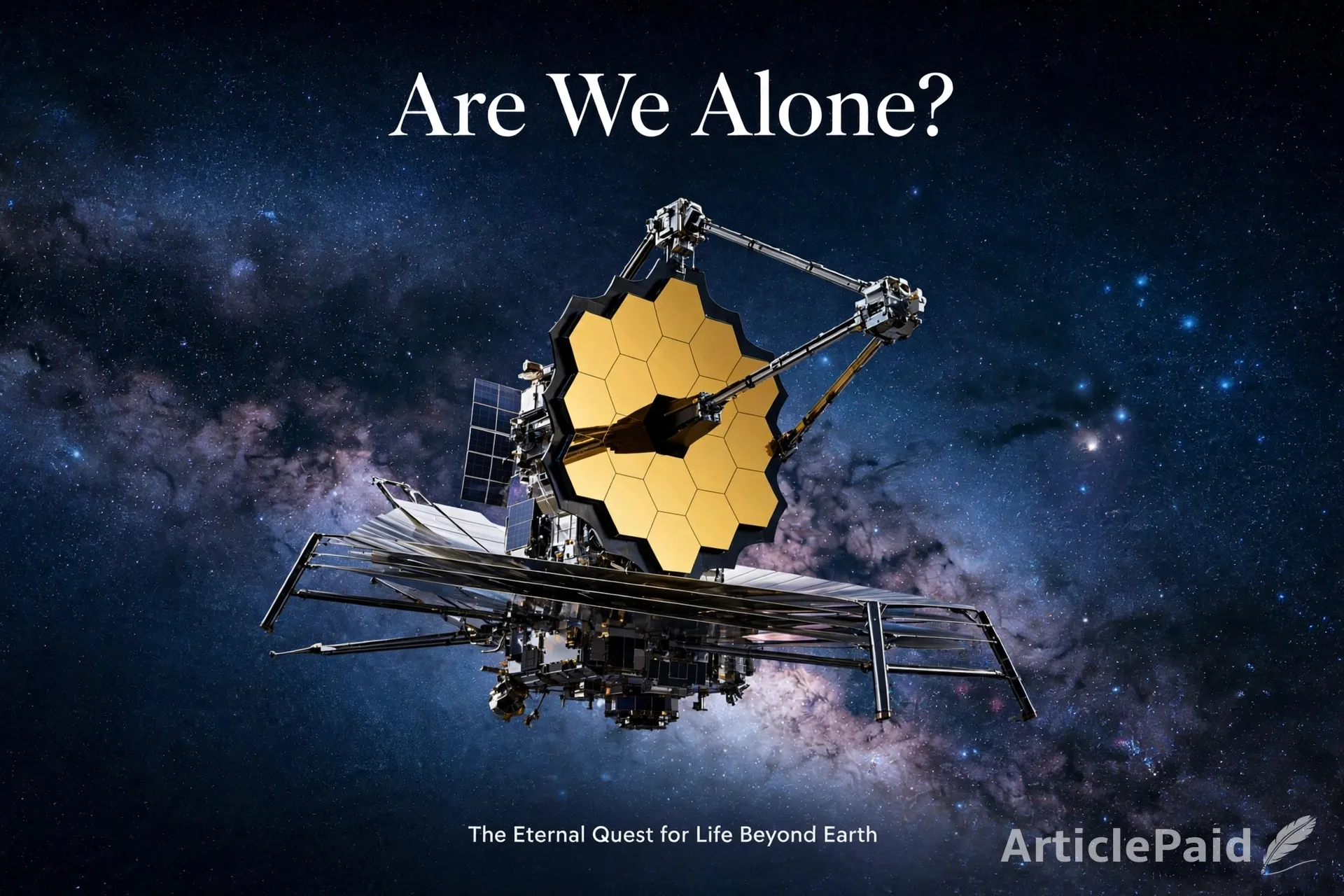
Are We Alone? The Eternal Quest for Life Beyond Earth
When you look up at the night sky and gaze into the vast ocean of twinkling stars, a natural, bone-chilling thought almost always creeps in: Is anyone out there looking back at us?
This question is as old as humanity itself. When our ancestors first sat around campfires staring at the dark canopy above, they too must have wondered if the cosmos held other conscious minds.
Today, armed with cutting-edge space observatories like the James Webb Space Telescope and deep-space probes, modern science is actively hunting for an answer. So, what does science actually say about the possibility of extraterrestrial life?
1. The Mind-Boggling Scale of the Cosmos
To understand why scientists believe alien life exists, you have to appreciate the sheer size of the universe.
Our home galaxy, the Milky Way, contains an estimated 100 to 400 billion stars. And the Milky Way is just one of an estimated two trillion galaxies in the observable universe. The famous astronomer Carl Sagan once famously remarked:
"If it’s just us, it seems like an awful waste of space."
Mathematically speaking, the odds of Earth being the only planet with life are astronomically low.
Astronomers have identified thousands of exoplanets sitting comfortably in their star’s "Goldilocks Zone"—the region where temperatures are just right for liquid water to pool on the surface.
2. Clues in Our Own Cosmic Backyard
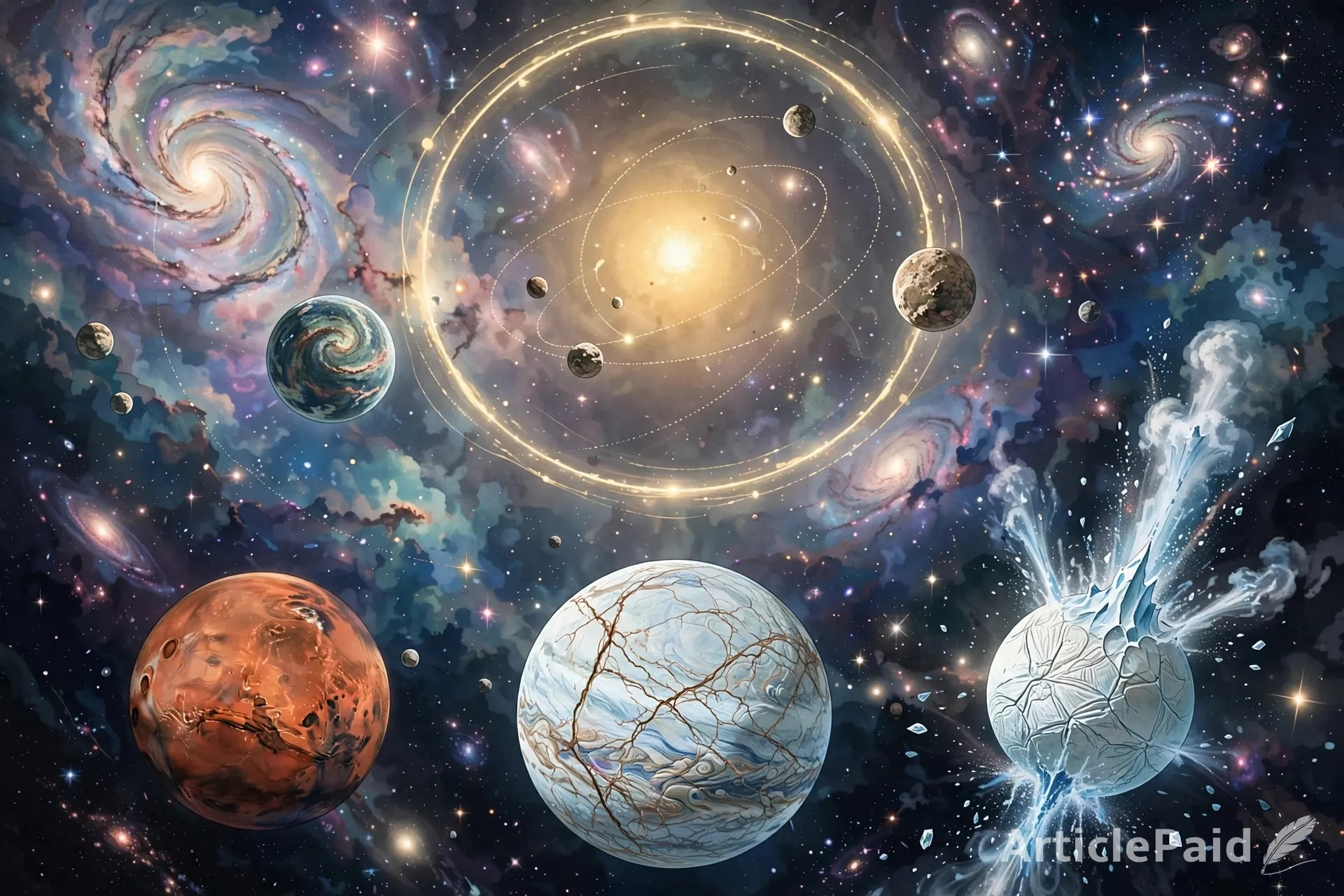
We don't even need to look light-years away to find promising environments. Our own Solar System holds tantalizing clues:
- Mars: Billions of years ago, the Red Planet was warm and wet, flowing with rivers and lakes. Ancient microbial life might well be frozen beneath its rusty soil.
- Europa & Enceladus: These icy moons of Jupiter and Saturn harbor deep, sub-surface liquid oceans heated by hydrothermal vents on their ocean floors. On Earth, similar underwater ecosystems thrive completely isolated from sunlight.
3. The Fermi Paradox: If Aliens Exist, Where Is Everybody?
This brings us to one of the greatest mysteries in modern science: The Fermi Paradox.
In 1950, physicist Enrico Fermi simply asked: "Where is everybody?" If the universe is brimming with ancient civilizations, why haven't we picked up their radio signals or found evidence of their visitations?
Scientists offer several fascinating theories:
- The Cosmic Zoo Hypothesis: Advanced alien civilizations know we exist, but observe us from a distance—much like humans watch animals in a nature reserve—without interfering.
- The Vasts of Time and Space: Radio signals take thousands of years to cross interstellar space. A alien civilization might have broadcast a signal that passed Earth centuries before we had radio towers, or will send one thousands of years from now.
The Verdict
Whether we discover a simple single-celled organism on a distant moon or pick up an intelligent signal from a faraway star system, the outcome will reshape our place in the universe forever.
If we find life, we realize we are part of a vast, cosmic community. If we truly are alone, then our fragile blue dot is impossibly precious—and it is up to us to protect the spark of consciousness.
What do you think? Are we truly alone in the dark, or is someone out there waiting to be found?























Responses (0)
Sign in to share your thoughts.
Sign in