Beyond Chatbots: How AI Agents Are Quietly Taking Over Work in 2026
Remember the first time you typed a prompt into an AI chatbot and watched the words appear on your screen like magic? Fo


Remember the first time you typed a prompt into an AI chatbot and watched the
words appear on your screen like magic? For the last couple of years, that was pretty much the whole game.
Everyone was obsessed with finding the "perfect prompt," saving cheat sheets, and acting like a digital whisperer just to get a decent email written or a quick summary pulled together.
Well, if you look at how people are actually getting work done right now in late 2026, that era is already fading into the background.
We’ve quietly moved past the age of chatting with AI.
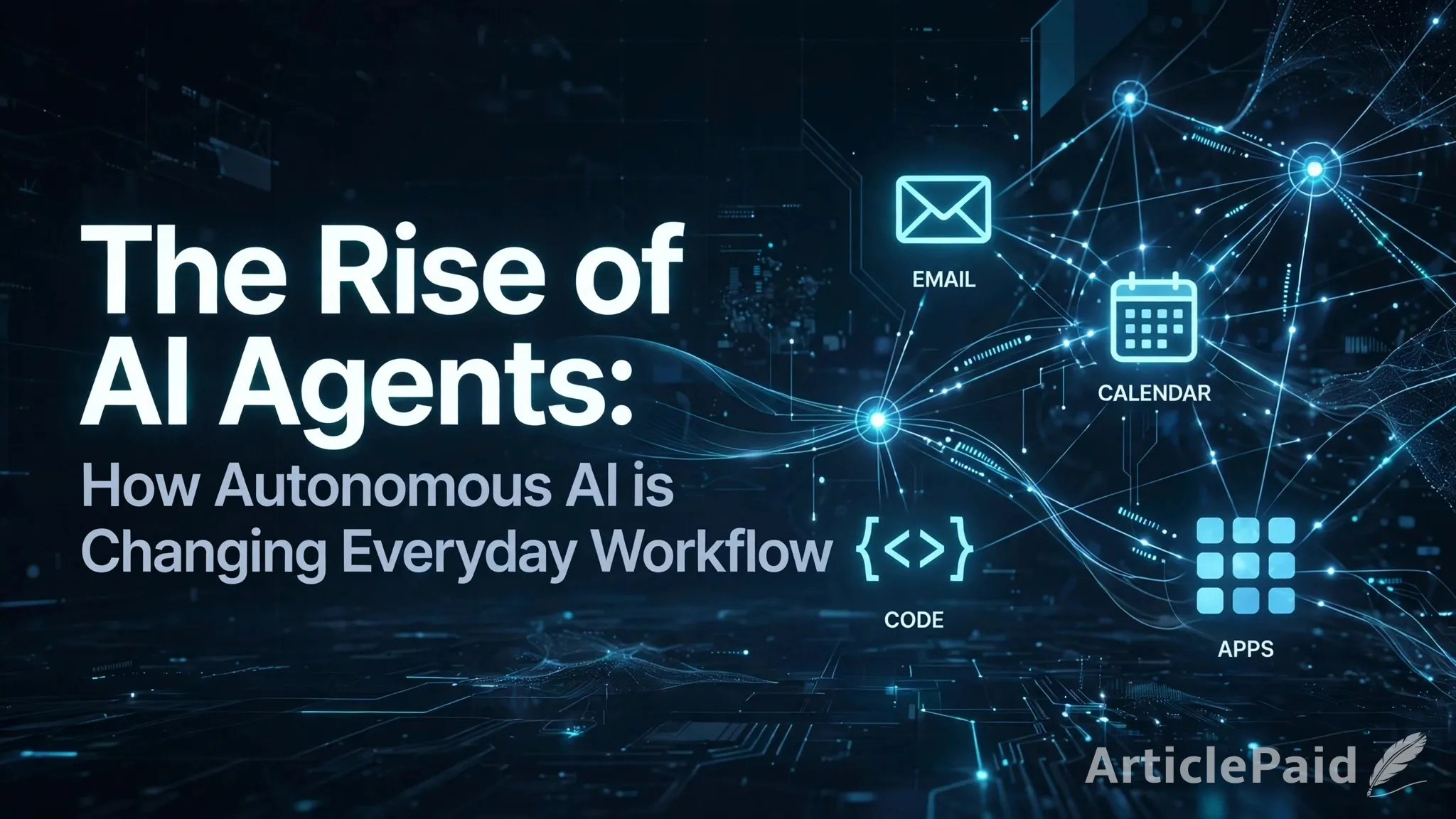
Today, the real shift is all about autonomous AI agents—and honestly, if you haven’t paid much attention to them yet, they are probably already changing your industry behind the scenes.
Wait—What’s the Actual Difference?

Think of a regular chatbot like a really smart intern sitting at a desk across from you. You still have to tell them every single step.
"Hey, look up these ten companies. Okay, great. Now write a quick intro for each. Cool, now put them into a spreadsheet." You’re doing all the heavy lifting, just a little faster.
An AI agent is a completely different beast. You don't micromanage an agent; you give it a goal and walk away to grab a cup of coffee.
Instead of babysitting a chat window, you tell an agent, "Find twenty potential clients in the skincare space, read their recent posts to see what they're struggling with, draft a friendly pitch for each, and leave them in my drafts folder by 4 PM." And it just... goes and does it.
It opens browser tabs, reads pages, figures out when it hits a dead end, tries another route, and hands you the finished pile of work.
Where This Is Happening Right Now

This isn't some far-off sci-fi movie stuff anymore. It’s happening quietly in everyday workspaces as we speak.
Freelancers who used to spend half their week hunting for gigs and sending proposals now have background agents scanning job boards, matching their portfolios, and prepping pitches while they sleep.
Small online store owners have agents handling customer refunds, tracking delayed packages, and updating inventory without a human ever touching a keyboard.
Even in regular office jobs, that soul-crushing routine of copying numbers from emails into spreadsheets, scheduling messy team calls, and chasing unpaid invoices is being handed off to digital workers that never get tired or lose focus.
The Weirdly Human Shift

At first, watching a piece of software click around and make decisions on its own feels a little strange.
Most of us spent years learning how to be faster at repetitive tasks—typing quicker, memorizing Excel shortcuts, keeping folders neat. Suddenly, those skills aren't the main event anymore.
When an agent can handle an entire workflow from start to finish, your job changes. You stop being the person doing the busywork, and you become the director.
And honestly? That takes a very different kind of brainpower. You have to know how to spot when the AI makes a subtle, overly confident mistake.
You have to understand what your clients or readers actually feel, because an agent can mimic politeness, but it doesn't truly know what it's like to have a rough day or need a little reassurance.
The human touch—taste, empathy, gut instinct—suddenly becomes the most valuable thing in the room because everything else is automated.
How to Keep Up Without Burning Out
You don't need to become a coder overnight to keep up with this. Just start small. Look at your daily routine and find the one repetitive task that makes you sigh every time it pops up on your to-do list.
Maybe it's sorting through messy research, organizing weekly content ideas, or answering the same five customer questions over and over.
Instead of asking a chatbot to help you write one tiny piece of it, look into agentic tools that can connect to your apps and handle the whole loop.
Stop treating AI like a search engine you have to poke every five minutes. Give it a clear goal, set some smart boundaries, and let it run. I'mThe people thriving right now aren't the ones with the cleverest prompts—they're the ones who figured out how to step back and let the machines run the errands.














Responses (0)