Is Slow Walking Really as Good as Brisk Walking? A Reader Asked, So I Checked It
Sometimes a single comment sends you down a rabbit hole. That's what happened here. A reader named dylanrowe asked under

In this article 14 sections
- First, the Quick Version
- What Two Big Studies Showed
- What's Going On in Your Body
- A Fair Warning About the Numbers
- No Time for Long Walks? Pace Still Counts
- The Talk Test: Are You Going Fast Enough?
- Finding Speed Hard? Here's the Easy Way In
- Got a Health Condition? Check With Your Doctor First
- FAQs
- Is slow walking still exercise?
- What counts as brisk?
- Do 15 fast minutes a day do the job?
- Wrapping Up
- Where this comes from:
Sometimes a single comment sends you down a rabbit hole. That's what happened here. A reader named dylanrowe asked under my walking article, "Does slow walking offer the same health benefits as brisk walking?"
Article writing guides
I didn't want to answer from a hunch. So I dug into the studies.
First, the Quick Version
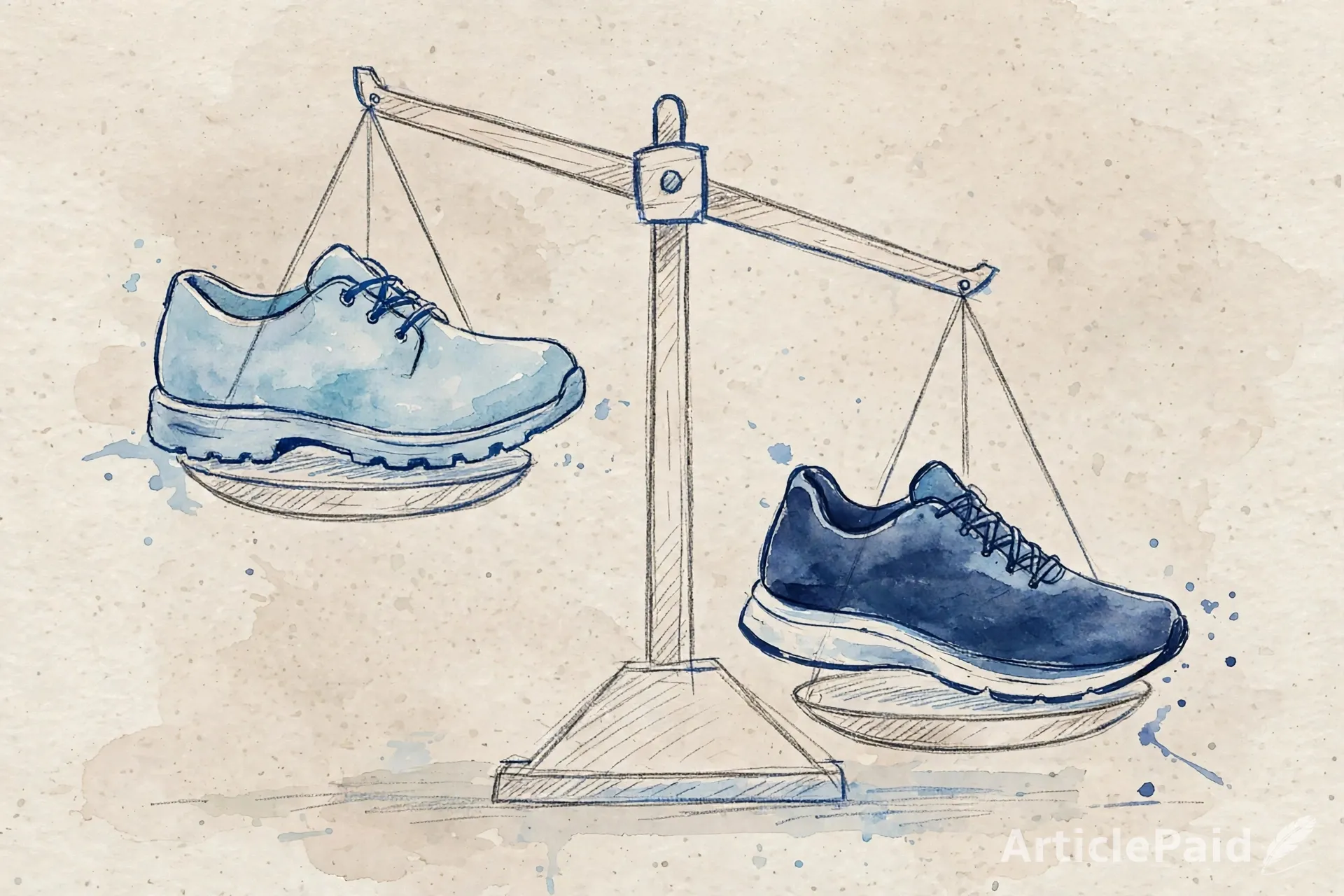
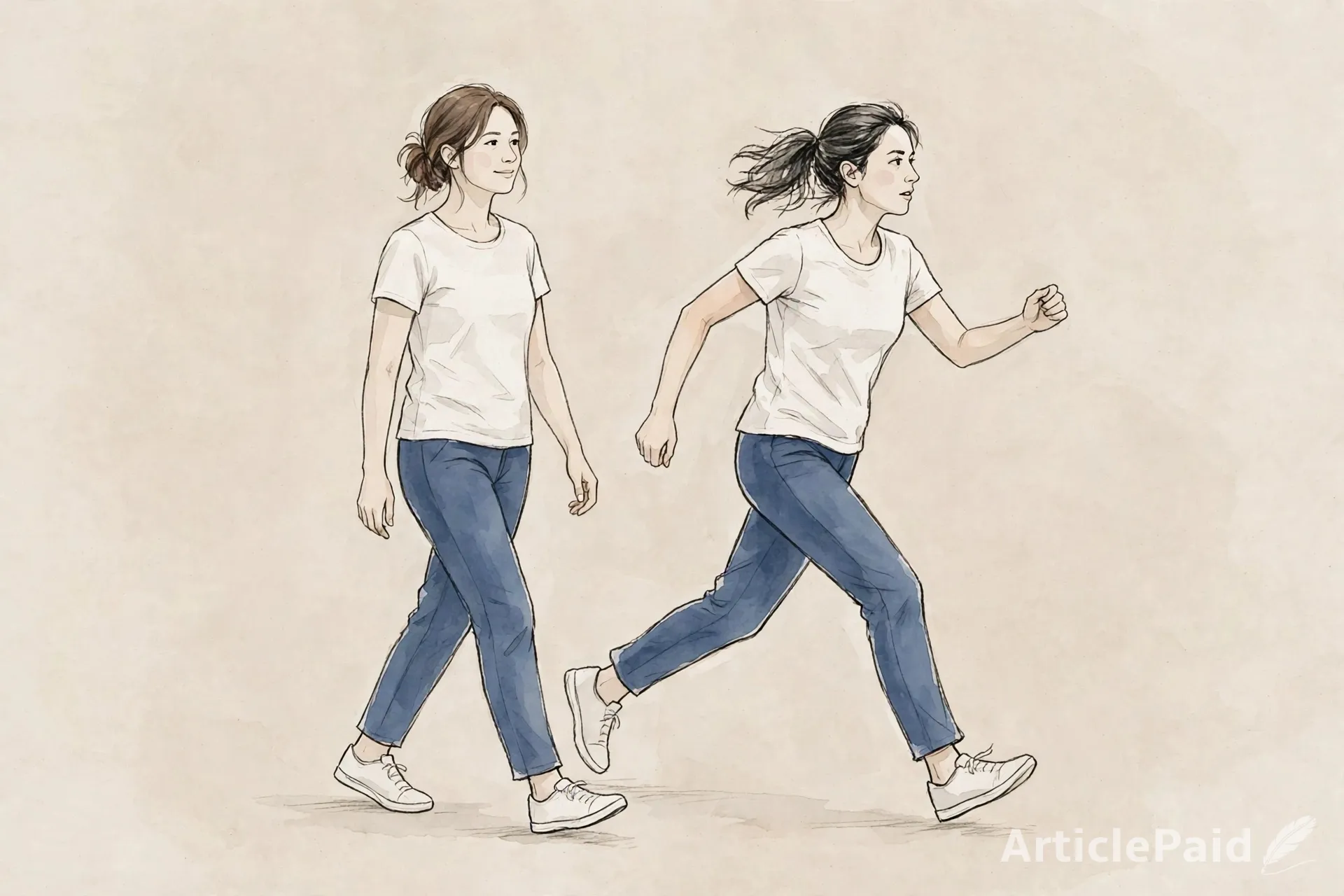
Slow walking is good. Brisk walking is better. Either one beats staying seated.
Here's how the research backs that up.
What Two Big Studies Showed
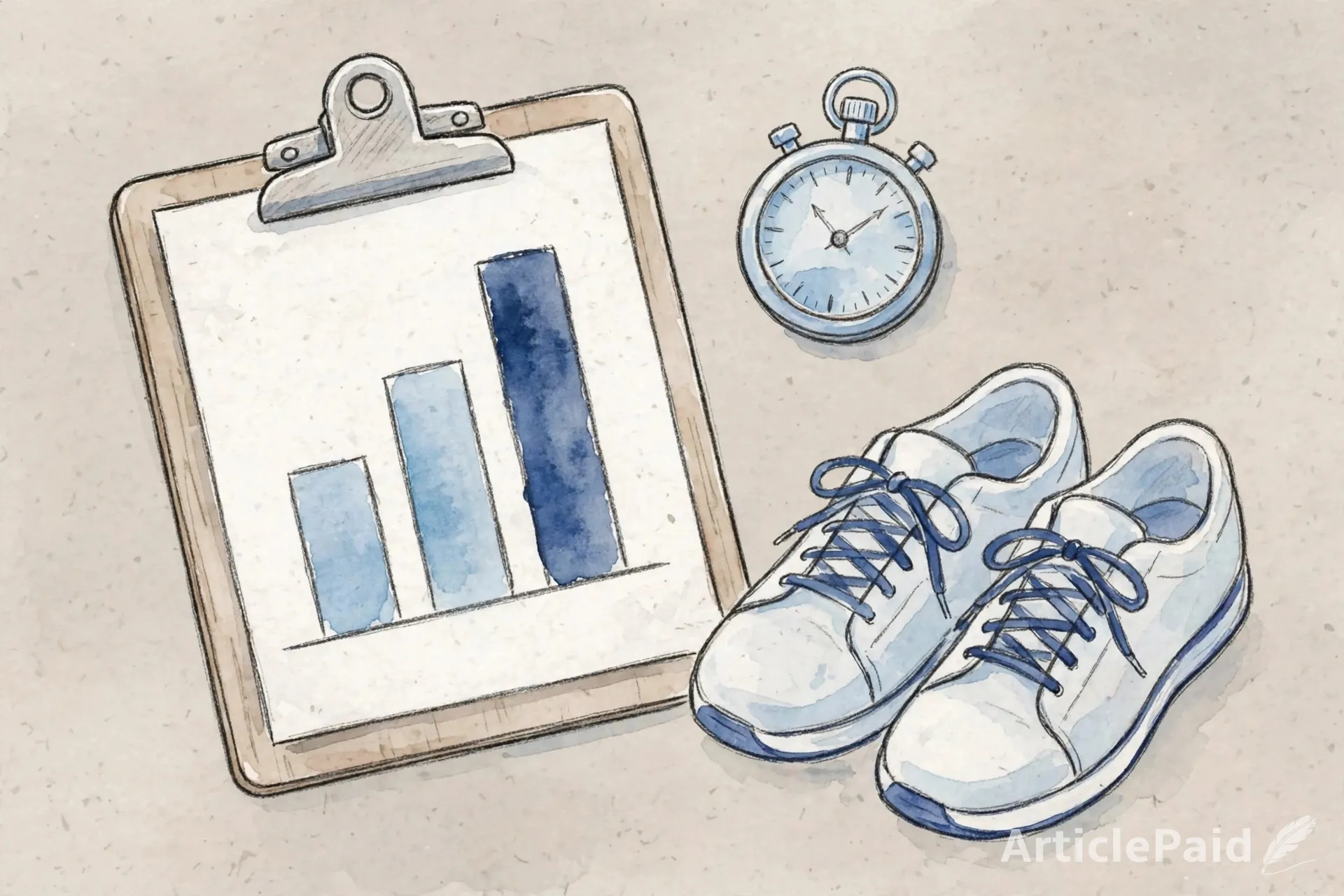
The first one appeared in the American Journal of Preventive Medicine. It tracked nearly 80,000 adults between 40 and 79 for over 16 years. Fast walkers who managed just 15 minutes daily had close to a 20 percent lower risk of death from any cause. Slow walkers only saw a smaller drop, and that was after more than three hours a day.
Read that twice. A quarter of an hour at speed against three hours of slow walking.
The second study came from the University of Sydney. It compared people by how fast they said they usually walk. Average-pace walkers had a 20 percent lower risk of early death. Brisk walkers? 24 percent lower.
What's Going On in Your Body
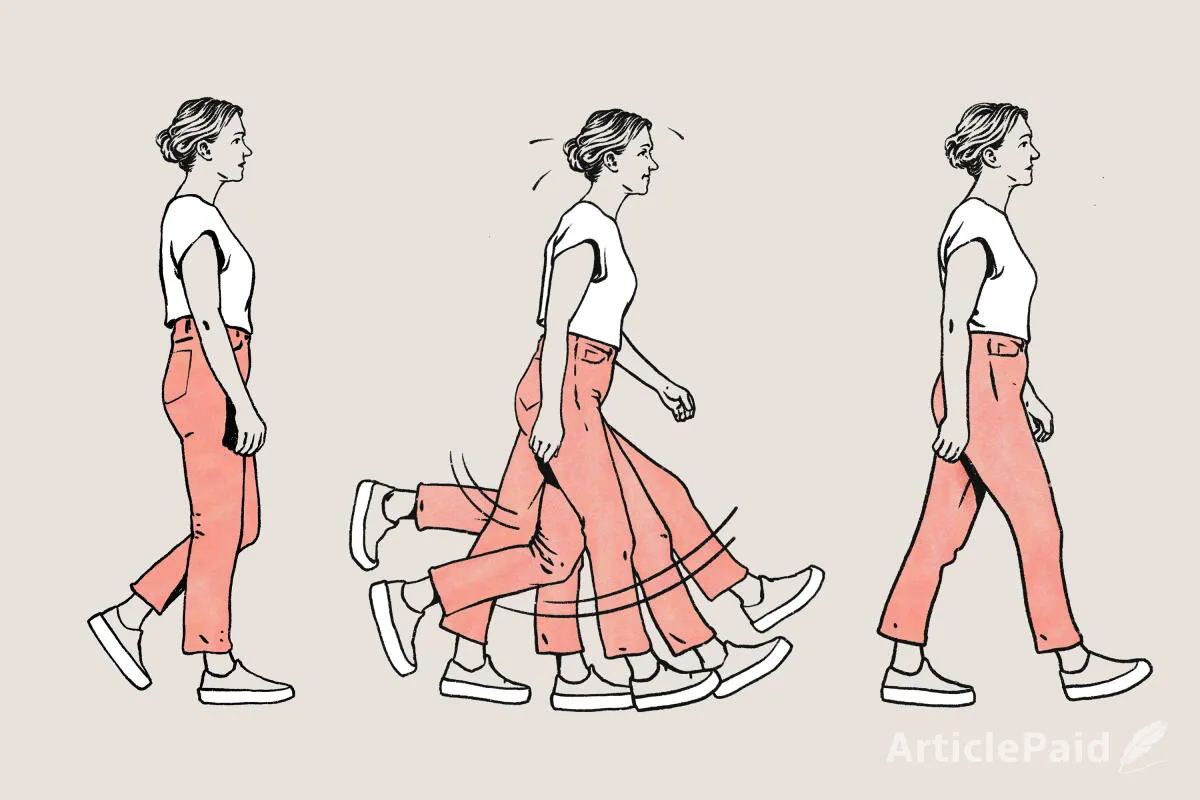
When you pick up speed, your heart works harder and your breaths get deeper. Researchers liken it to a mild aerobic workout. That kind of effort may help your heart do its job more efficiently.
Strolling is pleasant. It just doesn't push your heart much.
A Fair Warning About the Numbers
These findings are mostly observational. They point to a connection, but they can't prove walking speed alone made the difference. And since people judged their own pace, "fast" isn't the same for a 25-year-old and a 65-year-old.
Use the numbers as a compass, not a promise.
No Time for Long Walks? Pace Still Counts
A 2026 study in the British Journal of Sports Medicine looked at about 70,000 adults. Among those taking under 5,000 steps a day, a quicker stepping pace went along with a lower risk of early death.
People who took 7,500 to 10,000 steps a day had the lowest risk overall, whatever their speed. So if your day is short on steps, a faster pace can still help.
The Talk Test: Are You Going Fast Enough?
Forget gadgets. Ask yourself:
- Can I talk, but not sing?
- Am I breathing deeper than usual?
- Is my heart beating a bit faster?
If you said yes to all three, you're likely in the right zone. Roughly 100 steps a minute is usually counted as moderate effort.
Finding Speed Hard? Here's the Easy Way In
Nobody starts at full speed, and that's fine.
- Warm up for a few relaxed minutes.
- Walk quickly for a minute or two, then ease off.
- Stretch the fast part a little more each week.
- Pick flat paths until you feel steady.
Got a Health Condition? Check With Your Doctor First
Heart problems, diabetes, sore joints, or any long-term illness? Ask your doctor before you speed up your walks. What's safe for someone else might not be safe for you.
FAQs
Is slow walking still exercise?
Yes, it's better than sitting. In the same amount of time, though, a faster pace gives more.
What counts as brisk?
For most healthy adults, you're breathing harder but can still hold a conversation. It feels different from person to person.
Do 15 fast minutes a day do the job?
The study linked it with a lower risk of death. Health guidelines still recommend at least 150 minutes of moderate activity a week, though.
Wrapping Up
So, dylanrowe, here's my honest answer. Slow walking is still worth your time, but a brisk pace gives you more. If you can, mix some faster minutes into your usual walk.
Thanks for asking. One good question can turn into a whole article.
Article writing guides
Do you walk slowly or briskly? Tell me in the comments.
This article is meant to inform, not to replace advice from your doctor.
Where this comes from:
- American Journal of Preventive Medicine (2025): Liu and colleagues, "Daily walking and mortality in racially and socioeconomically diverse US adults."
- The Conversation: University of Sydney professor Emmanuel Stamatakis writing about walking pace and long-term health.
- British Journal of Sports Medicine (2026): a study on daily steps and stepping pace, reported by ABC News.










Responses (0)