
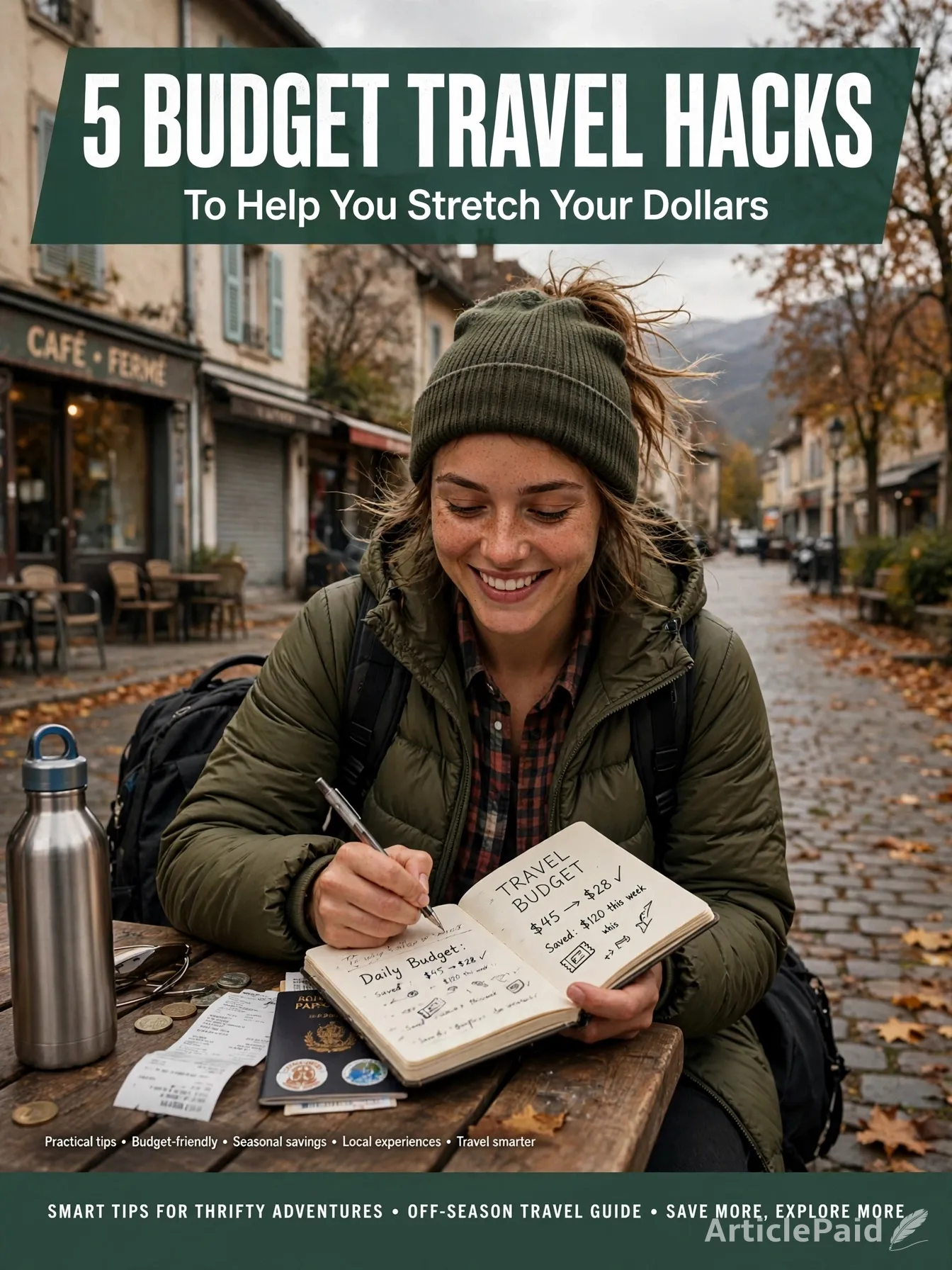
Everybody want to travel. Not everyone believes they can afford it. However, the reality is that travelling on a tight budget doesn't mean staying in subpar hostels or going without food. It's about prudent money management so you may achieve more, go farther, and stay longer. Millions of low-income individuals travel the world each year and return with the most amazing stories. If you have the right mindset and some practical advice, your dream vacation is closer than you would think.
Budget Travel: What Is It?
Budget travel involves making thoughtful financial selections as opposed to frugal ones. It entails cutting back on unnecessary expenses so you may spend more on activities that are important to you.. A budget traveler might skip a fancy hotel but splurge on a cooking class in Thailand. They might fly economy but stay an extra two weeks because of what they saved. It's not about sacrifice. It's about priorities.
Plan Early, Save Big
The single biggest mistake travelers make is booking last minute and paying full price. Early planners are rewarded by hotels and airlines. Book your flights at least 6 to 8 weeks in advance for domestic travel and 3 to 6 months in advance for international travel if you know where you want to go.
To keep track of costs and receive notifications when rates decrease, use flight comparison services like Google Flights, Skyscanner, or Hopper.Flying on Tuesdays or Wednesdays is almost always cheaper than weekends. Early morning and late-night flights tend to cost less too. A little flexibility with your travel dates can save you hundreds of dollars.
Choose Destinations That Stretch Your Dollar
Your destination matters more than anything else when it comes to budget. Traveling in Southeast Asia, Eastern Europe, Central America, or parts of Africa is significantly cheaper than Western Europe or North America — and often more rewarding.
Countries like Vietnam, Portugal, Mexico, Georgia (the country), and Nepal offer incredible food, culture, and scenery at a fraction of the cost. Think about what your daily spending would look like before committing to a destination. A week in Bali on $50 a day feels luxurious. A week in Paris on $50 a day is survival mode.
Sleep Smart, Not Cheap
Accommodation is usually the second biggest travel expense after flights. You don't have to stay in a dingy room to save money. Here are some smart options:
Hostels have completely changed. Many now offer private rooms, clean facilities, rooftop bars, and social events. They're perfect for solo travelers who want to meet people.
Guesthouses and locally-run hotels in budget-friendly countries often cost $15–$30 per night and are far more charming than big chain hotels.
Vacation rentals through platforms like Airbnb work great for groups or longer stays. Splitting a whole apartment with a friend cuts your cost in half.
House-sitting and work exchanges through platforms like Workaway or Trusted house sitters let you stay for free in exchange for light duties. This is a game-changer for long-term travelers.
Eat Like a Local
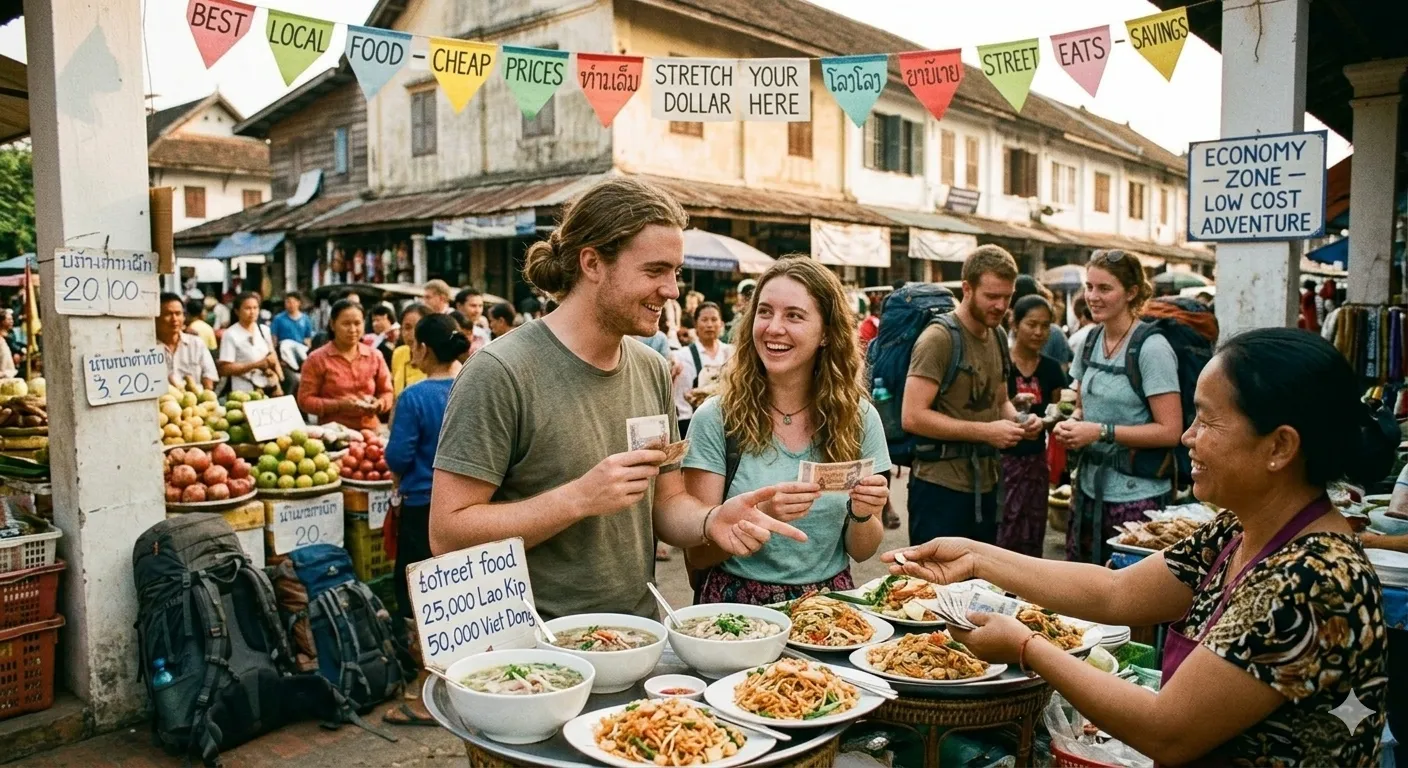
Food is where budget travelers either win or waste money. Eating at tourist restaurants every night is expensive and, honestly, not that great. Local markets, street food stalls, and small family-run restaurants give you the real taste of a place — and they cost a fraction of the price.
In most countries, a filling, delicious meal at a local spot costs between $2 and $6. Learn a few words in the local language, point at what looks good, and eat where the locals eat. It's one of the best parts of travel.
Grocery stores are your friend too, especially for breakfast and snacks. Picking up fruit, bread, and yogurt in the morning instead of sitting down for a café breakfast saves money every single day.
Get Around for Less
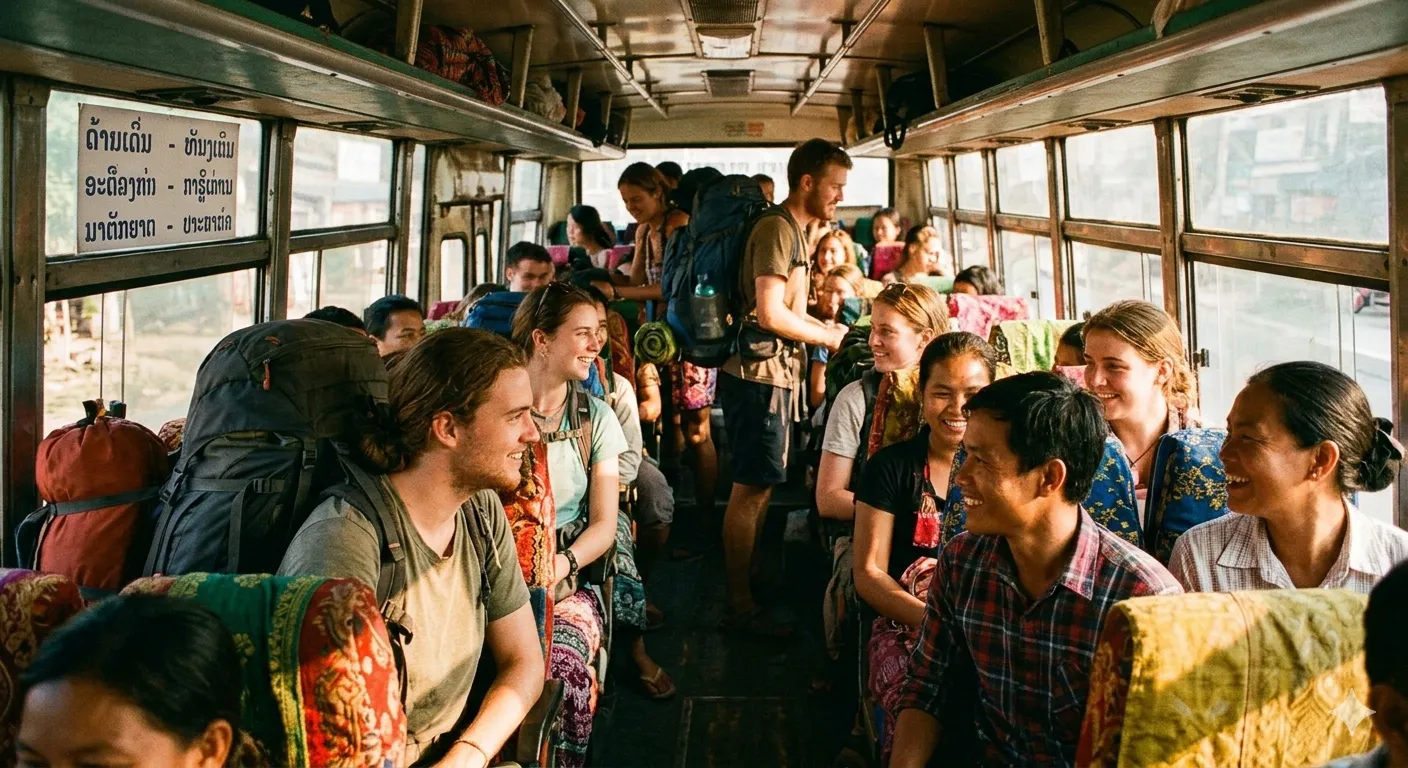
Transportation costs add up fast if you're not paying attention. Look at local choices before hiring a car or using cabs everywhere.Buses, trains, tuk-tuks, and ferries are often far cheaper and way more interesting.
In cities, walk when you can. It's free, you discover things you'd never find otherwise, and it keeps you healthy. For longer distances, overnight buses or trains save you both travel time and a night's accommodation.
Ride-sharing apps like Bolt and in Drive work in many countries and are cheaper than traditional taxis. Always agree on a price or confirm the meter before getting in.
Take Your Time to Save Money

It may seem paradoxical, but the faster you travel, the more money you spend.Every time you switch cities, you pay for transportation, often a first-night meal out, and the chaos of figuring out a new place. Staying somewhere for a week instead of two days means you negotiate better accommodation rates, find your cheap local spots, and actually relax.
Slow travel saves money and makes trips more meaningful. You stop rushing and start living.
Use Cards That Don't Charge Foreign Fees
Many bank cards charge 2–3% on every foreign transaction. Over a month of travel, that adds up. Look into travel-friendly cards that offer no foreign transaction fees and reimburse ATM charges. For foreign visitors seeking reasonable exchange rates free of additional costs, Wise (previously TransferWise) is a well-liked option.
In order to reduce ATM costs, always take out greater amounts of cash, and avoid exchanging money at airports because the rates are nearly always appalling.
In conclusion
Travelling on a tight budget is not a lesser form of travel. It's a richer one in many respects.When you travel smart, you stay longer, meet more people, and experience places the way locals actually live them. You don't need a fat savings account or two weeks of paid vacation to see the world. You need a plan, a little flexibility, and the willingness to step outside your comfort zone.
Start small if you have to. A weekend trip to a nearby city. A budget flight to somewhere new. Every journey begins with one decision — and the world is waiting.
Typical Questions
What is the minimal sum of money needed to start budget travel?
If well planned, even $1,000–$1,500 can cover a two-week trip to an affordable location. Central America and Southeast Asia are excellent places to start.
Q: Is budget travel safe?
Use common sense. Choose a safe place, read everything carefully, back up your documents, and be careful.
Google Flights and Skyscanner are great for finding cheap flights.Set a budget and stay flexible with your dates if you want the best deals.
And yeah, you and your family can absolutely do a low-budget vacation. It just takes a bit of planning.
Of course. Family budget vacations are quite feasible thanks to vacation rentals, self-catering choices, and off-season travel.Countries in Southeast Asia and Eastern Europe are especially family-friendly on a budget.
Ready to plan your next trip? Tell us where you want to go in the comments and let's find a solution together so it's possible without breaking the bank!
















Responses (0)
Sign in to share your thoughts.
Sign in