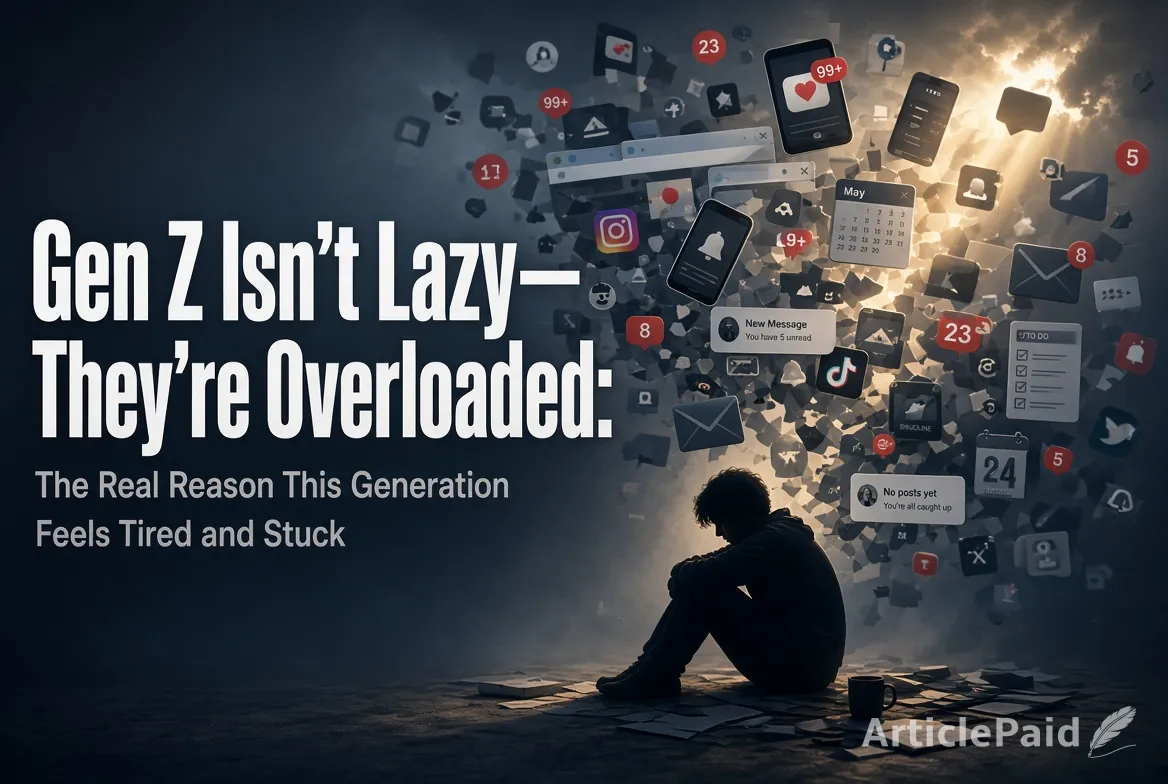
Gen Z Isn’t Lazy—They’re Overloaded: The Real Reason This Generation Feels Tired and Stuck
If you’re a teen who keeps calling yourself “lazy” while your to‑do list grows, here’s the kinder truth: you’re not broken—you’re overloaded. What looks like laziness is often your brain’s way of hitting the brakes when life is running too hot.
Why so many teens feel exhausted
First, the pressure is real. Surveys show about 72% of Gen Z name academic pressure as a major stressor, and school burnout is common; many feel one wrong choice could ruin their future. That kind of “all‑or‑nothing” thinking drains energy before you even start.

Second, your phone isn’t neutral. Infinite scroll, autoplay, and likes create quick dopamine hits that make slow tasks (studying, applying for jobs) feel painfully dull, so starting becomes hard. Over time, the brain gets used to constant novelty, and quiet focus starts to feel like withdrawal.
Third, there’s digital overstimulation. Notifications, comparison culture, and endless news act like “micro‑stressors” that keep your nervous system switched on, leading to mental fatigue even on “rest” days. Add late‑night screens, and sleep quality drops—making mood, focus, and self‑control worse the next day.
Finally, decision fatigue plays a role. Too many options—courses, careers, side hustles, content to consume—drain cognitive energy, so the brain defaults to “do nothing” to conserve resources. In short, you’re not lazy; you’re running too many apps in the background.
Small fixes that actually help
You don’t need a perfect routine. Try tiny changes that lower the load:

- Cut micro‑stressors: Turn off non‑essential notifications; batch messages to 2–3 checks a day.
- Make starting tiny: Use a 2‑minute rule—open the doc, write one sentence, solve one question—to bypass the “start wall.”
- Protect one sleep window: Same bedtime on school nights; phone outside the bedroom or on Do‑Not‑Disturb.
- Single‑task sprints: 20–25 minutes on one task, then a real break (walk, stretch), not another screen.
- Limit big decisions per day: Decide your top 1–2 priorities in the morning; let smaller choices wait.
A better story to tell yourself
When you call yourself lazy, your brain hears “I can’t.” When you say “I’m overloaded,” it hears “I need less noise and one small step.” Pick one fix above, try it for a week, and watch how “stuck” starts to move.























Responses (0)
Sign in to share your thoughts.
Sign in