
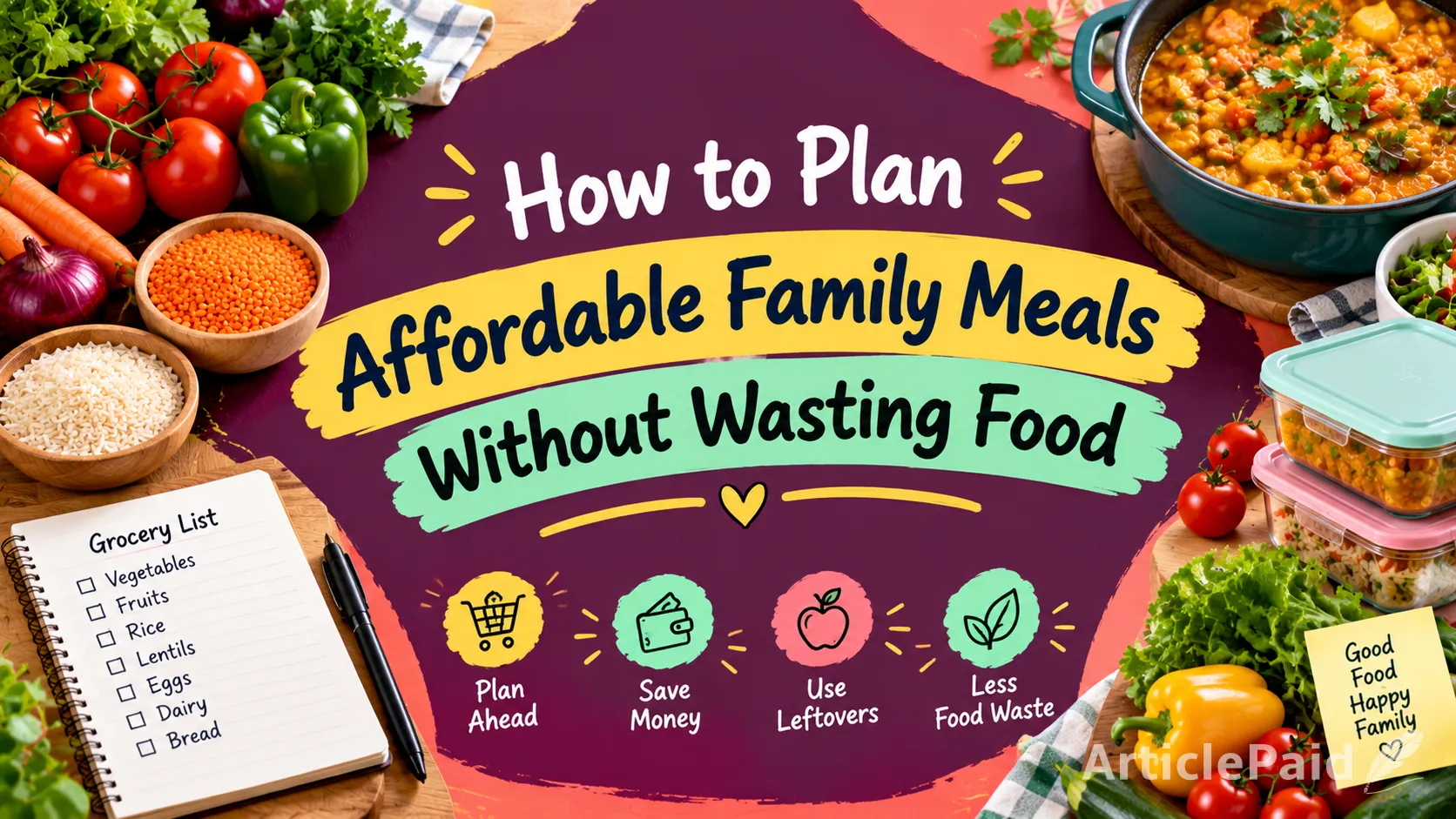
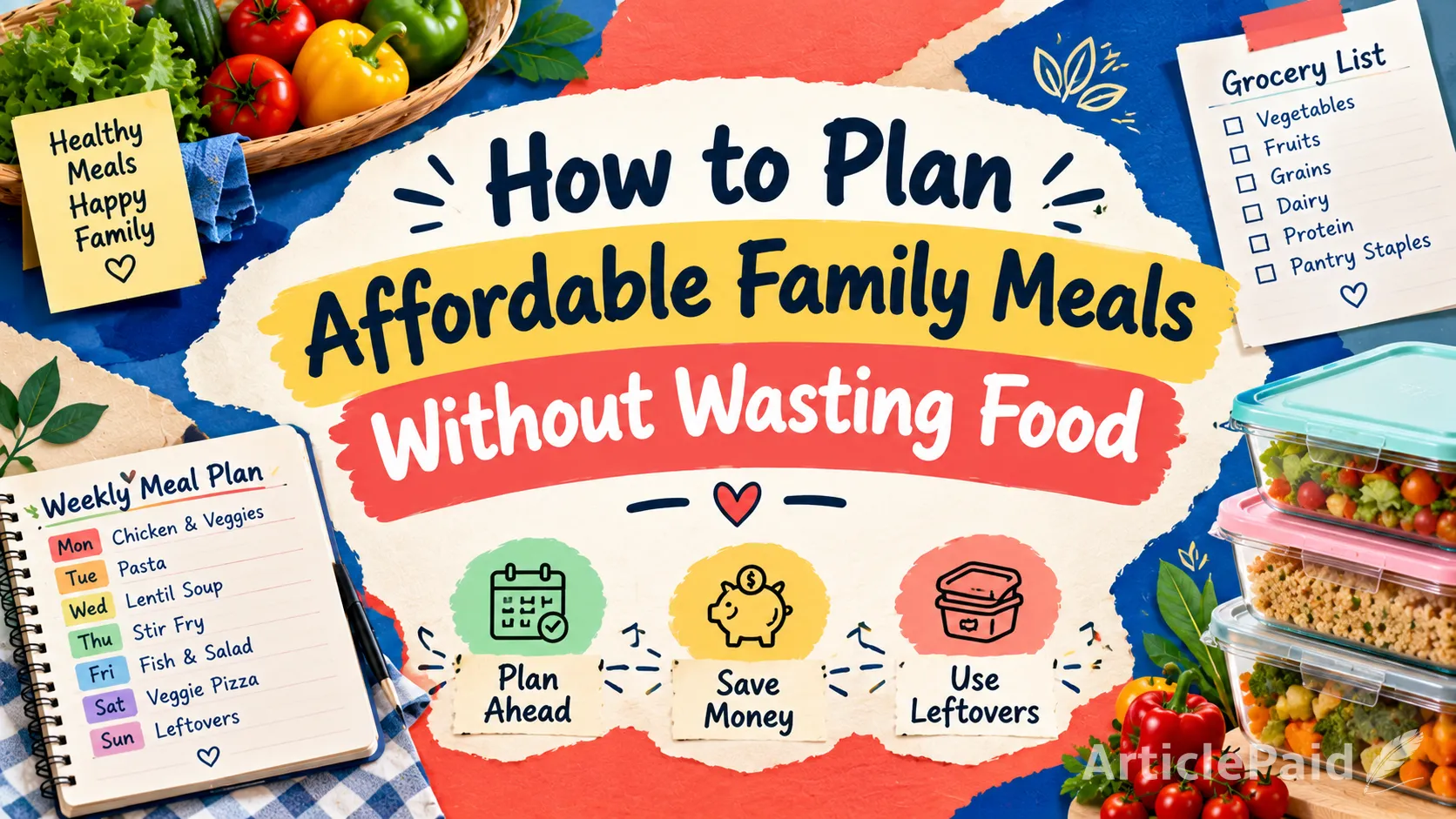
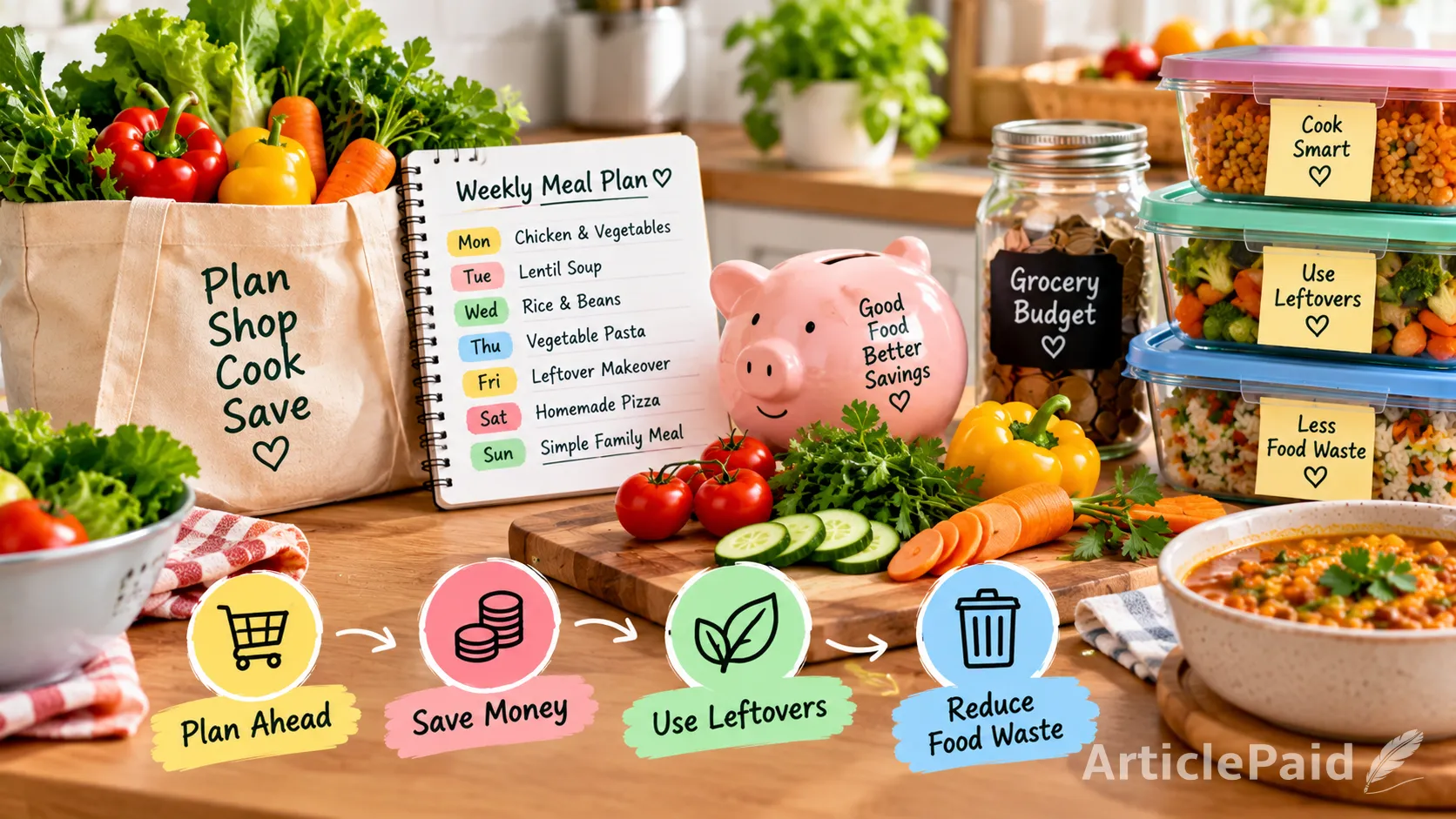
How to Plan Affordable Family Meals Without Wasting Food
Introduction
Feeding a family every day can get expensive, especially when food is bought without a plan and then thrown away. Many families waste a surprising amount of food simply because they buy too much or forget what they alread have.The good news is that a little planning can save both money and stress. In this post, we will look at 7 simple way to plan affordable family means while wasting less food.
1. Check Your Kitchen Before Shopping
Before you go to the store, take a few minutes to look through your fridge, freezer, and cupboards. You may find ingredients you forgot about, or items that need to be used soon. This helps you avoid buying the same things twice. It also gives you a good starting point for planning your meals.
2. Create a Weekly Meal Plan
Decide what you will cook for the week, even if it’s just a rough plan. Choose meals that use similar ingredients so nothing is left unused. Keep a few easy meals on the list for busy days when you have little time. A simple plan takes away the daily stress of deciding what to cook.
3. Make a Grocery List and Set a Budget
Once your meals are planned, write down only the items you actually need. Decide how much you can spend and try to stay within that amount. A list helps you avoid random purchases, especially when you’re hungry or in a hurry. Sticking to it can save you a lot of money over time.
4. Choose Affordable, Seasonal Ingredients
Fruits and vegetables that are in season are usually cheaper and fresher. Basic foods like rice, lentils, beans, eggs, and vegetables can make filling meals without costing much. You don't need expensive ingredient to cook healthy, tasty food. Simple choice often work best for family budgets.
5. Use Leftovers in New Meals
Leftover food doesn’t have to be boring or thrown away. Extra rice can become fried rice, and leftover vegetables or chicken can be added to wraps, soups, or parathas. Plan one meal each week where you use up what’s left. This saves money and cuts down food waste.
6. Store Food Properly to Keep It Fresh
Good storage helps your food last longer. Keep fruits, vegetables, and cooked meals in the right containers and in the right place. Freeze extra portions or ingredients you won’t use soon. Label them if you can, so you know what you have and when to use it.
7. Prepare the Right Amount of Food
Cooking too much often leads to leftovers that nobody wants to eat. Try to cook amounts that match your family’s appetite. If you’re unsure, start with a little less and adjust next time. Over a few weeks, you’ll learn the right portions for your family.
Benefits of Planning Family Meals
Meal planning helps you save money by reducing extra shopping and westige food. It also saves time, since you don't have to decide what to cook every day. Your family may eat healthier or meals because you are cooking at home more often. It also brings less stress during busy weekdays.
Conclusion
Planning affordable family meals doesn't need to be difficult or time consuming. By checking what you have, making a simple plan, and shopping with a list, you can control your spending. Using leftovers and storing food well helps reduce waste even more. Start with one or two of these habits this week, and you'll soon notice the savings.























Responses (0)
Sign in to share your thoughts.
Sign in