
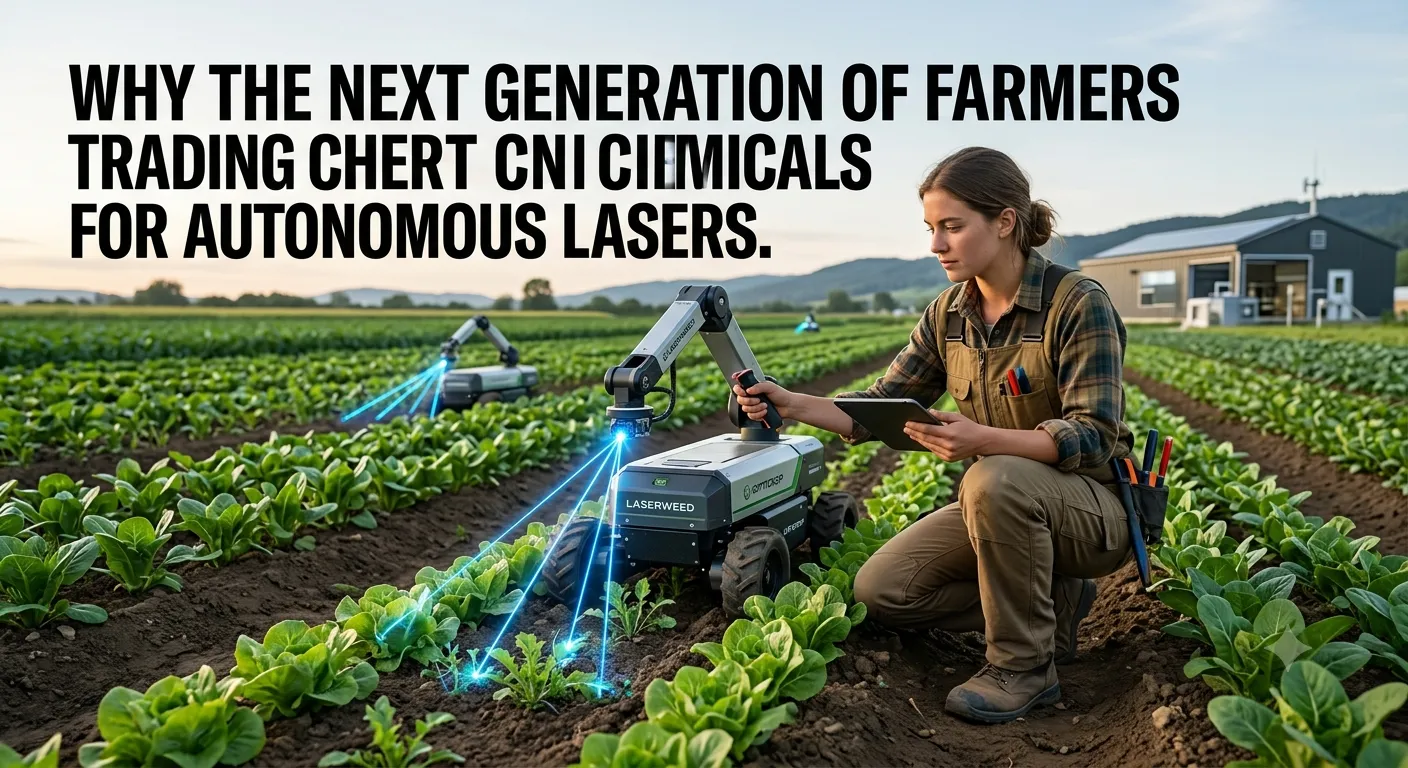
1. The Core Technology: How AI Sees the Field
The entire system relies on an incredibly fast, edge-computed feedback loop. The robot must scan, identify, and execute a kill command while moving at speeds up to 5 mph.
High-Speed Multispectral Cameras: The robots carry downward-facing cameras shielded by a high-intensity lighting canopy. This canopy eliminates shadows and keeps the lighting uniform, allowing the robot to work 24/7.
Edge-AI Object Detection: Real-time object detection models (often optimized convolutional neural networks running on onboard GPUs) analyze every plant leaf pattern, venation, and color density.
The Millisecond Decision: The AI references a massive database of crops versus regional weeds. In less than 10 to 30 milliseconds, it maps the exact coordinates of the weed’s growth center (meristem) while marking the adjacent crop as a "no-fire zone."
2. Deep Dive: Laser vs. Mechanical Destruction
Once a target is acquired, the robot deploys its physical payload. The two dominant approaches on the market solve this problem differently:
Laser Weeders (Thermal Destruction)
The Payload: Most industrial laser weeders use multiple high-powered carbon dioxide ($CO_2$) or fiber laser tubes directed by dynamic scanning mirrors (galvanometers).
The Kill Mechanism: The laser shoots a highly concentrated burst of thermal energy directly at the weed's meristem. This instantly boils the water inside the plant cells, causing them to burst.
The Output: It can target weeds down to a millimeter in size, firing up to 30 to 40 times per second. Because the heat is localized, it leaves the surrounding crop completely unharmed.
Mechanical Micro-Weeders (Physical Interdiction)
The Payload: These systems utilize micro-blades, rapid-actuating pneumatic hoes, or mini-rotary tillers driven by high-torque electric servomotors.
The Kill Mechanism: Instead of burning, the robot rapidly deploys a blade just fractions of an inch below the soil surface to snap the weed's taproot or completely uproot it.
The Output: These systems open and close their blades around crops dynamically. If two crops are spaced 4 inches apart with a weed in the middle, the micro-blades snap inward to kill the weed and instantly retract before striking the crop stem.
3. Comparison of Field Mechanics
Operational Factor Laser Systems Mechanical Micro-Blades Soil Health Impact Zero disturbance. Keeps the soil crust intact, keeping dormant weed seeds buried where they can't germinate. Minimal disturbance. Lightly tills the top centimeter, which can occasionally aerate the soil but may bring up deep seeds. Crop Versatility Exceptional for high-density, delicate specialty crops (e.g., onions, carrots, leafy greens). Best for wider row crops (e.g., brassicas, garlic, corn) or tougher soil types. Weather Dependencies Works perfectly in dry or slightly damp conditions; heavy dust can sometimes scatter the laser beam. Can operate in dusty environments, but highly muddy or sticky clay soils can clog physical blades. Consumables & Wear High upfront cost, but low physical wear and tear (no blades to dull). Regular maintenance required to sharpen or replace moving parts and actuators. 4. Why This is Transforming Agriculture
The Herbicide Resistance Crisis: For decades, farmers have relied heavily on chemical glyphosates. Over time, weeds have evolved a natural immunity to these chemicals. Because lasers and blades rely on raw physics (heat and kinetic cutting), weeds cannot develop genetic resistance to them.
Main Benefits:
Saves Millions on Labor: Hand-weeding organic or specialty crops requires massive, expensive field crews. Autonomous platforms reduce manual weeding labor costs by up to 80% to 90%.
Environmental Restoration: Eliminating chemical drift prevents toxic agricultural runoff from contaminating local water tables and preserves the beneficial microbiome living in the field's topsoil.
Higher Crop Yields: Standard chemical spraying often stunts crop growth slightly as the plant processes the chemical stress. Physical weeding allows the primary crop to grow at maximum velocity.
The agricultural landscape is undergoing a massive shift.
A new generation of tech-forward farmers is stepping away from traditional, blanket chemical applications and turning instead to AI-driven, autonomous lasers (popularized by companies like Carbon Robotics and their LaserWeeder). It isn't just about adopting "cool tech"—it is a practical, highly economical response to a mounting set of farming crises.
Why Farmers Are Making the Switch
1. Cracking the Labor Crisis
Hand-weeding is grueling, back-breaking work, and finding crews to do it has become incredibly difficult and expensive.
A single modern laser weeding implement can zap over 200,000 to 500,000 weeds per hour with millimeter precision. For perspective, one machine can easily out-efficiency a hand crew of dozens of people, dropping weeding costs by up to 80%. 2. Beating Herbicide Resistance
Weeds are evolutionary survivors. Decades of blanket-spraying have led to widespread herbicide resistance, meaning many chemicals simply don't work anymore. Lasers completely bypass this biological defense mechanism. By shooting a highly focused thermal pulse directly at the weed's meristem (its growth center), the laser instantly vaporizes or weakens the plant.
You can't develop genetic resistance to being blasted by light at 300°F. 3. Boosting Yield and Crop Quality
Traditional tractors pulling mechanical cultivators tear up the soil, which can accidentally damage the shallow root systems of nearby crops. Chemical sprays can also stress the primary crop, resulting in a minor "chemical drag" on growth. Laser systems target only the weed, leaving the surrounding soil and crop roots entirely undisturbed.
Farmers using this tech report yield increases ranging from 5% to 50%. 4. Meeting Consumer and Regulatory Pressures
Both shoppers and environmental regulators are pushing for a drastic reduction in synthetic pesticides. Runoff from blanket chemicals contaminates local groundwater and alters soil microbiology.
Autonomous lasers or UV-C light robots allow growers to enter profitable organic or "low-chemical" markets while keeping their operational scale high. The Tech Under the Hood: These machines don't just blindly fire.
They are pulled behind tractors or crawl autonomously, using high-resolution cameras fed into onboard supercomputers (often powered by Nvidia GPUs). Running deep-learning computer vision models, they can instantly identify the difference between a piece of romaine lettuce and a rogue weed in less than 50 milliseconds. Social Media Hashtags
If you are planning to share content, write an article, or post a video about this cutting-edge agricultural revolution, here is a curated list of hashtags optimized for various platforms:
#AgTech#SmartFarming#AutonomousFarming#AgriculturalRobotics#LaserWeeding#AIinAgriculture#FarmAutomation#FutureOfFarming#NvidiaAgri#CarbonRobotics#SustainableAgriculture#OrganicFarming#RegenerativeAg#ChemicalFree#NoTillFarming#NextGenFarmers#EcoFriendlyFarming#PrecisionAg#CleanFood#Robotics#ArtificialIntelligence#GreenTech#FutureTech#TechInInnovation#ModernFarmerMore from ArticlePaid

Ragi versus Jowar: Which is more nutritious and superior?
Ragi versus Jowar: Which is more nutritious and superior?For better nutrition and holistic health, health-conscious individuals are increasingly turning to
214 views 0 comments
How to cook Thai Soup (Tom Yum Soup)
Here’s a wonderful recipe for making authentic Tom Yum Soup, known for its aromatic and vibrant flavors. This recipe is easy to follow and will deliver a delicious bowl of this classic Thai dish.
168 views 0 comments
Delicious and Easy Ukrainian Borscht: A Warm and Cozy
Ukrainian cuisine is famous for its hearty and flavorful dishes that celebrate the country’s rich agricultural roots and cultural history. Among these, Bor
126 views 0 comments
Top 5 Oils for Healthy Cooking,stay safe and healthy.
Top 5 Oils for Healthy Cooking, Cooking oils are a staple in every kitchen, yet the type of oil you use can significantly impact your overall health. Oils
165 views 0 comments
How to cook Japanese Aburi Steak
A delightful recipe for Japanese Aburi Steak, featuring a perfectly seared steak finished with a delicious touch of umami and flavor. Aburi means "flame-seared" in Japanese, and this technique enhances the steak's natural flavors with a smoky finish.
249 views 0 comments
How to Travel with Less or No Money: Guide to Budget travel
Traveling with little or no money is achievable by adopting a budget-friendly mindset and leveraging resources like free accommodation through Couchsurfing, house sitting, or work exchange programs. You can minimize costs by hitchhiking, ride-sharing, or even biking, while saving on food by eating street food, cooking your own meals, or dining with locals. Free activities such as walking tours, museums, and cultural events offer enriching experiences without the cost. Additionally, earning money on the go through freelancing, teaching, or seasonal work can help sustain your travels. With careful planning and flexibility, budget travel can lead to unforgettable adventures.
290 views 0 comments
How to cook Pad Kee Mao (Thai Drunken Noodles)
Pad Kee Mao, also known as “Drunken Noodles,” is a popular Thai dish known for its bold flavors and aromatic ingredients. Unlike Pad See Ew, Pad Kee Mao features a more intense sauce and often incorporates a variety of fresh herbs, making it spicier and more fragrant. Here’s a detailed recipe for you to prepare Pad Kee Mao at home.
150 views 0 comments
How to cook Thai Red Duck Curry
Thai Red Duck Curry, or "Curry Ped," is a rich and aromatic dish that beautifully combines the flavors of tender duck with a creamy coconut sauce and fragrant spices. Here’s a detailed recipe for you to prepare this delicious dish at home.
155 views 0 comments
How to cook Thai Stir Fried Noodles (Pad See Ew)
Pad See Ew is a popular Thai street food dish that features flat rice noodles stir-fried with soy sauce, vegetables, and protein, usually beef, chicken, or tofu. It’s known for its smoky flavor, thanks to the high heat used in the cooking process. Here’s a detailed recipe to make delicious Pad See Ew at home.
159 views 0 commentsWeekly Top Articles

Best AI Tools in 2026: 10 Tools That Make Everyday Work Easier
Artificial intelligence has become a practical part of everyday work in 2026. From writing and research to graphic design, coding,...

10 Future-Ready Courses Writers Should Consider in 2027
The Concept of Writing Skills Has Changed The role of a great writer is no longer about putting words together to form a good...

Money and Peace Together: 5 Hobbies That Can Earn You Extra Income Today
IntroductionIt is no secret that a person’s leisure time is often limited due to the ongoing hustle for money. However, in some ca...

Creamy Garlic Butter Chicken: A Weeknight Dinner Worth Repeating
Every so often, a dish takes over your social feed and you wonder if it's really that good. This one is. Tender chicken sits in a ...

Top 10 Online Courses to Learn in 2026 for a Successful Future Career
IntroductionThe online courses market is on the rise in 2026, and there are plenty of options suitable for students, job seekers. ...

7 AI Skills Paying $100 Daily In 2026 (No Degree Required)
IntroductionThe world of Artificial Intelligence is booming, offering unprecedented opportunities to make a living and build a sus...








Responses (0)
Sign in to share your thoughts.
Sign in