
Immediately Stop Using Toothpicks to Avoid Dangerous Side Effects,
One of the most crucial aspects of our overall health is oral health. We brush, floss, and rinse to keep our teeth strong and fresh, but many people still use toothpicks a lot.
This is an unnoticed habit. For generations, toothpicks have been a quick fix to remove food particles stuck between teeth.
However, while they may provide temporary relief, using toothpicks daily can actually cause serious harm to your teeth, gums, and oral health. Dentists strongly advise replacing this habit with safer alternatives.
In this article, let’s uncover the dangerous side effects of using toothpicks daily and why you should stop this habit today.
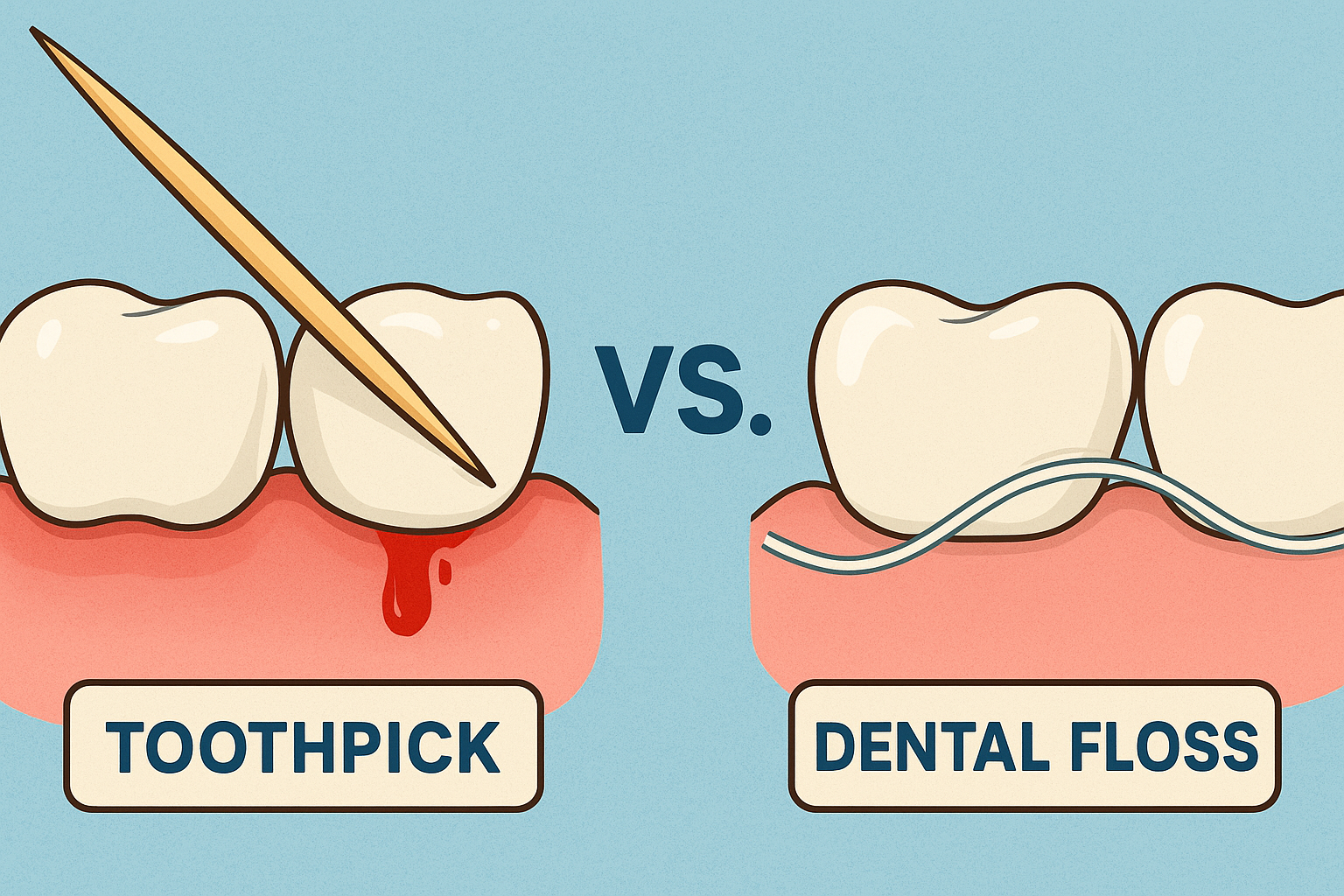
1. Gum Bleeding and Damage Toothpicks are sharp and rigid. When inserted between teeth, they often poke and irritate the delicate gum tissues.
Repeated pressure can cause small cuts, leading to gum bleeding. Over time, this weakens the gum line, making you more prone to infections, swelling, and painful inflammation known as gingivitis.
2. heightened danger of gum recession Constant use of toothpicks can cause gums to recede from their natural position.
Gum recession exposes the root of the tooth, which is not protected by enamel.
This leads to sensitivity to hot, cold, or sweet foods, and increases the risk of cavities forming along the roots.
Once gum tissue recedes, it cannot grow back naturally without dental treatment.
3. Damage to Tooth Enamel
The hard wooden or plastic surface of toothpicks can scratch the enamel while trying to dislodge food. Enamel is the protective outer layer of your teeth and does not regenerate once damaged.
Over time, these scratches can become weak spots, making teeth vulnerable to decay, staining, and sensitivity.
4. Formation of Gaps Between Teeth
Improper and frequent poking between teeth can widen the gaps between them.
This doesn’t just change your dental structure but also creates more space for food particles to get stuck, leading to a vicious cycle of dependence on toothpicks. Additionally, it has the potential to alter your smile and alter your teeth's natural alignment.
5. Risk of Broken Teeth Wooden toothpicks may seem harmless, but applying force can cause small cracks or fractures in teeth.
These micro-fractures are often invisible at first but gradually weaken the tooth. It could eventually result in broken teeth or the necessity of costly dental procedures like fillings or crowns. ---
6. Pushing Food Particles Deeper
Instead of cleaning teeth properly, toothpicks can push food particles deeper into the gum pockets.
This not only fails to solve the problem but can also create an ideal breeding ground for bacteria. The result? gum disease, bad breath, and even abscesses that hurt.
7. Increased Risk of Oral Infections
When toothpicks break, splinters can get lodged in the gums or between teeth.
These tiny fragments often go unnoticed and can cause severe irritation and bacterial infection.
A small wound inside the mouth is enough for harmful microbes to enter the bloodstream, potentially leading to more serious health complications.
8. Development of Bad Breath
Using toothpicks does not remove plaque or clean the tongue. Instead, food pushed deeper between teeth may decompose, releasing foul-smelling bacteria.
Over time, regular use of toothpicks can actually worsen bad breath rather than improve it.
9. Pain and Sensitivity Rise As gums weaken and enamel erodes from toothpick use, teeth become increasingly sensitive.
Even brushing your teeth or drinking hot coffee can cause sharp pain. This sensitivity can last for a long time and make it harder to enjoy some foods comfortably.
10. Over time, Misaligned Teeth Toothpick use can slowly shift teeth from their natural position by applying pressure.
This misalignment not only affects the beauty of your smile but also complicates chewing and may require orthodontic correction later.
11. deterioration of dental crowns or fillings If you already have dental work such as fillings, crowns, or veneers, using toothpicks can dislodge or damage them.
The pressure and scraping may loosen these restorations, leading to repeated dental visits and costly repairs.
12. Choking Hazard
Though rare, a broken toothpick can become a choking hazard if accidentally swallowed. In addition to putting your oral health at risk, wood splinters can also cause damage to the digestive system or throat.
Safer Alternatives to Toothpicks
Instead of risking your dental health with toothpicks, try these dentist-recommended alternatives:
Dental Floss: The safest and most effective way to remove food particles. Flossing prevents plaque buildup and protects gums.
Interdental Brushes: Small brushes designed to clean between teeth gently without damaging gums.
Water Flossers: Devices that use water pressure to clean between teeth and along the gum line.
Rinsing with Mouthwash or Water: A quick rinse after meals can dislodge loose particles without harm.
Chewing Sugar-Free Gum: Stimulates saliva flow, which naturally helps in cleaning teeth.
Your teeth are meant to last a lifetime, but only if you protect them. Stop using toothpicks daily today and invest in healthier oral care habits. Your future smile will



















Responses (1)
Sign in to share your thoughts.
Sign in