Sir Patrick Stewart and Walter Koeing passed away this week:
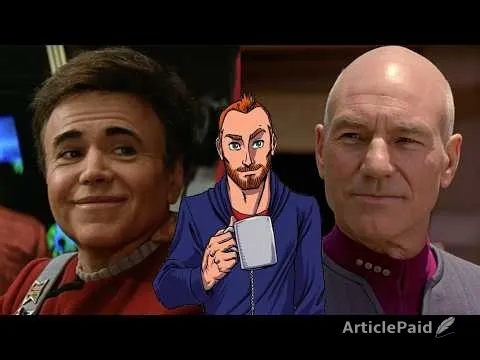
Star Trek Icons Captain Picard and Ensign Chekov are now immortalized in movie and television history: Sir Patrick Stewart and Walter Koenig are remembered.
Patrick Stewart, the classically trained stage actor famed for his roles in the “Star Trek” franchise and the “X-Men” movies, died Thursday at 86, his family announced.
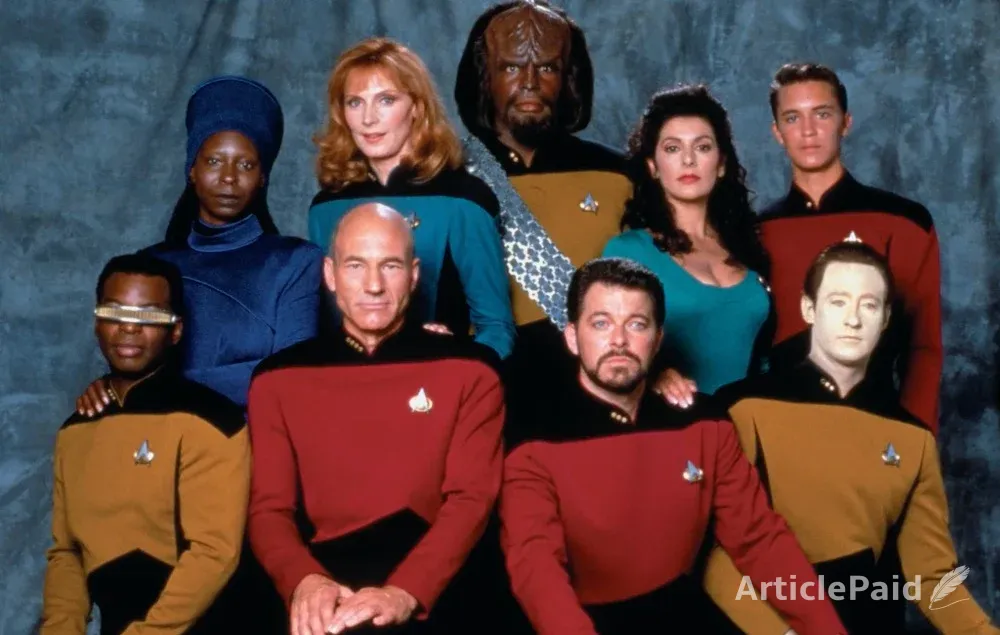
His death comes after what his spokesperson described as “a brief and poignant journey” with Alzheimer’s disease and Lewy body dementia.
The Associated Press said Stewart’s diagnoses had not been made public before.
Alzheimer’s disease is the most common type of dementia in the U.S., affecting more than 7 million Americans. Lewy body dementia is the second most common neurodegenerative dementia in the country, impacting more than 1 million people.
Lewy body dementia is more common than people realize, but it’s often missed or confused with Alzheimer’s or Parkinson’s disease, Michael Okun, MD, of the University of Florida Fixel Institute in Gainesville, told MedPage Today in an interview earlier this year.
“Awareness is important because early diagnosis can impact care, safety and quality of life for families,” he added.
Lewy bodies are abnormal clumps of alpha-synuclein, also found in Parkinson's disease. Lewy body dementia is a term that encompasses two disorders: dementia with Lewy bodies and Parkinson’s disease dementia. There is no one test to diagnose Lewy body dementia in living people.
Lewy body dementia symptoms include memory and problem-solving deficits, hallucinations and delusions, slow or rigid movement, balance problems, sleep disorders such as restless leg syndrome and dream enactment, anxiety and depression, and autonomic dysfunction. Loss of smell is often an early symptom.
Lewy body dementia can be hard to diagnose because it shares many symptoms with other neurodegenerative diseases. This can be a frustrating process for patients and families, as Susan Schneider Williams wrote in an essay in Neurology about her husband, actor and comedian Robin Williams, who had Lewy body disease and died by suicide.
“One of my early research studies was interviewing former caregivers of people with dementia with Lewy bodies and asking them about the last 3 months of life,” Melissa Armstrong, MD, MSc, also of the University of Florida, told MedPage Today. “I was surprised that -- considering that the questions were about the end of life -- more than a third of the people I interviewed started by talking about how misdiagnosis, delayed diagnosis, or conflicting diagnoses were still important parts of their experiences.
Armstrong said there are a number of reasons for this. Important clues such as dream enactment can be missed, she stated. Some clues such as "Hallucinations" can be misattributed to other causes such as a psychiatric diagnosis like schizophrenia. Dementia with Lewy bodies is a conundrum for clinicians to decipher. "It can make diagnosis more difficult."
Further complicating matters, abnormal alpha-synuclein and Alzheimer’s pathology can co-exist which may impact outcomes. About 30%-60% of Alzheimer's autopsy cases have concomitant alpha-synuclein pathology in brain tissue.
"When families initially encounter the term 'Lewy body dementia," they frequently express, 'We were aware that something was amiss.'" "The combination of memory, movement, sleep, and behavioral symptoms can be perplexing," stated Okun.
“It’s not a rare disease in old people,” he added. “We need better recognition, better tools, and more conversations about symptoms such as hallucinations, dream enactment, and fluctuating thinking.
Walter Koeing
It is with great sadness that we announce the passing of Walter Koenig, the cherished actor who portrayed the earnest, excitable, and proudly Russian Pavel Chekov in the original Star Trek television series and seven feature films. Koenig also captivated a new generation of science fiction fans as the sinister Alfred Bester on Babylon 5.
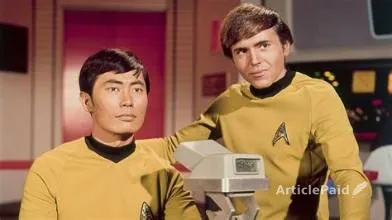
The news was first confirmed today by Walter’s co-star and longtime friend George Takei, who said on social media, “My heart is heavy. Our Ensign Pavel Chekov, Walter Koenig, died early today.” Koenig passed away at his North Hollywood home from natural causes, according to The Hollywood Reporter. Koenig was 90 and had an extended period of declining health that saw him cancel several scheduled convention appearances this year, including Creation Entertainment’s 60th anniversary Las Vegas Star Trek convention in August.
RIP: Walter Koenig
To legions of Star Trek fans, Koenig was an indelible companion of Chekov, the young navigator with the thick Russian accent, equally thick mop of hair and amusing habit of insisting that seemingly everything and anything of importance had originated in Russia. Koenig joined Star Trek in 1967, at the start of the show’s second season, a year after the series bowed. Some have long suggested the character was created as a nod to the Soviet Union during the Cold War, but Koenig said the real reason was much less geopolitical: NBC wanted a young character who could appeal to the teenage audience that was attracted to Davy Jones and The Monkees. In fact, that’s why they created the character,” Koenig told StarTrek.com in a 2011 interview.
Koenig was born Walter Marvin Koenig in Chicago on September 14, 1936, and raised in New York. He was the son of Russian Jewish immigrants. He was a big baseball fan, and for years he rooted for the New York Yankees. Koenig went to Grinnell College, and then graduated with a psychology degree from UCLA before he turned to acting. He had racked up credits on such series as The Untouchables, Alfred Hitchcock Presents, Combat!, Mr. Novak, The Lieutenant, Gidget and I Spy long before reporting for duty aboard the Enterprise.
He even developed a relationship with Star Trek creator Gene Roddenberry prior to the production of Star Trek. Koenig had also guest starred in Roddenberry’s previous series, The Lieutenant. “Immediately after my audition for Chekov, a costume designer came in and took my measurements,” Koenig later recalled. “It was as if a snap decision had been made. And that was how he learned that he had been selected for the job.
Chekov, of course, didn't get nearly the same screen time as Captain Kirk, Mr. Spock, or Dr. McCoy on Star Trek, but Koenig made the most of what he was given. One of his favorite episodes was "Spectre of the Gun," the surreal Western adventure in which Chekov seems to die, only to show up alive at the end. Koenig would later praise the episode’s intentionally sparse sets, due to budget constraints, for bringing “class” and “style” to the story.
But some of Chekov’s best moments came after Star Trek was off the air. Koenig had his meatier material to play with in Star Trek II: The Wrath of Khan. Now promoted from Ensign to Lieutenant and first officer of the Reliant, Chekov discovers that what he thinks is Ceti Alpha VI is actually Ceti Alpha V. Soon he meets Khan Noonien Singh face to face, who is out for revenge. Ricardo Montalbán's Khan knows Chekov, but Koenig hadn't joined Star Trek when Khan showed up in the first-season episode "Space Seed." Then Chekov got possessed by a grotesque Ceti eel,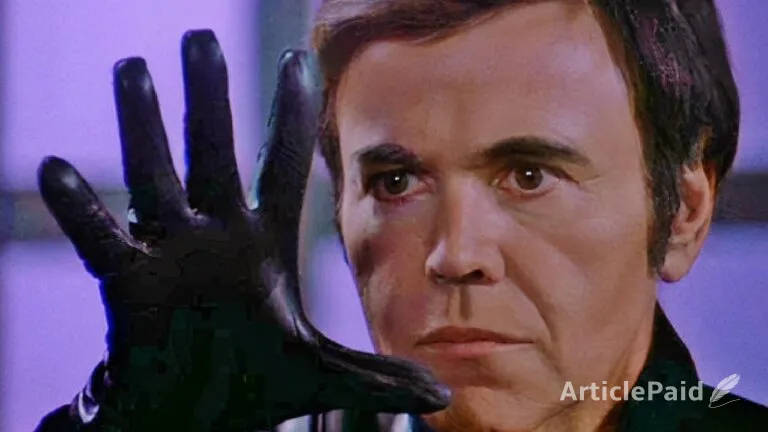 and the terror was real and squirm-inducing. This was a darker tone that would help make The Wrath of Khan a landmark in the franchise.








Responses (0)