
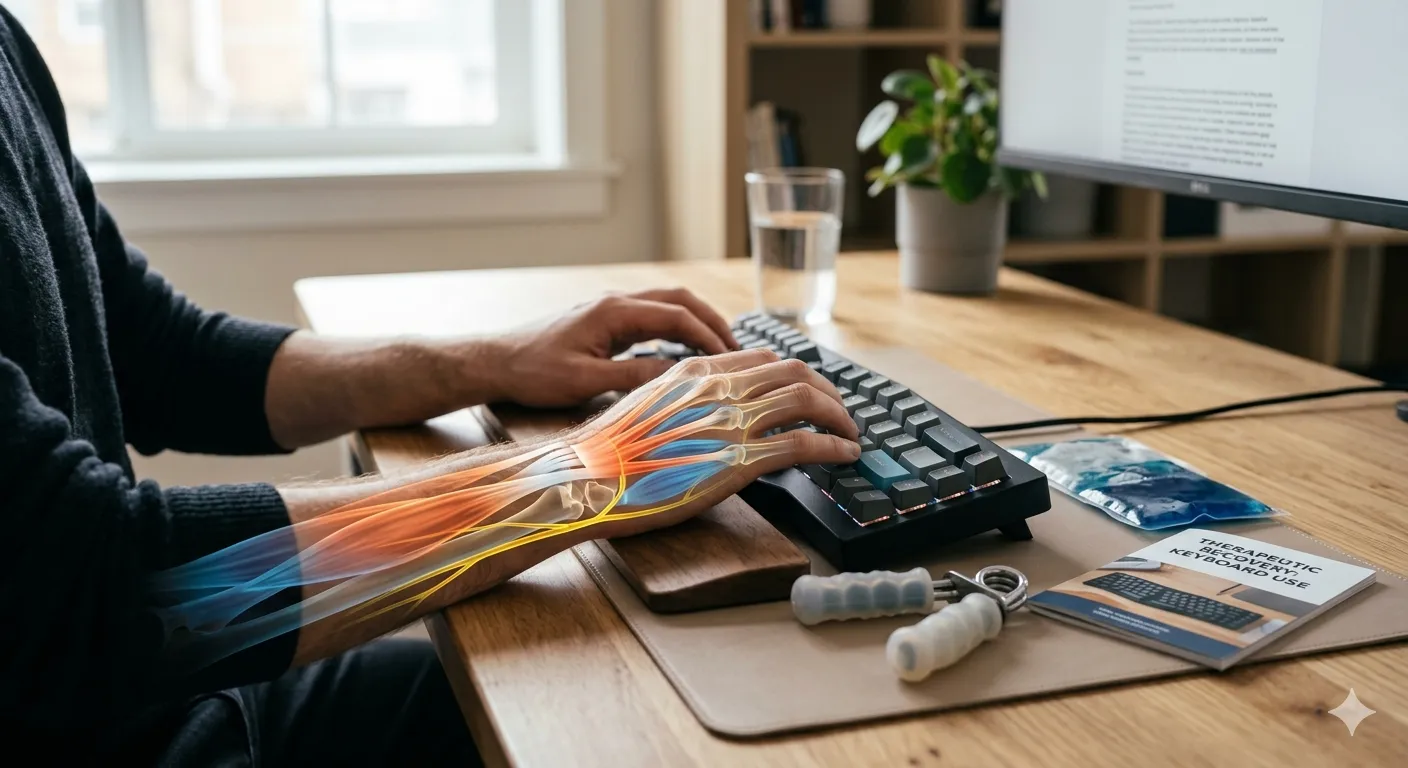
Most people barely notice it. Yet each keystroke triggers a cascade of physiological events—muscle contractions, nerve signals, tendon gliding—that, over time, can insidiously strengthen or weaken your muscles.Understanding how your body reacts to using a sensible keyboard isn't just a theoretical exercise. It's the foundation for more efficient and pain-free productivity..
How does your body respond to typing?
When you squeeze something, the muscles in your upper and lower arm the forearm muscles contract. These nerves travel between the fibers of your wrist, guided by a passage called the carpal tunnel.. Along the way, the median and ulnar nerves transmit sensation and motor commands with astonishing speed..
Low-profile keyboards, designed with shallow key travel (typically 1–2mm versus the traditional 4mm), alter this physiological chain significantly. The reduced travel distance means your fingers exert less downward force per keystroke. Studies in occupational ergonomics consistently show that reduced keystroke force lowers the cumulative load on flexor tendons which is a genuine physiological advantage for long typing sessions.
However, low-profile designs also encourage a flatter wrist angle, which can subtly compress the carpal tunnel if the keyboard is poorly positioned. This is where physiology and therapy meet.
Treatment: What does science say?
Healthcare providers are increasingly implementing new keyboard layouts even though they are less popular.For patients recovering from repetitive strain injuries (RSIs), wrist arthritis, or osteoarthritis, switching to a keyboard with low-profile keys is recommended as part of a rehabilitation program.
The logic is simple. Lower actuation force reduces muscle fatigue. Less fatigue means fewer micro-tears in tendon fibers. Fewer micro-tears translate to less inflammation — which is the root driver of most keyboard-related chronic conditions.
Treatment guidelines often limit basic keyboard use and:
Wrist tendon gliding — using the tendon to do everything to avoid friction
Muscular techniques using soft muscles to stimulate the central nervous system
Position training alternating forward and backward postures to emphasize the arms
Timed typing breaks — using the 20-20-20 rule designed for hands: every 20 minutes, rest your hands for 20 seconds, then slowly move .
The combination of hardware adaptation and targeted physiotherapy yields better outcomes than either approach alone.
Posture, Muscle Memory, and Long-Term Adaptation
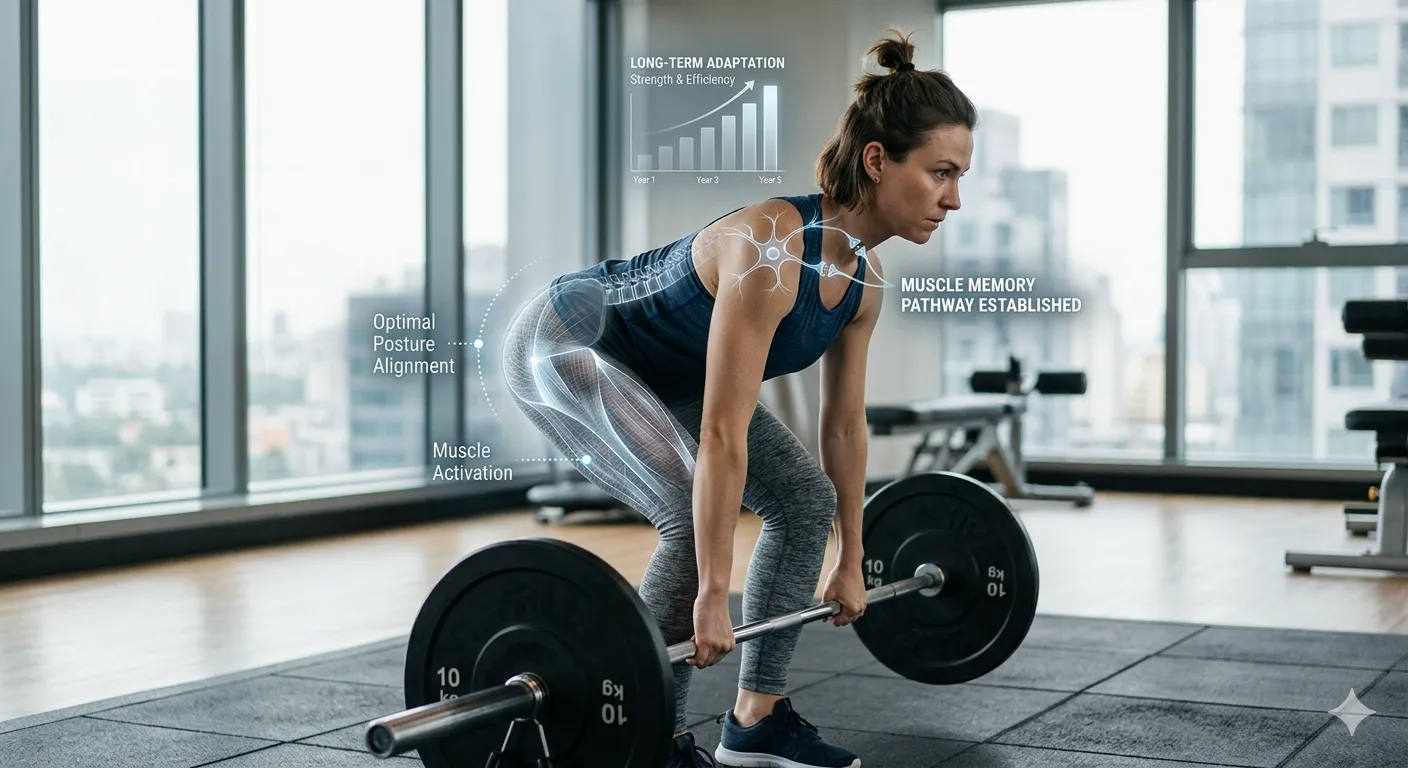
Physiology is never static. Your neuromuscular system adapts to the demands you place on it a principle called specific adaptation to imposed demands (SAID). If you type eight hours daily on a high-resistance keyboard, your forearm muscles develop chronic low-grade tension as their baseline state. Switching to a low-profile keyboard essentially "re-trains" your motor units to operate with less unnecessary recruitment.
Over four to six weeks, most users report noticeably reduced forearm fatigue and improved typing endurance — physiological markers of genuine neuromuscular adaptation, not just placebo.
Frequently Asked Questions
Q: Can a basic keyboard replace physiotherapy for RSI?
No, it is a tool, not a substitute.Always consult your healthcare provider about any unusual symptoms.
Question: Is a flat keyboard suitable for everyone? In general, yes — however, individuals with highly developed forearm musculature may still benefit from dedicated wrist support to distribute load evenly and prevent overuse injury."
Q: How long does it take to see significant skin benefits?
Most people see a reduction in fatigue within two to four weeks of regular use combined with a weight-lifting program..
Conclusion
The keyboard isn’t uncomfortable: it’s actually working against muscle health. Its premium design, combined with its strict health guidelines, provides a proven solution to reduce stress and improve long-term hand health. Listen to your body, respect its rhythm, and your hands will thank you for years to come.




















Responses (0)
Sign in to share your thoughts.
Sign in