

Thunderclap Headache: Causes, Effects, and Treatment
A thunderclap headache is an unusually sudden and intensely painful headache that reaches its worst level within seconds or a minute. It is often described as the “worst headache of my life,” and it should always be treated as a medical emergency rather than an ordinary migraine or tension headache.
What Is It?
The name comes from the abrupt way the pain begins—like a clap of thunder. Unlike a typical headache that gradually becomes stronger, a thunderclap headache starts at maximum intensity. It may last for hours or days and can be accompanied by nausea, vomiting, neck stiffness, fainting, confusion, vision problems, seizures, or weakness on one side of the body.

A thunderclap headache is a symptom, not a diagnosis by itself. Sometimes no dangerous cause is found, but doctors must first rule out bleeding, stroke, infection, or a problem with blood vessels in and around the brain.
Causes
One of the most serious possible causes is a subarachnoid hemorrhage, which is bleeding into the space around the brain. This often happens when a brain aneurysm—a weak, bulging area in a blood vessel—ruptures. Around 85% of non-traumatic subarachnoid hemorrhages are linked to ruptured aneurysms.
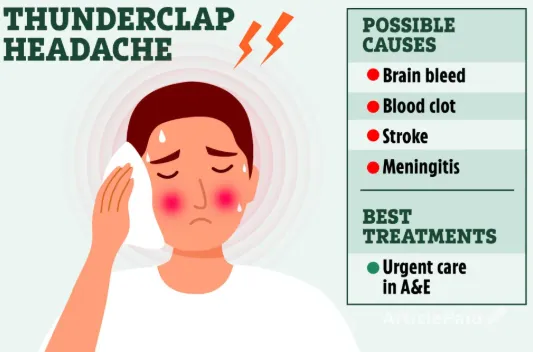
Other potential causes include:
- A clot in veins that drain blood from the brain, called cerebral venous sinus thrombosis.
- A tear in an artery of the neck, known as cervical artery dissection.
- Ischemic or hemorrhagic stroke.
- Very high blood pressure, especially during late pregnancy.
- Meningitis or another brain infection.
- Head injury, leaking spinal fluid, or certain medicines and drugs such as cocaine or amphetamines.
Effects and Risks
The effect depends entirely on the underlying cause. A harmless cause may resolve without lasting harm, but a thunderclap headache caused by a brain bleed or stroke can lead to brain damage, seizures, disability, coma, or death if treatment is delayed.
Subarachnoid hemorrhage, for example, can cause complications including seizures, hydrocephalus (fluid buildup in the brain), blood-vessel narrowing called vasospasm, and delayed brain ischemia. This is why ignoring a sudden severe headache can be dangerous, even if the pain later improves.
Treatment
There is no safe home treatment for a first or new thunderclap headache. Call emergency services or go to the nearest emergency department immediately—especially if the pain is sudden, severe, unfamiliar, or accompanied by fainting, fever, stiff neck, weakness, confusion, vision loss, or trouble speaking.
In hospital, clinicians may use urgent brain imaging, such as a CT scan, and may carry out further tests if needed to locate the cause. Treatment then targets the cause: a ruptured aneurysm may need neurosurgical or endovascular repair; infections require urgent antimicrobial treatment; and clots or blood-vessel problems require specialist care.
Important: This article is for general awareness, not personal diagnosis. A sudden “worst-ever” headache needs immediate medical assessment.























Responses (0)
Sign in to share your thoughts.
Sign in