
Artificial intelligence has become part of everyday life. Millions of people now rely on ChatGPT to write emails, brainstorm ideas, summarize documents, learn new skills, code software, and support business operations. As AI adoption has accelerated, governments have been under increasing pressure to establish clear rules that encourage innovation while protecting consumers, businesses, and national security.
In 2026, the regulatory landscape in the United States continues to evolve. Instead of a single comprehensive AI law, users face a combination of federal executive actions, agency guidance, state legislation, industry standards, and court decisions. For ChatGPT users, these developments raise important questions. Will AI become more restricted? Will personal data be safer? Will businesses face new compliance obligations? Could certain AI features disappear?
The good news is that most everyday users will still be able to use ChatGPT much as they do today. However, organizations, developers, and professionals who rely heavily on AI should understand how the changing regulatory environment may affect privacy, transparency, content generation, and business responsibility.
Here's what the latest US AI regulations mean for ChatGPT users in 2026 and what you should expect moving forward.
The US approach to AI regulation in 2026
Unlike the European Union, which introduced the AI Act as a comprehensive legal framework, the United States has taken a more flexible and decentralized approach. Rather than creating one nationwide AI law, regulators continue to address AI through existing consumer protection, privacy, copyright, cybersecurity, competition, and civil rights laws while introducing additional AI-specific guidance where needed.
Several federal agencies now play important roles, including:
- The Federal Trade Commission (FTC)
- The National Institute of Standards and Technology (NIST)
- The Department of Commerce
- The Equal Employment Opportunity Commission (EEOC)
- State attorneys general
At the same time, several US states have introduced their own AI-related laws addressing automated decision-making, privacy, political advertising, healthcare, employment, and deepfakes.
For ChatGPT users, this means the rules depend partly on how AI is being used.
Someone using ChatGPT to plan a vacation or improve writing will experience very few changes. A healthcare provider using AI to assist with patient communication or a financial institution automating customer decisions, however, may face much stricter compliance requirements.
This risk-based approach is becoming the dominant regulatory philosophy across many industries.
How ChatGPT users may notice changes
Although regulations primarily target AI providers and businesses, everyday users are likely to notice gradual improvements in transparency and safety.
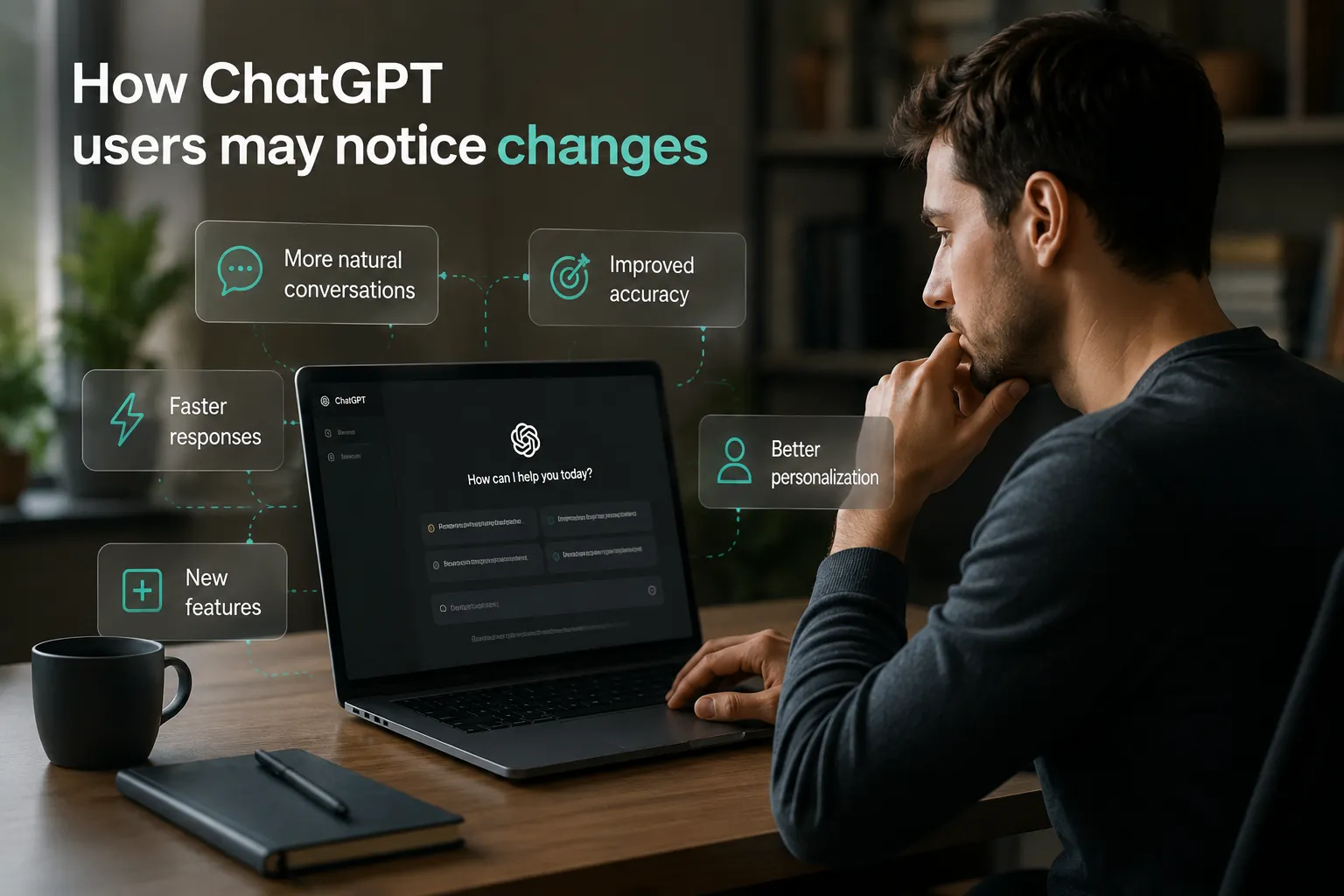
Some of the most visible changes include:
Better disclosure
Users are increasingly informed when AI generates content or assists with important decisions. Many platforms now provide clearer notices about AI-generated responses and system limitations.
Improved privacy controls
Organizations using ChatGPT increasingly adopt stricter policies for handling sensitive information.
Many businesses now:
- Remove personal identifiers before processing data
- Limit employee access
- Retain conversations for shorter periods
- Review AI usage through internal governance programs
This benefits users by reducing unnecessary exposure of confidential information.
Stronger safeguards
AI providers continue improving protections against:
- Fraud
- Identity theft
- Deepfake abuse
- Malware creation
- Financial scams
- Election misinformation
While some users may occasionally notice stricter content moderation, these safeguards aim to reduce misuse rather than limit legitimate productivity.
Greater transparency
Businesses increasingly document when AI assists customers.
Examples include:
- Customer support chatbots
- AI-generated product descriptions
- Automated email responses
- AI-assisted hiring processes
Transparency helps consumers understand when they are interacting with AI rather than a human.
Privacy, data security, and user responsibilities
One of the biggest concerns surrounding AI remains data privacy.
Although ChatGPT continues improving security features, regulations increasingly emphasize responsible data handling by organizations rather than placing the entire burden on AI developers.
Users should still follow several best practices.
Avoid entering:
- Social Security numbers
- Banking information
- Medical records
- Passwords
- Confidential corporate documents
- Trade secrets
- Private legal materials
Businesses using ChatGPT should also establish internal AI policies covering:
- Employee training
- Approved use cases
- Sensitive data restrictions
- Human review procedures
- Documentation requirements
- Vendor risk assessments
Many organizations now treat AI similarly to cloud software by conducting security reviews before deployment.
For individual users, responsible AI use often comes down to common sense. If you would not post sensitive information publicly, you should think carefully before sharing it with any online service.
Privacy expectations are becoming a central part of AI governance, and organizations that ignore them face increasing legal and reputational risks.

What businesses, creators, and professionals should know
The largest regulatory impact falls on organizations rather than casual users.
Businesses increasingly need to demonstrate that AI systems are being used responsibly.
This often includes:
- Risk assessments
- Internal documentation
- Human oversight
- Bias testing where appropriate
- Security reviews
- Vendor due diligence
Professionals working in regulated industries should pay particular attention.
Examples include:
Healthcare
Medical professionals must ensure AI does not replace clinical judgment and complies with healthcare privacy requirements.
Finance
Financial institutions remain responsible for lending, fraud detection, customer communication, and investment decisions, even when AI assists those processes.
Human resources
Employers using AI for recruiting or employee evaluation must avoid discriminatory outcomes and maintain appropriate human oversight.
Legal services
Law firms increasingly use AI for research and drafting but continue verifying legal accuracy before filing documents.
Content creators should also remain aware of copyright considerations.
While ChatGPT is an excellent brainstorming and drafting tool, publishers, marketers, and businesses are still responsible for ensuring originality, factual accuracy, and compliance with intellectual property laws.
Human review remains essential before publishing important content.
What the future looks like for ChatGPT users
The direction of AI regulation suggests that future rules will focus less on restricting AI itself and more on encouraging responsible deployment.
Several trends are likely to continue beyond 2026.
More transparency
Users can expect clearer explanations about how AI systems operate and what limitations they have.
Industry-specific rules
Healthcare, banking, education, insurance, and government services will probably receive increasingly detailed AI requirements.
Improved safety standards
Security testing, red-team evaluations, and ongoing monitoring are becoming standard practice among leading AI providers.
International coordination
Although regulatory approaches differ worldwide, businesses operating internationally increasingly align their AI governance practices with multiple legal frameworks simultaneously.
Better consumer protections
Users should benefit from stronger privacy safeguards, clearer disclosures, and improved mechanisms for reporting AI-related harms.
For most people, these developments will improve trust rather than reduce access.
The practical experience of using ChatGPT for writing, research, education, programming, travel planning, brainstorming, and productivity is expected to remain familiar while becoming more transparent and secure over time.
Conclusion
The evolving US AI regulatory landscape in 2026 reflects a careful balancing act between innovation and accountability. Rather than imposing sweeping restrictions on everyday ChatGPT users, current regulations largely focus on responsible business practices, consumer protection, privacy, transparency, and risk management.
For individuals, the biggest takeaway is simple: continue using ChatGPT responsibly, avoid sharing highly sensitive information, verify important facts independently, and understand that AI works best as a tool that supports human decision-making rather than replacing it.
Businesses and professionals, meanwhile, should prepare for greater governance expectations, stronger documentation requirements, and increased accountability for how AI systems are deployed.
As AI becomes more deeply integrated into work and daily life, thoughtful regulation is likely to strengthen public confidence while encouraging continued technological progress. Users who stay informed about evolving policies and follow responsible AI practices will be well positioned to benefit from the next generation of intelligent tools.




















Responses (0)
Sign in to share your thoughts.
Sign in