
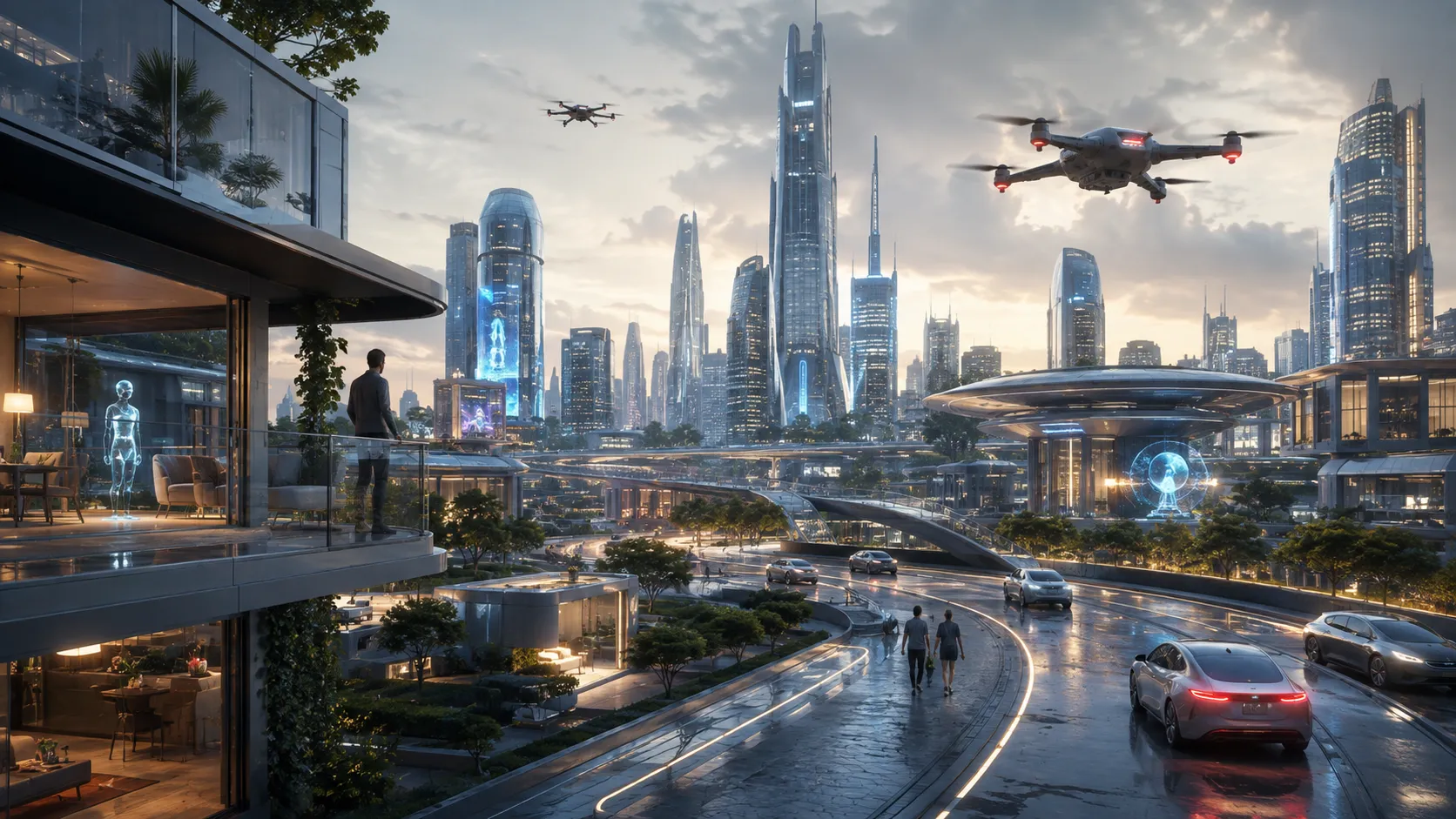
Technology is evolving at a pace that would have seemed impossible just a decade ago. Artificial intelligence is becoming part of everyday workflows, electric vehicles are transforming transportation, and connected devices are making homes, workplaces, and cities smarter than ever. By 2030, many emerging technologies will move beyond early adoption and become an integral part of daily life.
Rather than existing as isolated innovations, these technologies will work together to create more efficient healthcare systems, personalized education, cleaner energy networks, intelligent transportation, and highly automated workplaces. Businesses will use them to improve productivity, while consumers will experience greater convenience, safety, and personalization in nearly every aspect of life.
This article explores the 10 technology trends that will change everyday life by 2030, examining their practical applications, real-world examples, and the long-term impact they are expected to have on society.
Artificial intelligence will become everyone's digital assistant
Artificial intelligence (AI) has already changed how people search for information, create content, translate languages, and automate repetitive work. By 2030, AI will become deeply integrated into everyday routines rather than being viewed as a separate tool.
Instead of simply answering questions, AI assistants will proactively schedule appointments, manage household tasks, recommend healthier lifestyles, optimize travel routes, and help people make better financial decisions.
Businesses are already using AI for customer service, predictive analytics, fraud detection, and software development. Healthcare providers rely on AI to assist with medical imaging and diagnostics, while manufacturers use intelligent systems to improve production efficiency.
Consumers will also notice AI becoming more personalized. Future assistants will understand context, remember preferences with user permission, and provide recommendations tailored to individual needs.
Practical impact:
- Smarter personal assistants
- Faster customer support
- Personalized shopping experiences
- Automated administrative work
- Improved healthcare recommendations
AI is expected to become one of the most influential technologies shaping everyday life throughout the coming decade.
Smart homes will evolve into intelligent living environments
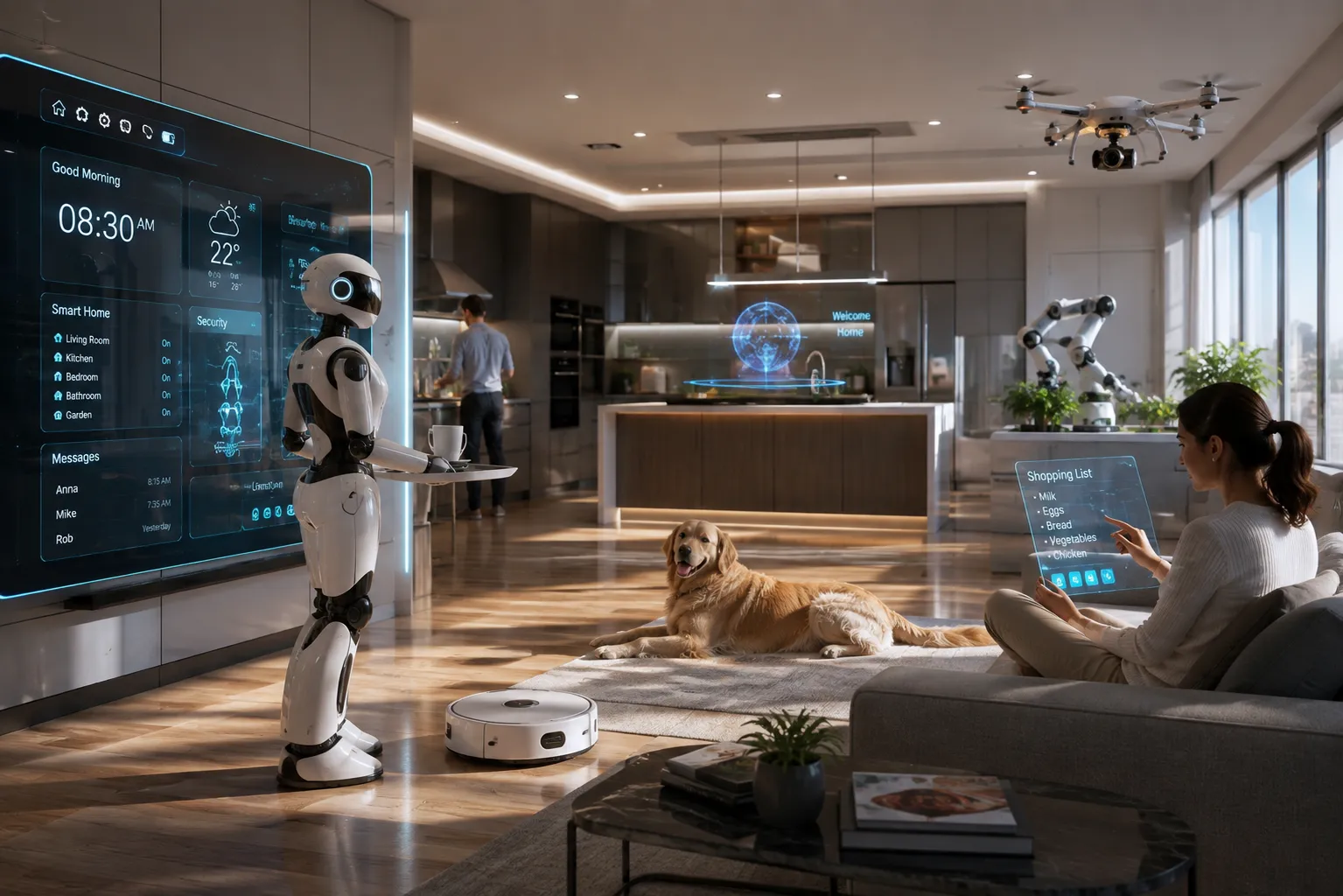
Today's smart homes include connected speakers, thermostats, security cameras, and lighting systems. By 2030, homes will become intelligent ecosystems capable of managing themselves with minimal human input.
Smart appliances will communicate with each other to optimize electricity consumption, improve home security, and reduce waste. Refrigerators may automatically order groceries, while heating systems adjust temperatures based on occupancy and weather forecasts.
Voice control will become increasingly natural thanks to improvements in natural language processing, allowing family members to interact with multiple devices conversationally.
Energy management will also improve significantly. Homes equipped with solar panels, battery storage, and AI-powered energy management systems will automatically decide when to consume, store, or sell electricity back to the grid.
Real-world examples already include smart thermostats, connected security systems, robotic vacuum cleaners, and intelligent lighting that adapts throughout the day.
Autonomous transportation will redefine mobility
Self-driving technology continues to improve through advances in sensors, artificial intelligence, and high-definition mapping. While fully autonomous vehicles may not dominate every road by 2030, autonomous transportation will become increasingly common.
Driver-assistance systems will continue reducing accidents by monitoring surroundings, detecting hazards, and reacting faster than humans.
Public transportation may benefit even sooner. Autonomous buses, airport shuttles, warehouse vehicles, and delivery robots are already being tested across numerous cities.
Logistics companies are investing heavily in autonomous trucking to improve efficiency and reduce transportation costs.
For consumers, everyday mobility could become safer and more accessible, especially for elderly individuals and people with disabilities.
Expected benefits include:
- Fewer traffic accidents
- Reduced congestion
- More efficient deliveries
- Lower transportation costs
- Greater accessibility
As infrastructure improves, autonomous mobility will gradually become a normal part of everyday life.
Personalized healthcare will improve prevention and treatment
Healthcare is shifting from reactive treatment toward proactive prevention. Advances in artificial intelligence, wearable technology, genetic research, and remote monitoring will significantly improve personalized medicine by 2030.
Wearable devices already monitor heart rate, sleep quality, blood oxygen levels, and physical activity. Future devices may continuously monitor blood glucose, hydration, stress levels, blood pressure, and additional health indicators without invasive procedures.
Doctors will increasingly use AI to analyze patient data, detect diseases earlier, and recommend individualized treatment plans.
Genomic medicine will allow treatments to be tailored according to a person's genetic profile, improving outcomes while reducing side effects.
Telemedicine will continue expanding, making healthcare more accessible for rural populations and reducing unnecessary hospital visits.
Real-world innovations already include AI-assisted cancer detection, remote cardiac monitoring, robotic surgery, and wearable ECG devices.
By focusing on prevention rather than treatment, healthcare systems may become more effective and affordable.
Extended reality will transform work, education, and entertainment
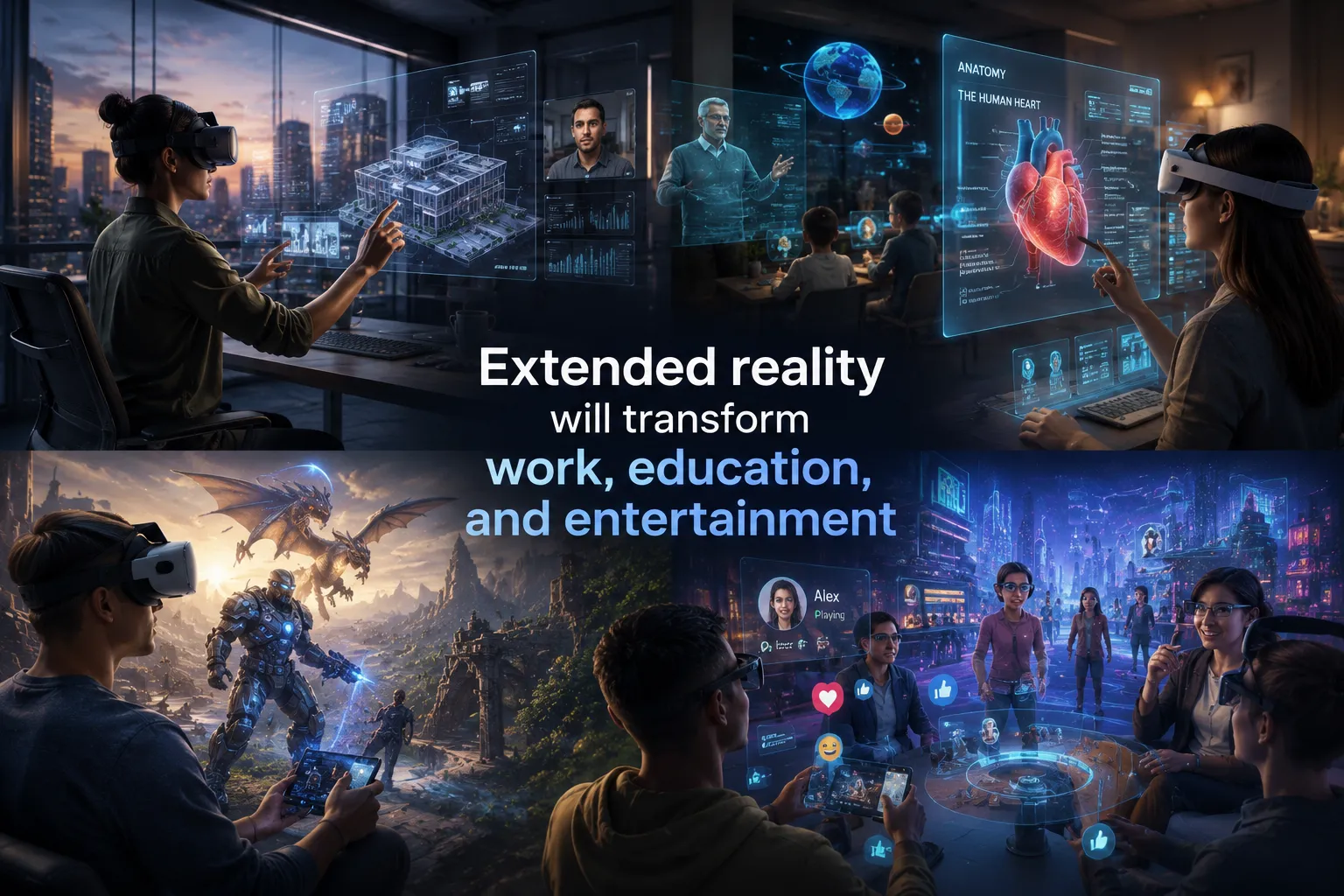
Extended Reality (XR), which includes Virtual Reality (VR), Augmented Reality (AR), and Mixed Reality (MR), is expected to become much more common by 2030.
Education could become highly immersive, allowing students to explore ancient civilizations, conduct virtual science experiments, or practice technical skills in realistic digital environments.
Businesses may use AR glasses to display instructions during maintenance work or warehouse operations.
Healthcare professionals can already practice surgical procedures using VR simulations before operating on patients.
Consumers will experience entertainment in entirely new ways through immersive gaming, live events, virtual tourism, and interactive shopping.
Retailers are already enabling customers to visualize furniture inside their homes or virtually try on clothing before purchasing.
As hardware becomes lighter, more affordable, and more powerful, extended reality will expand well beyond gaming into everyday life.
Sustainable energy technologies will accelerate the green transition
Clean energy is becoming both an environmental necessity and an economic opportunity.
By 2030, renewable energy technologies will become increasingly affordable and widespread, supported by advances in battery storage, smart grids, and energy management software.
Solar panels will continue becoming more efficient while wind energy expands across many regions.
Battery technology improvements will allow homes and businesses to store renewable electricity for later use, reducing dependence on traditional power grids.
Electric vehicles will also play an important role by serving as mobile energy storage units capable of supplying electricity back to homes during peak demand.
Smart grids will automatically balance electricity production and consumption using AI-powered forecasting.
Practical benefits include:
- Lower electricity costs
- Reduced carbon emissions
- Greater energy independence
- Improved grid reliability
- Increased resilience during power outages
The transition toward sustainable energy is expected to influence transportation, manufacturing, construction, and residential living alike.
Robotics will automate more everyday tasks
Robotics is expanding beyond industrial manufacturing into healthcare, hospitality, agriculture, logistics, and domestic environments.
Warehouse robots already move inventory around fulfillment centers, while agricultural robots assist with planting, harvesting, and crop monitoring.
Healthcare robots help transport medical supplies, disinfect hospitals, and assist during surgical procedures.
Service robots may become increasingly common in hotels, restaurants, airports, and shopping centers.
Household robots will evolve beyond vacuum cleaning to include lawn maintenance, window cleaning, elderly assistance, and home monitoring.
Rather than replacing every human worker, robotics will often complement human capabilities by handling repetitive, dangerous, or physically demanding tasks.
This allows employees to focus on creativity, problem-solving, and customer interaction.
The Internet of Things will connect everything
The Internet of Things (IoT) refers to networks of connected devices that collect and exchange information automatically.
By 2030, billions of connected devices will continuously communicate across homes, cities, healthcare facilities, transportation systems, and industrial environments.
Smart cities may optimize traffic lights based on real-time congestion, monitor air quality, detect infrastructure problems, and improve waste collection efficiency.
Businesses will use IoT sensors to predict equipment failures before costly breakdowns occur.
Consumers will benefit from connected appliances, wearable health devices, smart security systems, and intelligent vehicles that communicate with surrounding infrastructure.
The increasing availability of 5G and future communication technologies will support faster, more reliable device connectivity.
As IoT adoption grows, cybersecurity and privacy protection will become even more important.
Quantum computing will solve problems beyond today's computers
Although quantum computing remains an emerging technology, its long-term potential is enormous.
Unlike traditional computers that process information using binary bits, quantum computers use quantum bits (qubits), allowing certain calculations to be performed exponentially faster.
By 2030, quantum computing may not be available to consumers directly, but it could significantly improve industries behind the scenes.
Potential applications include:
- Drug discovery
- Climate modeling
- Financial risk analysis
- Logistics optimization
- Advanced material science
- Cryptography
Researchers are already exploring how quantum computers can accelerate complex simulations that would take classical computers years to complete.
While widespread commercial adoption may still require additional breakthroughs, quantum computing is expected to influence many future innovations.
Biotechnology will enhance quality of life
Advances in biotechnology are transforming medicine, agriculture, nutrition, and environmental sustainability.
Gene-editing technologies are enabling researchers to investigate treatments for inherited diseases that were previously considered untreatable.
Lab-grown meat may reduce environmental pressure associated with traditional livestock farming while providing alternative protein sources.
Precision agriculture uses biotechnology together with AI and sensors to improve crop yields while reducing water, fertilizer, and pesticide use.
Scientists are also developing biodegradable materials, sustainable biofuels, and environmentally friendly manufacturing processes.
Future biotechnology innovations may contribute to longer, healthier lives through regenerative medicine, tissue engineering, and personalized therapies.
Ethical considerations will remain important as biotechnology continues advancing, requiring careful regulation and public discussion.
Conclusion
The technology trends shaping the next decade are not simply about faster computers or smarter gadgets. They represent a broader transformation in how people live, work, travel, learn, receive healthcare, and interact with the world.
Artificial intelligence, robotics, smart homes, biotechnology, autonomous transportation, quantum computing, renewable energy, extended reality, personalized healthcare, and the Internet of Things are converging to create more connected and intelligent environments.
While challenges such as cybersecurity, privacy, ethical AI, and digital inclusion must continue to be addressed, the overall direction is clear: technology will increasingly simplify everyday tasks, improve decision-making, enhance sustainability, and create new opportunities for individuals and businesses alike.
For consumers, staying informed about these developments will make it easier to adapt to changing technologies. For organizations, investing in innovation and digital transformation will be essential to remaining competitive in an increasingly technology-driven world.
The technologies emerging today are laying the foundation for a future where intelligent systems work alongside people to improve productivity, health, safety, and quality of life. By 2030, many of these innovations will no longer feel futuristic—they will simply be part of everyday living.

















Responses (0)
Sign in to share your thoughts.
Sign in