
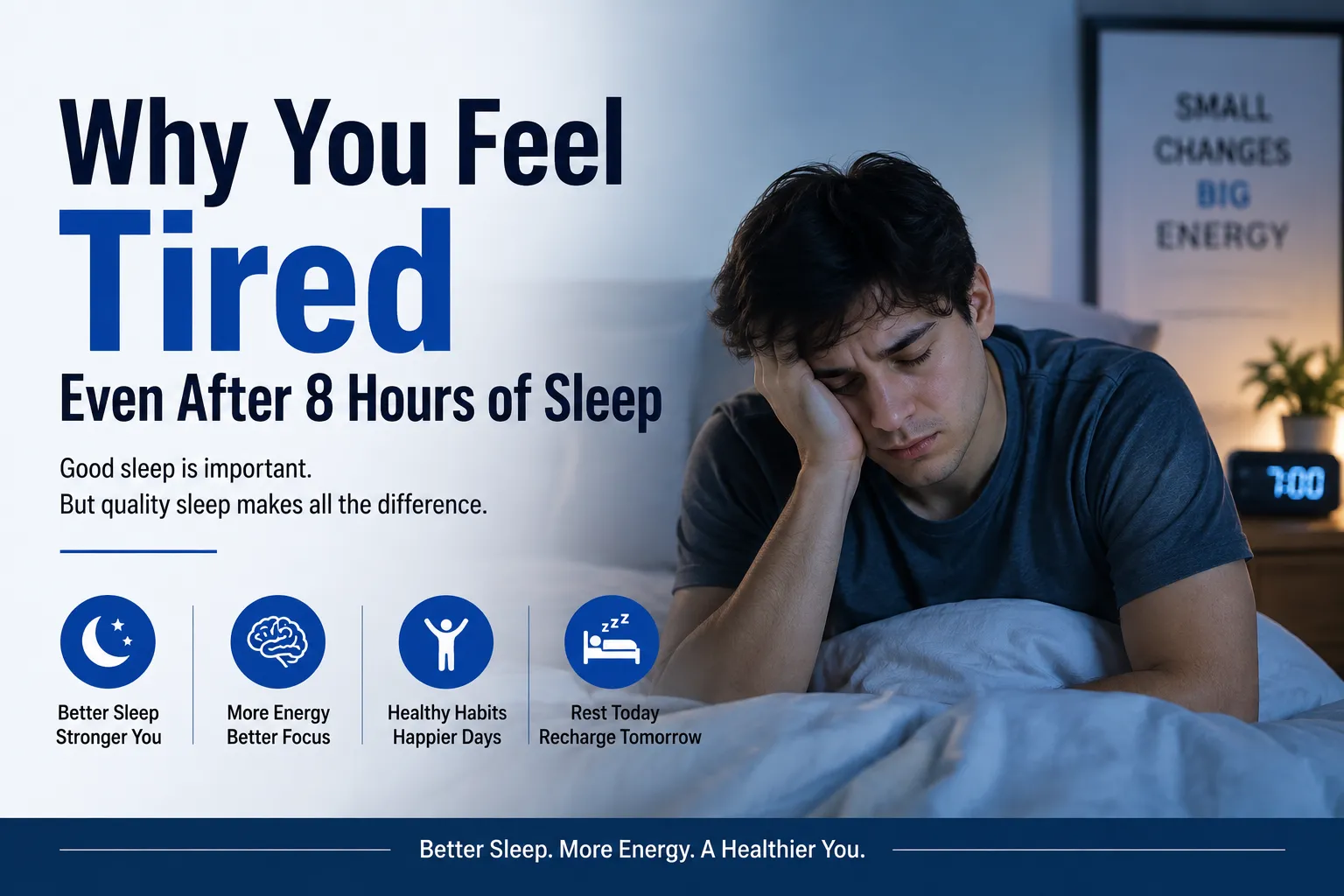
You finally get the recommended eight hours of sleep, yet when the alarm rings, you still feel exhausted. You drag yourself out of bed, rely on coffee to stay awake, and spend the day wondering why your energy never seems to return. If this sounds familiar, you're not alone. Millions of people experience persistent fatigue despite getting what appears to be enough sleep.
The truth is that sleep quantity and sleep quality are not the same thing. You can spend eight hours in bed but still wake up feeling unrefreshed if your sleep is repeatedly interrupted or lacks the deep and REM sleep stages your body needs to recover.

One common reason is poor sleep quality. Noise, light, an uncomfortable mattress, or waking up several times during the night can prevent your brain and body from completing healthy sleep cycles. Even if you don't remember waking up, these interruptions can leave you feeling drained the next morning.
Another major cause is stress. When your mind is filled with worries about school, work, or personal problems, your brain remains active even while you sleep. High levels of stress hormones make it difficult for your body to achieve truly restorative rest. As a result, you may wake up feeling as though you barely slept.
Your daily habits also play an important role. Spending hours looking at your phone before bedtime exposes your eyes to blue light, which suppresses melatonin—the hormone that signals your body it's time to sleep. Late-night scrolling may seem relaxing, but it often delays quality sleep.
Diet matters too. Eating heavy meals late at night or consuming caffeine in the evening can interfere with your natural sleep rhythm. On the other hand, dehydration and poor nutrition can also contribute to daytime fatigue, even if your sleep duration is adequate.

In some cases, persistent tiredness may be linked to medical conditions such as sleep apnea, anemia, thyroid disorders, or vitamin deficiencies. These conditions reduce your body's ability to recover during sleep and may require professional evaluation.
Fortunately, there are simple ways to improve your energy. Try going to bed and waking up at the same time every day, even on weekends. Limit screen time for at least an hour before bed, keep your bedroom cool and quiet, avoid caffeine late in the day, and stay physically active. Regular exercise helps many people sleep more deeply and wake up feeling refreshed.
If you continue feeling exhausted for several weeks despite improving your sleep habits, it's wise to consult a healthcare professional. Persistent fatigue should never be ignored because it can sometimes be a sign of an underlying health issue.
Getting enough sleep is important, but getting good-quality sleep is what truly restores your body and mind. Instead of focusing only on the number of hours you spend in bed, pay attention to how well you sleep. Small changes to your routine can make a remarkable difference, helping you wake up with the energy you need to enjoy each new day.
























Responses (0)
Sign in to share your thoughts.
Sign in