
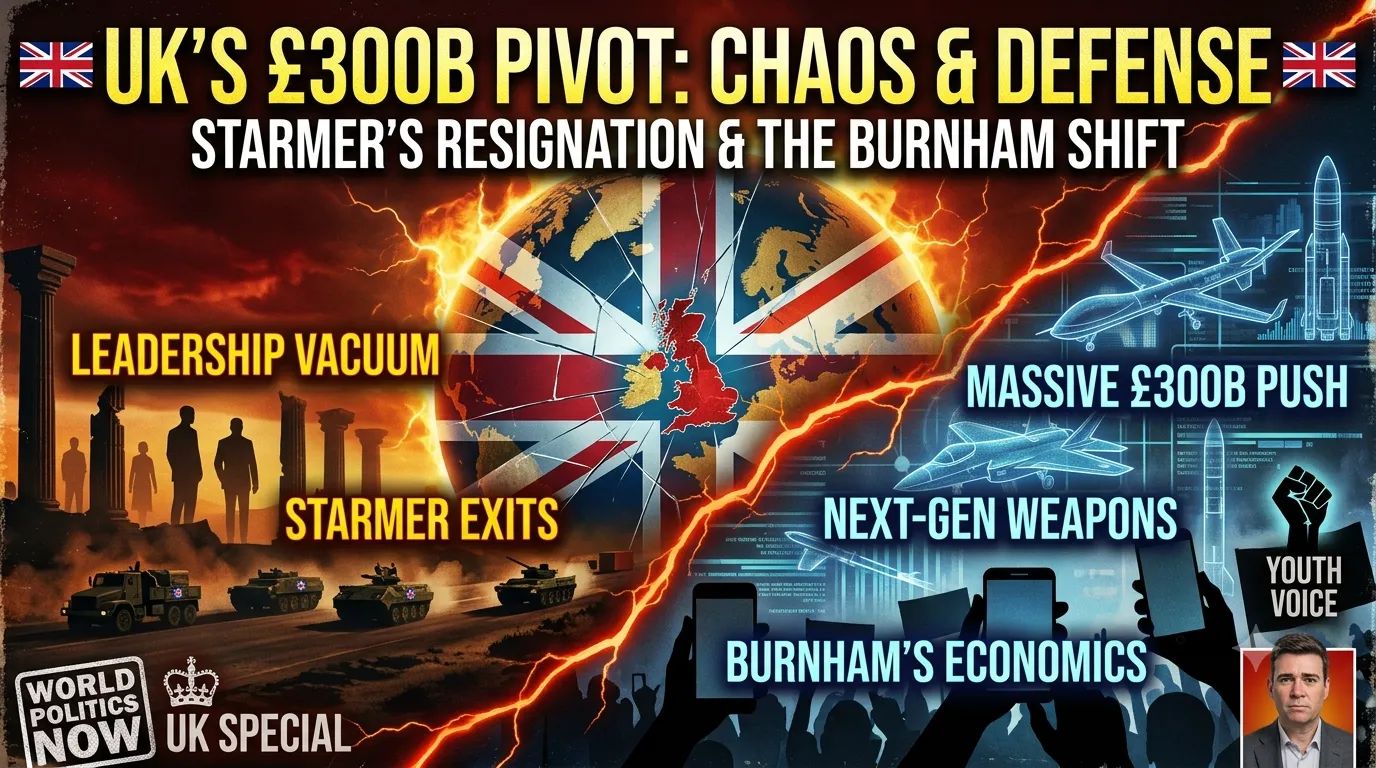
This massive pivot comes at a time when the Labour Party is actively re-evaluating its domestic and economic trajectory under the rising influence of figures like Andy Burnham.
## 1. The Political Fallout: Starmer’s Exit
Starmer’s decision to step down followed a brutal wave of local election losses in May and months of compounding internal party friction. Despite winning a historically large majority in 2024, his administration suffered from plunging public approval and mounting pressure from lawmakers worried about the rise of rival political factions like Reform UK.
By establishing a clear timeline for his departure—remaining in office until September 1 to ensure an orderly handover—Starmer has cleared a direct path for a leadership transition.
## 2. The £300 Billion Legacy: Breaking Down the Defense Push
Described by Starmer as his definitive political legacy, the newly published **Defence Investment Plan (DIP)** allocates roughly £300 billion over the next four years to completely modernize the UK's military capabilities. This historic funding push aims to increase the UK's defense spending to **2.7% of GDP** by the end of the decade—marking its highest level since the Cold War.
The package heavily prioritizes advanced tech to counter escalating global threats, particularly warnings that Russia could pose a direct threat to a NATO ally by 2030:
* **Drone Transformation:** Over £5 billion is dedicated to autonomous systems, covering everything from highly complex uncrewed ground vehicles and mine-hunting drones to low-cost tactical "kamikaze" drones.
* **The Next-Gen Air Shield:** More than £8 billion is locked in for the Global Combat Air Programme (GCAP) to build a next-generation stealth fighter jet alongside Italy and Japan.
* **Nuclear Deterrent:** A massive £64 billion is set aside specifically to upgrade and secure Britain's nuclear capabilities.
* **Domestic Jobs:** The government estimates this military overhaul will generate nearly **60,000 new direct and indirect jobs** within the UK defense sector by 2030.
## 3. Andy Burnham and the Shift in Economic Policy
As the race to replace Starmer takes shape, Greater Manchester’s former mayor, **Andy Burnham**, has rapidly emerged as the uncontested frontrunner. Burnham’s recent victory in the Makerfield by-election paved his way back to Parliament, positioning him to take the party's reins unchallenged after other prominent figures stepped aside to support him.
Burnham's impending premiership represents a noticeable pivot in Labour’s economic and social focus:
* **Focusing on Regional Growth:** Unlike Starmer's more centralized approach, Burnham’s background in regional governance means his economic agenda is expected to focus heavily on devolution, localized industrial strategy, and direct support for working-class communities.
* **Reversing Financial Stagnation:** Major labor and trade unions are already aggressively lobbying the incoming leadership to address immediate economic pain points, demanding an end to frozen tax thresholds and urgent interventions on domestic energy price caps.
## The Outlook
The UK currently finds itself balancing on a fine wire. On one hand, it is executing an aggressive, long-term military pivot to prepare for a more dangerous world and a potentially less predictable United States. On the other hand, a sweeping internal leadership change is forcing a rethink of how the state manages its domestic economy and restores public trust.
Whoever officially takes over the keys to 10 Downing Street in September will inherit both a highly modernized military blueprint and an intensely fractured, eager electorate.




















Responses (0)
Sign in to share your thoughts.
Sign in