
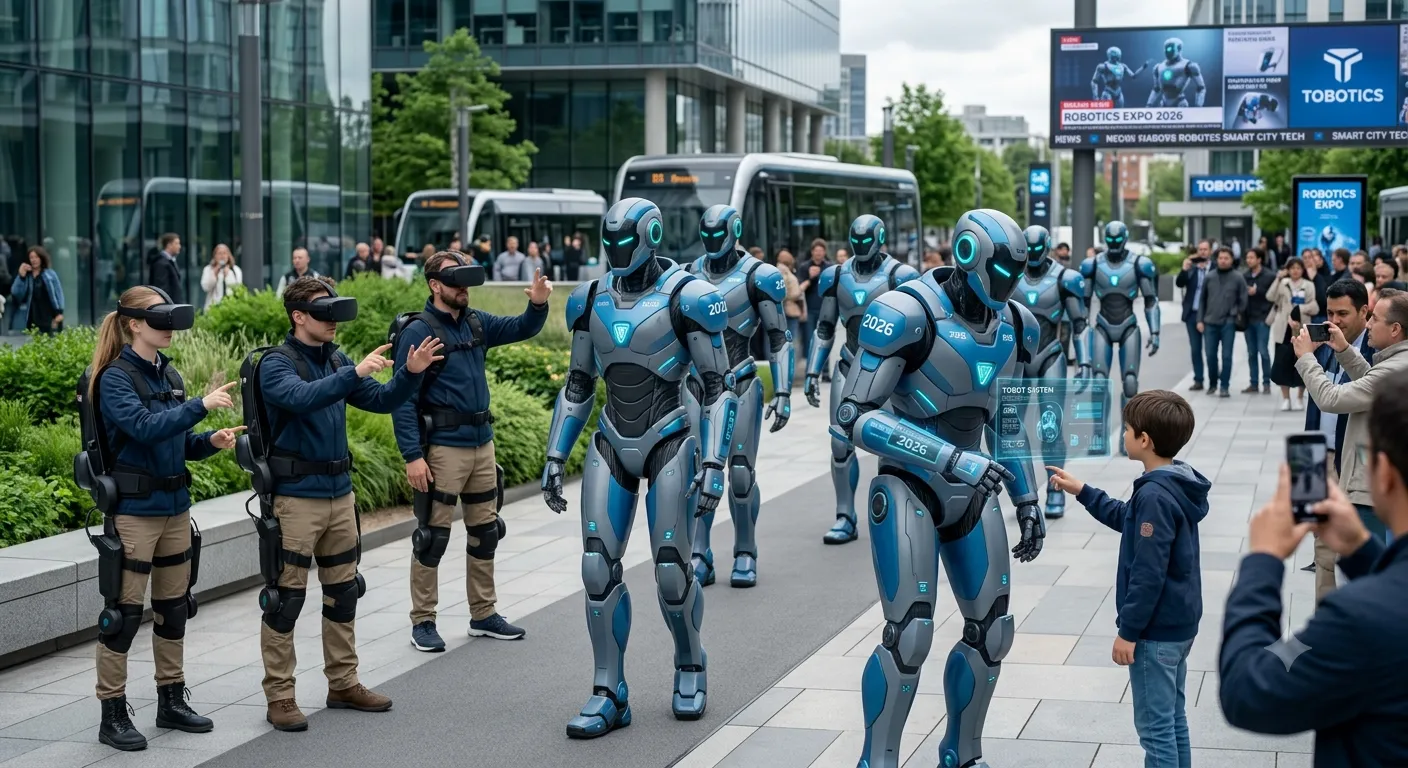
In 2026, humanoid robots have officially transitioned from prototypes and viral demos to real-world commercial deployments. This marks a pivotal year in robotics history.
Key Players and Deployments:
- Figure 03 (Figure AI): Hundreds of units delivered. Actively working at BMW’s Spartanburg plant, handling parts sequencing, material presentation, and package sorting with impressive autonomy (including 200+ hour runs with minimal intervention). Powered by advanced Vision-Language-Action (VLA) models like Helix.
- Tesla Optimus (Gen 3): Internal factory deployments at Tesla facilities for battery sorting and assembly tasks. Public reveal and ramp-up targeted for mid-to-late 2026, with ambitious scaling plans.
- Boston Dynamics Atlas (Electric): Production underway, with 2026 units committed to Hyundai and Google DeepMind partnerships for industrial and research applications. Known for superior athleticism and manipulation.
- Agility Robotics Digit: Leading commercial logistics deployments (e.g., GXO warehouses, moving tens of thousands of totes). Expanding into automotive plants.
- Others: Unitree G1/H1 (affordable, widespread in China), UBTech, Apptronik Apollo, and more. China leads in volume, while U.S. firms emphasize AI sophistication. Estimates suggest tens of thousands of units in operation or production by year-end.
These robots perform repetitive factory tasks today but are rapidly gaining general-purpose capabilities through AI. Prices are dropping toward $20K–$50K targets, with Robot-as-a-Service (RaaS) models emerging. Applications are expanding toward elderly care, homes, and beyond.
Why This Matters for the Bigger Picture: Humanoid form factors echo ancient myths of artificial beings—Greek Talos, Egyptian automata, Sumerian creations, or Indian robot guardians. Some ancient astronaut theorists speculate these legends describe real technology from visitors or lost civilizations.
Are modern humanoids purely human ingenuity, or accelerated by reverse-engineered insights (as some whistleblowers have hinted in UAP contexts)? Governments and scientists remain officially silent on any non-human tech links, emphasizing terrestrial AI and engineering breakthroughs.
Tying It Back: UAPs, Science, and Hidden History
The humanoid robot surge coincides with ongoing UAP disclosures. Pentagon reports and hearings note craft with non-human performance characteristics, though no confirmed extraterrestrial evidence. Some sightings describe “humanoid” or biological entities, fueling speculation about synthetic life or biological-mechanical hybrids.
JWST continues revealing cosmic anomalies challenging timelines. Ancient sites like Göbekli Tepe push back human sophistication, aligning with theories of external influence or forgotten advanced societies.
What Scientists & Governments Likely Know
- Scientists: Exoplanet biosignatures, Fermi Paradox solutions, and rapid robotics progress suggest we may soon create (or encounter) non-biological intelligence. Ethical debates around robot rights and consciousness mirror ancient concerns about “playing god.”
- Governments: Heavy classification around UAPs and advanced tech persists for national security. Partial transparency (videos, hearings) balances disclosure with control. No public admission of alien contact or hidden history, but patterns in global files suggest something unexplained.
The 2026 humanoid reality brings ancient myths into the lab. Whether this leads to enlightenment, disruption, or new cosmic questions remains to be seen.
What connections do you see between rising robot tech and humanity’s mysterious past? Share below, and stay tuned for more on these converging frontiers.






















Responses (0)
Sign in to share your thoughts.
Sign in