10 Practical Python Projects for Beginners to Build in 2026
When you are learning Python, do not stubbornly cling to the concepts in your textbooks. Many beginners often get stuck in the dead end of only poring over theo...
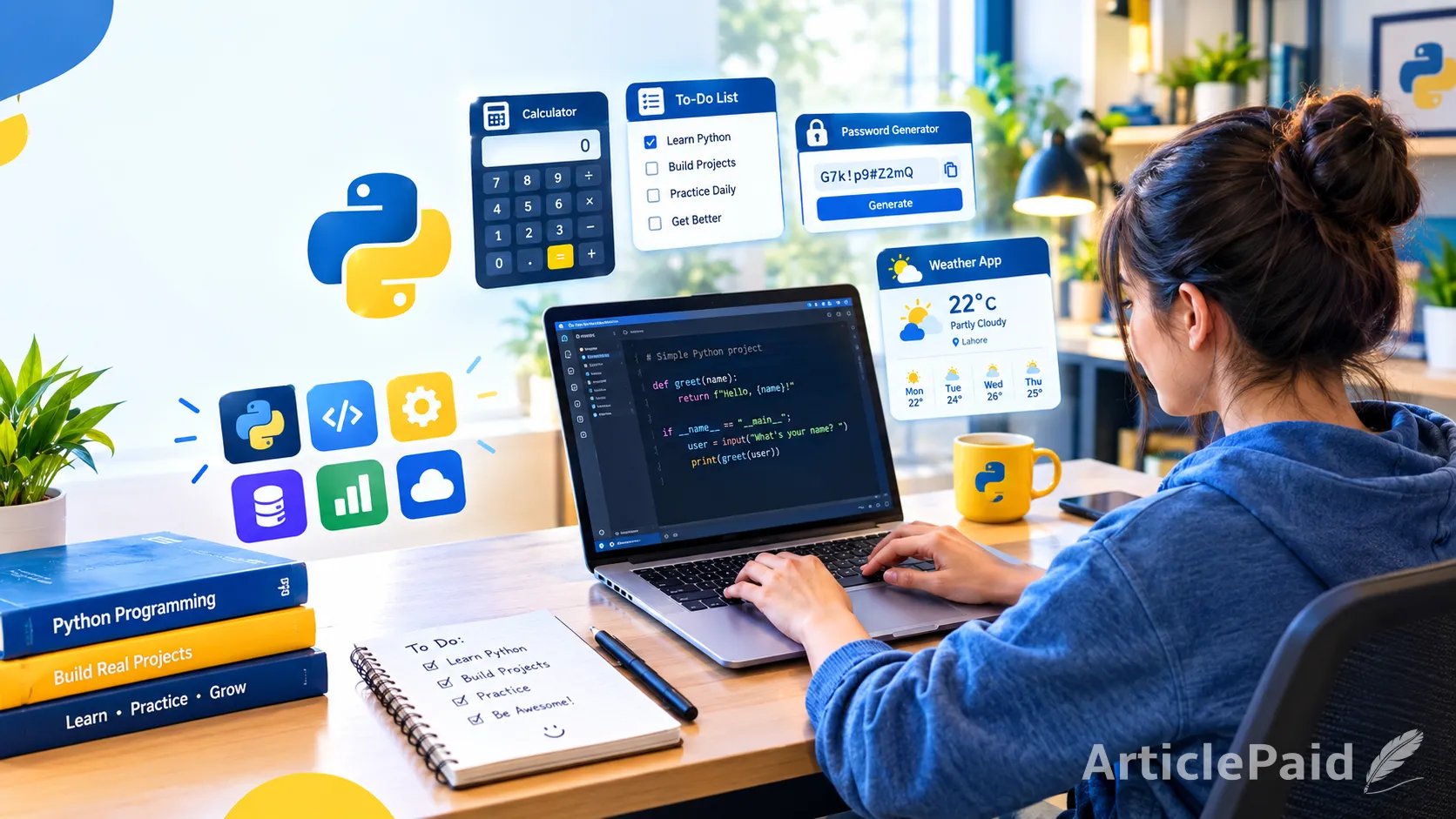
When you are learning Python, do not stubbornly cling to the concepts in your textbooks. Many beginners often get stuck in the dead end of only poring over theories, piling up knowledge points that grow increasingly messy in their minds, and finding the learning process more and more strenuous. Try to shift your mindset: start building something practical and tangible that you can share with others, and you will find learning far easier. If you are currently searching for beginner-friendly Python practice projects, choosing practical projects that let you get hands-on is the right call. Throughout working on these projects, you will not only gradually master the core fundamentals of programming, no longer having to scratch your head over the dry, lifeless definitions in textbooks, but you will also build up a portfolio of work that you can truly show to classmates and seniors. This approach leaves you with tangible gains and shareable achievements, keeping you far more motivated than if you only bury your head in theoretical studies.
I have a piece of good news to tell you first: you do not have to force yourself to write large, complex, fully featured software on your very first day of learning. Many new learners get intimidated right at the start, believing they have to immediately produce a presentable, complex program, and they back out before they even begin. That burden is completely unnecessary. Learning Python works the same way as learning to cook: you would not try to prepare a full Manchu-Han Imperial Feast the moment you pick up a spatula. You start practicing with simple recipes, nailing easy dishes with few steps like fried eggs or stir-fried greens first. Once you have solidified your basics, it will follow naturally to attempt a full multi-course feast. The same pace applies to learning Python.
Why Build Python Projects
When you learn programming, you will inevitably start by mastering a pile of scattered knowledge points, such as variables, loops, and functions. If you only stop at the level of understanding these concepts, you will never know what these things can actually be used to do. Building projects turns the programming course content from textbooks into real hands-on experience. You will no longer memorize these knowledge points in isolation; instead, you can use the tools you have learned to solve real problems, laying a solid foundation for your programming journey.
For newbies who have just started writing code, building a few small personal projects can also make learning programming far more interesting. You do not need to dive straight into large projects that take several months to complete. Small projects have low difficulty and can be implemented quickly. Every time you finish a small tool, you gain more confidence, and you also pick up a key skill that can support your long-term programming learning, keeping you motivated to keep learning.
1. Build a Simple Calculator
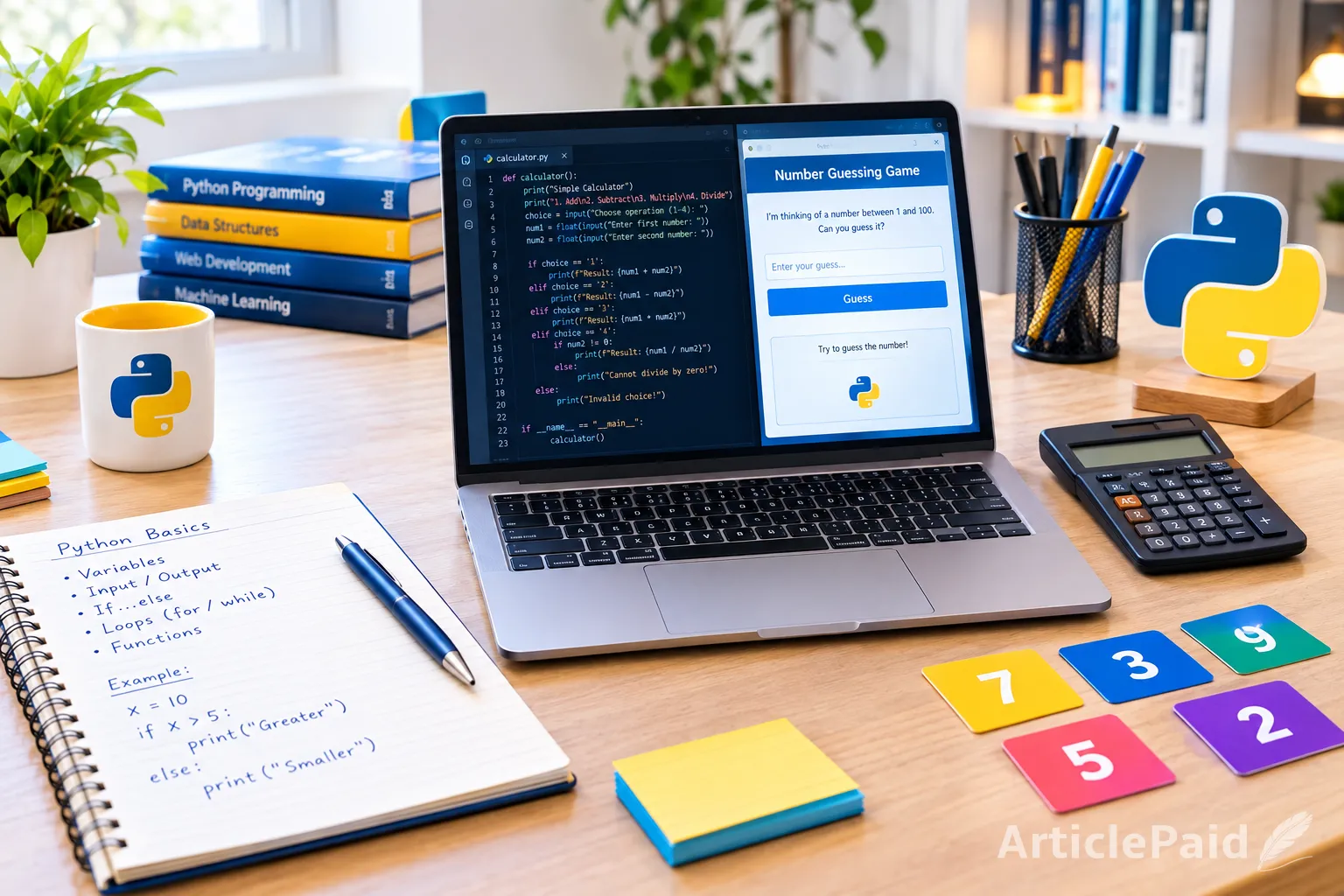
A calculator is one of the simplest Python projects that first-time coders can work on. You do not need to master any complex techniques to write a usable program that can perform addition, subtraction, multiplication, and division to handle the most basic mathematical calculations. You can run it immediately after finishing it, and you will get a strong sense of accomplishment very quickly.
During the process of building this project, you can practice all the scattered knowledge points you learned before. You will master how to use variables, write functions, obtain user input, and write conditional judgment statements, turning the content you only previously understood into skills you can truly use.
Make It More Interesting
Once the basic calculator works properly, if you want to keep refining it to make this small tool more convenient and interesting, there are directions to explore. You can add a percentage calculation function or create a menu that lets users directly select which operation they want to perform, instead of manually typing commands every time, which makes this small tool even more useful.
2. Build a Number Guessing Game
Advertisement
Global News & Perspective
Stay Informed with The International Press
Unbiased coverage, breaking international headlines, deep-dive analysis, and real-time world updates.
Find practicing Python too boring? Turn it into a game to play instead. The rules for this Number Guessing Game are very simple: first have the computer randomly select a number, and you, as the player, will take turns guessing what that number is. Throughout the process of building this small game, you will get to use Python's random module, and you will also practice writing loops and if-else conditional statements.
3. Build a To-Do List
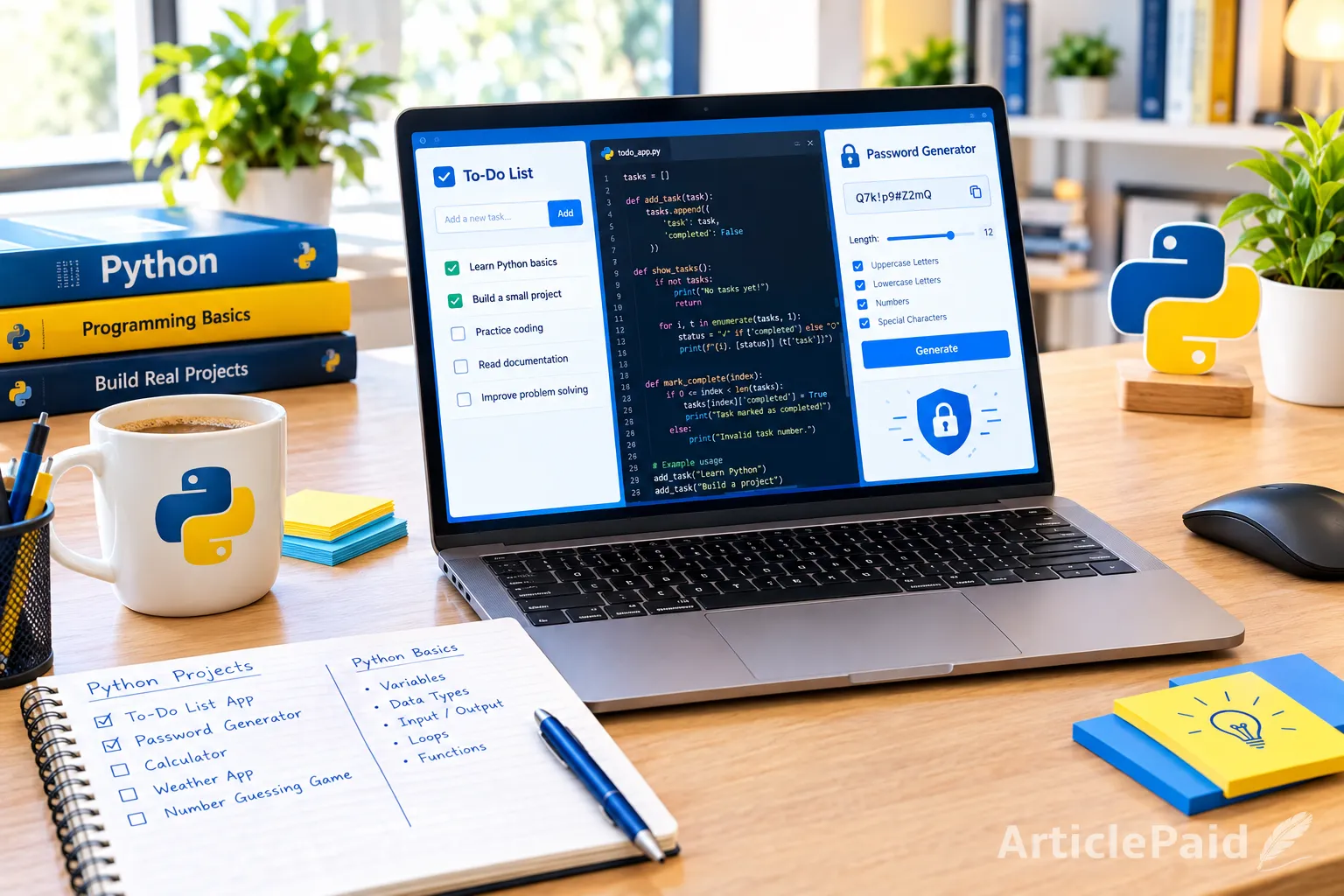
A to-do list is a practical small project that beginners can pick up and complete easily, and the finished product can be used directly. Users of this list can add new to-do tasks, view all recorded tasks at any time, and delete any completed tasks once they are finished. By building this project, you will learn how to operate lists, write functions, and master the most basic data management methods.
4. Build a Password Generator
This password generator can randomly create password combinations composed of letters, numbers, and symbols. Building this tool is perfect for practicing random selection, string operations, and methods to obtain user input; you can also add an extra feature that allows users to customize the length of the password to be generated.
5. Create a Digital Clock
A digital clock is another fun project, which can be done with Python. It allows displaying the current time on the screen and updating it constantly.
This project will help you get familiar with time modules, loops, and program flow.
6. Create a Quiz Game
You can also make a quiz game where the user will answer multiple-choice questions and receive their final score.
Advertisement
Trusted Halal Matrimonial
Authentic Rishta Service by NikahNoor
Find compatible proposals in a 100% Halal way, connecting eligible singles across Pakistan and abroad with total family privacy.
It is possible to store the questions in a list or dictionaries. The project will help you practice basic logic, loops, functions, and data structures.
7. Create an Expense Tracker
If you are looking to build something with real-life application, try to create an expense tracker.
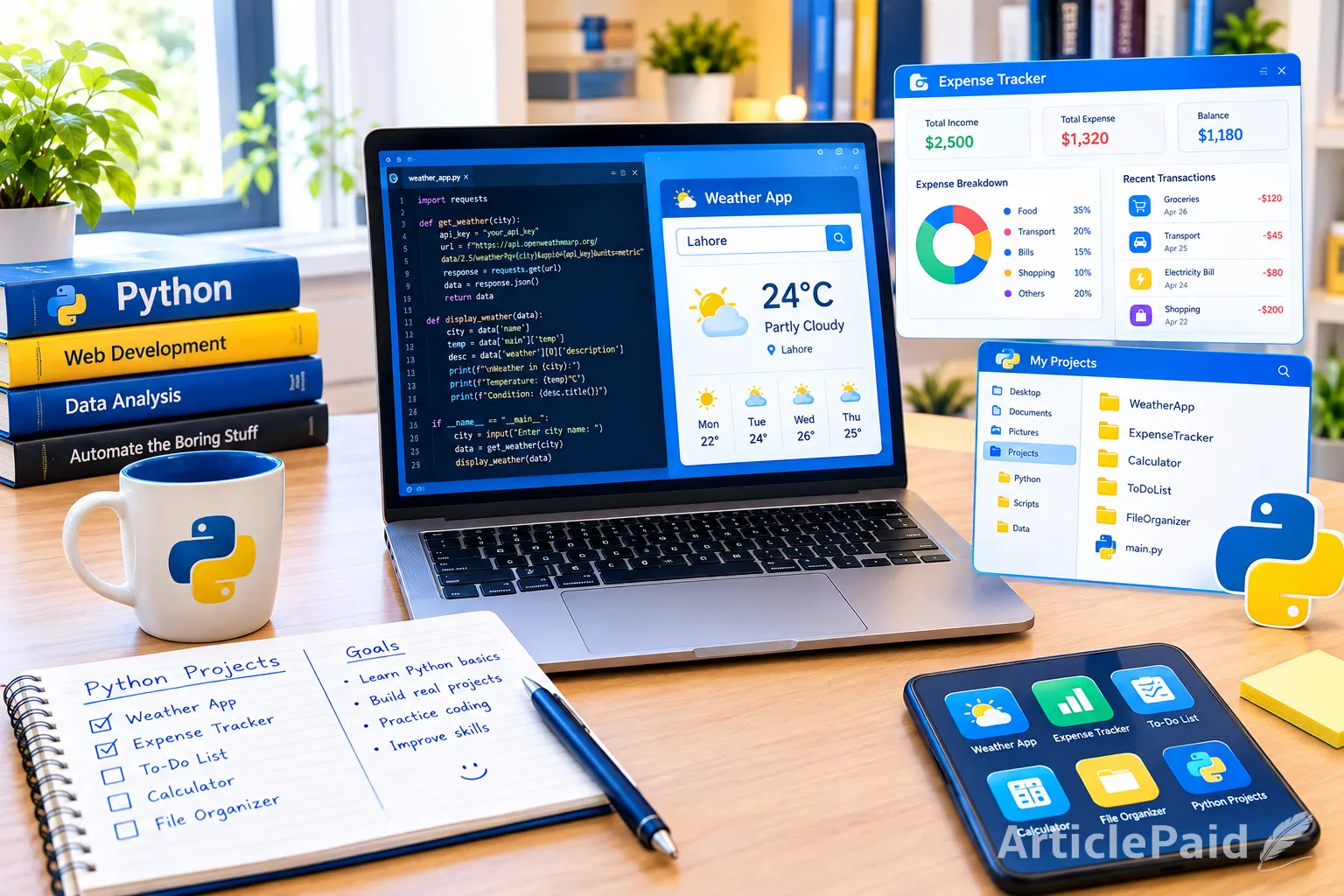
In this program, you will allow the user to input expenses and assign them to particular categories (eating out, gas, shopping, etc.). Later, you will be able to add functionality that will calculate the totals per category and track the annual or monthly budget.
8. Create a Weather App
A weather app is a great way to start to explore how APIs work. You can type in the name of a city and get information about its weather.
It is a good idea to be introduced to APIs and JSON data with this project and external services.
9. Make a File Organizer
Do you have dozens of disorganized files on your computer? A file organizer written in Python will help you.
It is possible for a Python program to organize files by their extension: photos, documents, and videos. This project will familiarize you with the basics of file management and automation.
Advertisement
10. Build a Simple Web Scraper
It is possible to make a simple web scraper in Python that can help you get information from the web.
It is a good idea for beginners to start with this project and learn HTML and how the web works. It is essential to remember that you should always check the terms of service of a website you are scraping.
Tips for Choosing a Python Project
Try to find a slightly challenging but realistic project to begin with. It is not a problem for your first project to be somewhat ugly.
Building → testing → fixing → improving.
After completing a project, try adding a couple of your own features. Your skills will be improved gradually and not overwhelmed.
Conclusion
These Python projects for beginners allow you to turn theoretical knowledge into practice. Start with a simple calculator or guessing game and move on to apps that work with files, APIs, and web data. The most important thing is to get coding!

















Responses (0)
Sign in to share your thoughts.
Sign in