
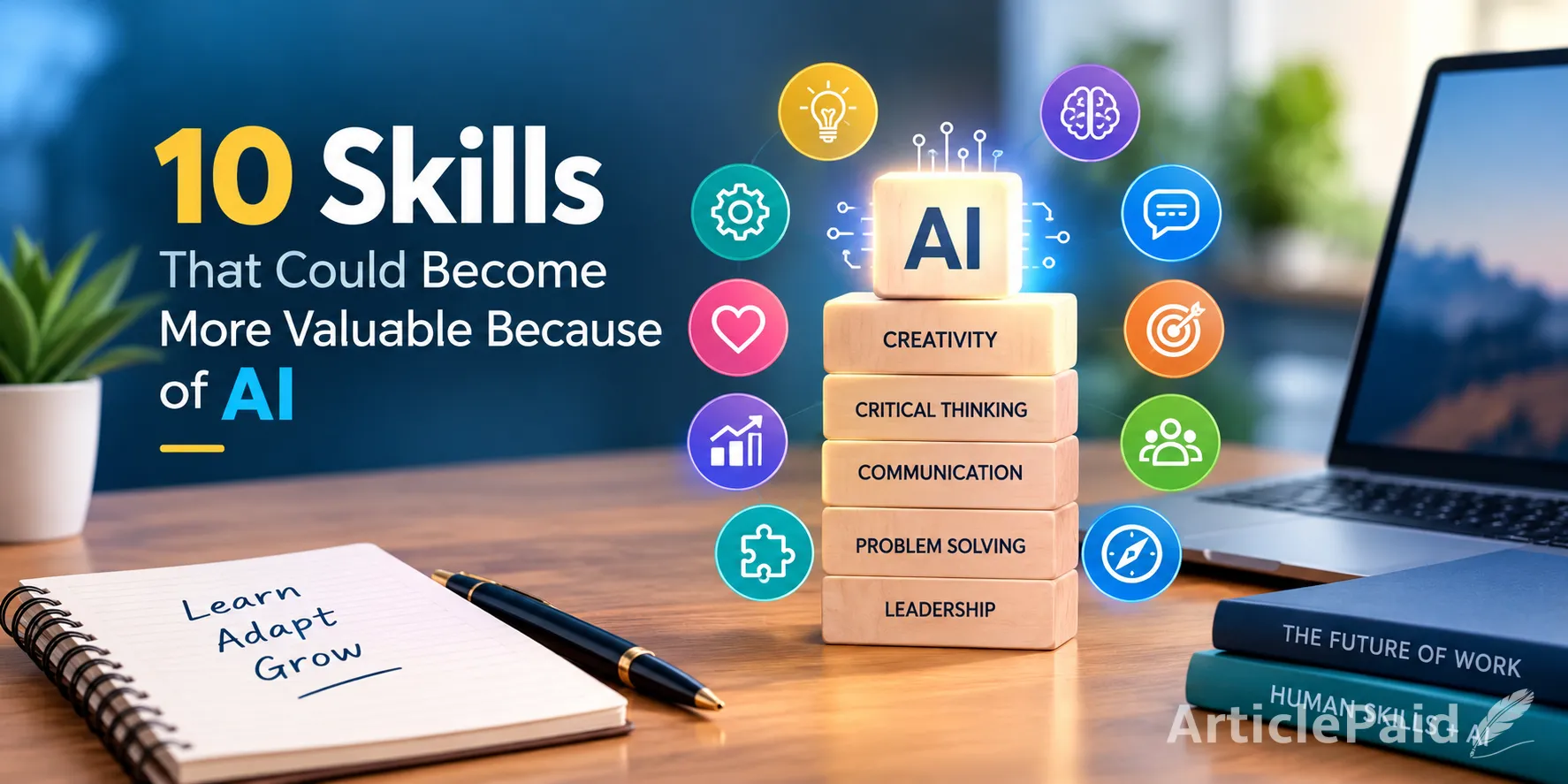
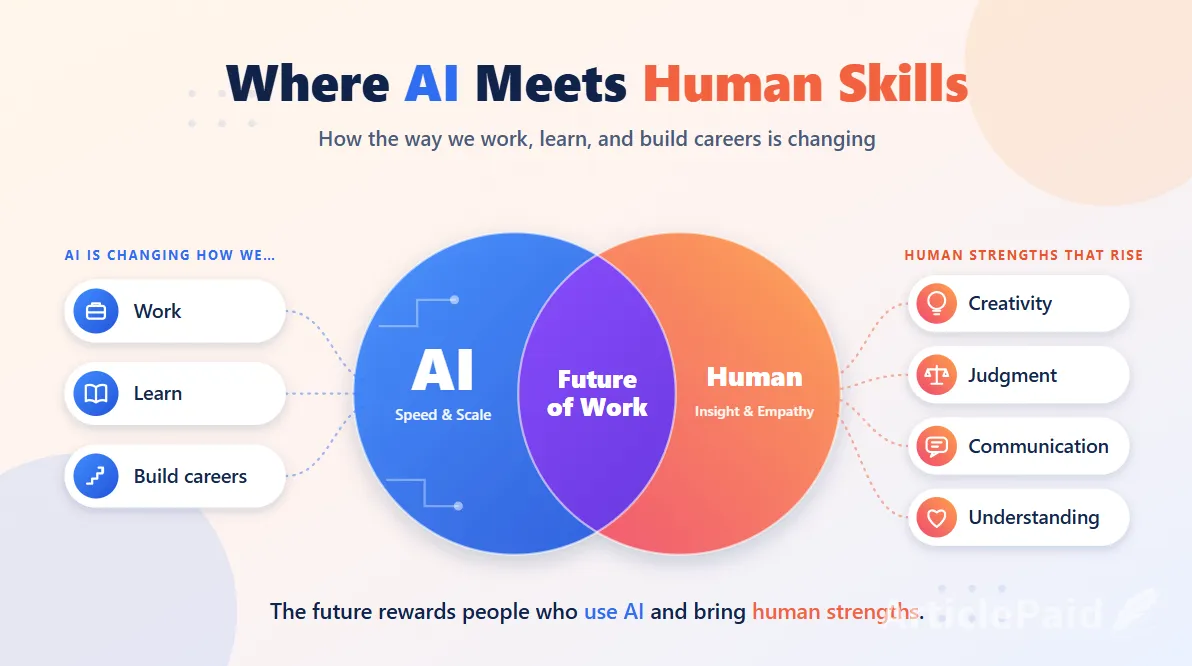
Artificial intelligence is changing the way people work, learn, and build careers. As AI tools become more capable, many people assume that technology will make human skills less important. In reality, AI may increase the value of certain skills that require creativity, judgment, communication, and human understanding.
The future of work is likely to reward people who know how to use AI while also bringing valuable human abilities to the table. Here are 10 skills that could become increasingly valuable because of AI.
1. Creative Thinking
AI can generate ideas, images, text, and other forms of content in seconds. However, deciding which ideas are useful, original, and appropriate still requires human creativity.
Creative thinking can help professionals develop better concepts, solve unusual problems, and use AI outputs in more interesting ways. As AI handles more routine creative tasks, original thinking could become an even stronger advantage.
2. Critical Thinking
AI can produce impressive answers, but it can also make mistakes, misunderstand information, or provide unreliable conclusions.
Critical thinking helps people evaluate AI generated information, identify errors, compare different sources, and make better decisions. This skill is especially valuable in education, business, research, journalism, and technology.
3. AI Literacy
Knowing how to use AI tools effectively is becoming an important workplace skill. AI literacy goes beyond simply asking a chatbot questions.
Professionals who understand prompting, AI workflows, automation, AI limitations, and responsible AI usage can potentially complete tasks faster and more efficiently. People who learn how to work alongside AI may have an advantage as AI adoption continues to grow.
4. Communication Skills
Strong communication remains essential even when AI is involved in the workflow.
Employees need to explain ideas clearly, communicate with clients, collaborate with teams, and present information effectively. AI can help create drafts and organize information, but humans still need to understand the audience and communicate with clarity and confidence.
5. Emotional Intelligence
Emotional intelligence involves understanding emotions, responding appropriately, building relationships, and working effectively with other people.
AI can analyze conversations and recognize certain patterns, but human relationships often require empathy, trust, and genuine understanding. These abilities can remain highly valuable in leadership, customer service, education, healthcare, and management.
6. Adaptability
Technology changes quickly, and AI is accelerating that change. Tools, workflows, and job requirements can evolve within a short period of time.
Adaptability allows professionals to learn new technologies, adjust to changing responsibilities, and remain productive in unfamiliar situations. Instead of relying on one fixed skill set, adaptable workers can continue developing as the workplace changes.
7. Problem Solving
AI can help people analyze information and suggest possible solutions, but identifying the right problem to solve is often more difficult than generating an answer.
Strong problem solving skills allow professionals to understand complex situations, identify important details, evaluate possible solutions, and make practical decisions. AI can become a powerful tool when combined with good human judgment.
8. Strategic Thinking
Businesses are increasingly using AI to automate tasks, analyze data, and improve operations. However, technology alone does not determine which goals a business should pursue.
Strategic thinking helps professionals understand the bigger picture, identify opportunities, manage resources, and make long term decisions. People who can connect AI capabilities with business objectives may become especially valuable.
9. Data Interpretation
AI can process enormous amounts of data, but organizations still need people who can understand what the information actually means.
Data interpretation involves recognizing patterns, evaluating results, understanding context, and turning information into useful decisions. This skill can be valuable across marketing, finance, technology, research, and business management.
10. Leadership
As AI changes workplace responsibilities, strong leadership could become more important than ever.
Effective leaders need to guide teams through change, make responsible decisions, encourage innovation, and understand how technology affects people. AI may automate certain management tasks, but building trust and motivating people still require strong human leadership.
The Future Belongs to People Who Can Work With AI
AI is not simply changing which jobs people do. It is also changing which skills can help professionals stand out.
The most valuable combination may be AI knowledge plus strong human skills. Someone who can use AI efficiently while thinking critically, communicating clearly, solving problems, and creating original ideas can bring value that technology alone cannot provide.
For students, freelancers, employees, and business owners, developing these skills today could make it easier to adapt to the changing future of work.
Final Thoughts
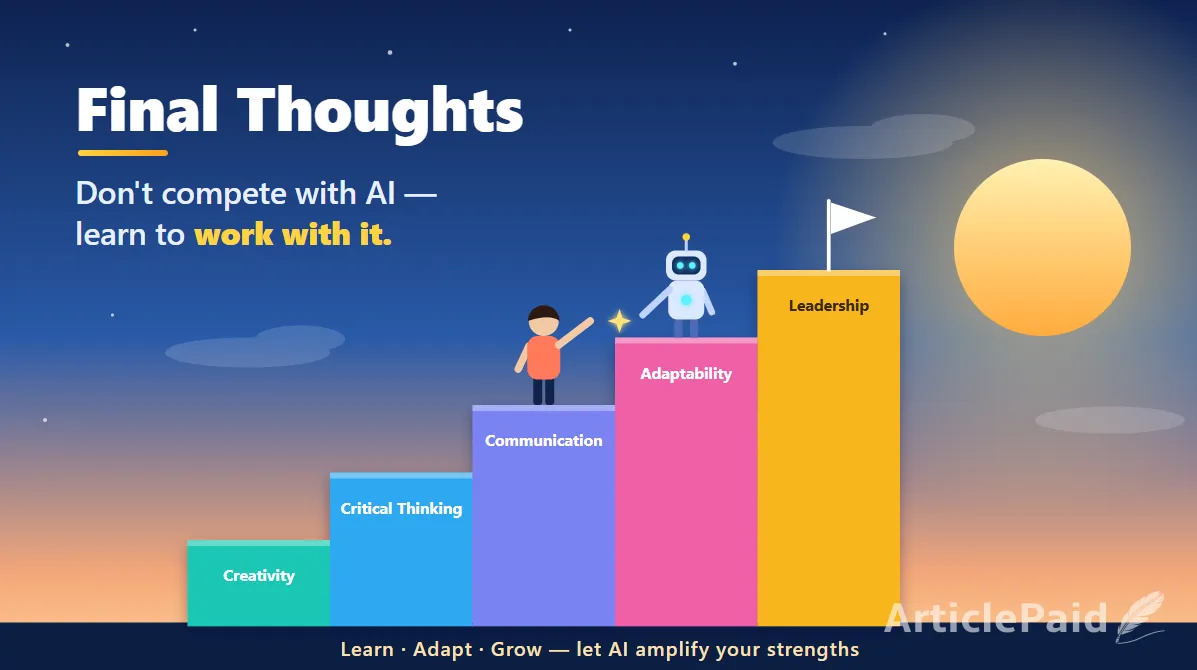
Artificial intelligence will continue to reshape industries and create new opportunities. While some tasks may become automated, skills such as creativity, critical thinking, communication, adaptability, and leadership are likely to remain important.
Rather than competing against AI, learning how to work effectively with it may be one of the smartest career strategies for the future.













Responses (0)
Sign in to share your thoughts.
Sign in