
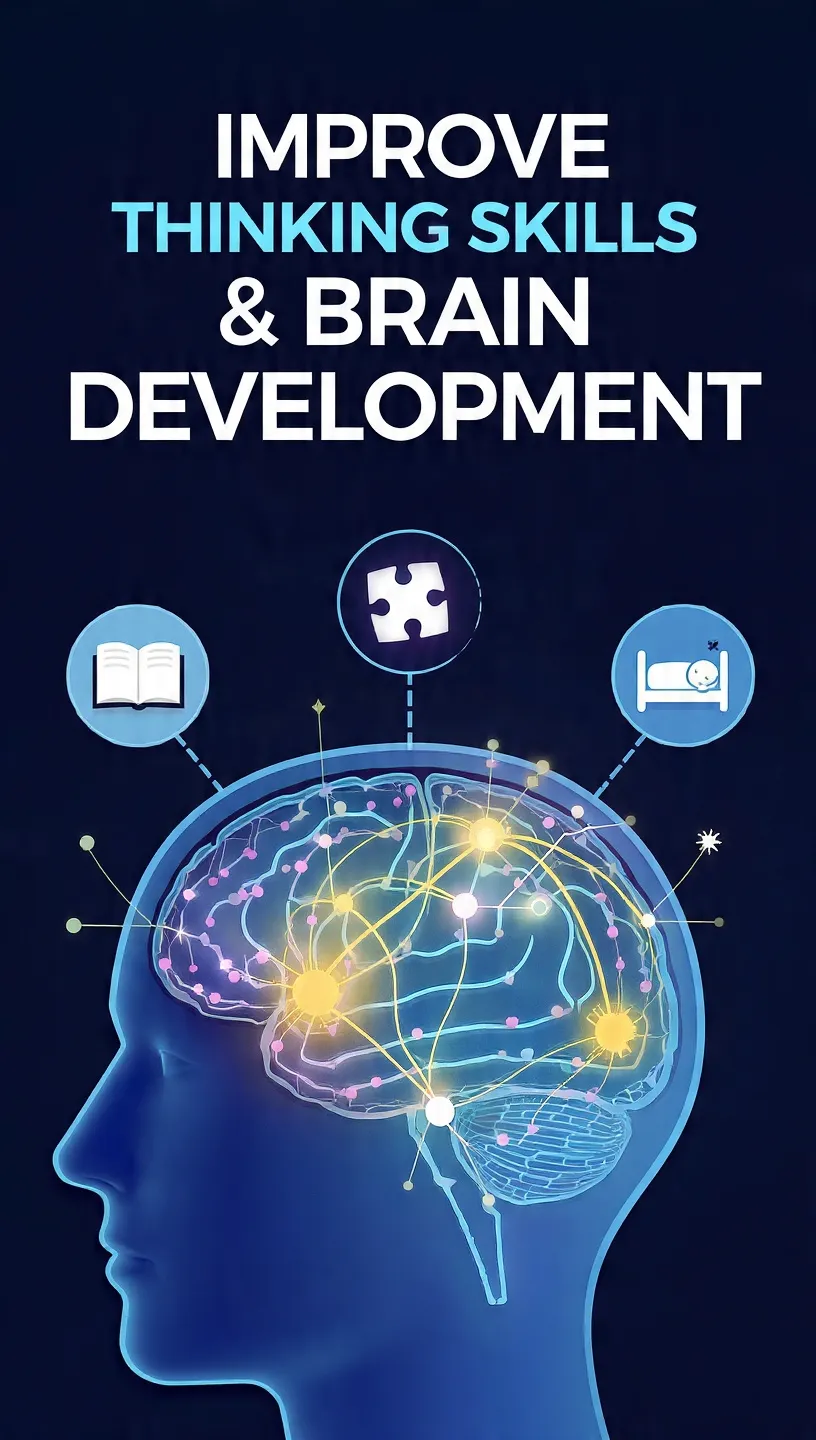
At age 7, I was certain my dad had all the answers. By 17, I was convinced he knew nothing. By 25, I started asking him for advice again. That’s how _cognitive development stages_ really work - messy, slow, and they don’t have an end date.
Cognitive development_ is how your brain learns to think, solve problems, and make decisions over time. And no, it doesn’t stop after school or college.
1. Sensorimotor Stage: Learning Starts Before Words
Babies aren’t born as blank slates. A 6-month-old drops a spoon, watches it fall, picks it up, and drops it again. That’s not random - it’s science. This first phase in _Jean Piaget theory_ is called the sensorimotor stage. Kids learn by touching, tasting, and throwing. Parents see a mess, but it’s actually building the base for _brain development in adults_ later.
2. Preoperational Stage: Imagination Without Logic
From 3 to 7 years, kids move into the preoperational phase. A stick turns into a sword. A cardboard box becomes a car. Imagination runs wild here. But they’re highly egocentric. _Ask a 4-year-old “what can you see from my chair?” They’ll only tell you what’s on their side._
Exactly. That’s why cognitive development stages matter. Slowly, we learn to see the world through someone else’s eyes._
3. Concrete Operational Stage: Logic For Things You Can Touch
Between 7 and 11 years, kids become logical, but only for things they can see or touch. They understand math, rules, and that a short wide glass holds the same water as a tall thin one. _Ask them this instead: “What if fairness didn’t exist?”_Their brain freezes. Abstract thinking needs more _brain development in adults_, which develops during the teenage years.
4. Formal Operational Stage: Abstract Thinking Begins
Teenagers reach the formal operational stage. Now “what if” questions make sense. A 15-year-old can plan a career, debate politics, and overthink one text message for 3 hours. But the prefrontal cortex keeps developing until around age 25. That’s why _brain development in adults_ continues past 20. Risk-taking is high because the logic part is still installing.
5. Your brain keeps developing long after 25
Biggest myth: learning ends after college. Reality: _neuroplasticity_ means your brain keeps forming new connections at 30, 40, and 60. Learning to code at 35, picking up a new language at 50, playing guitar at 65_ It’s slower than in childhood, but it’s 100% possible. If you want to _improve thinking skills_, age is just a number.
3 Simple Ways to Get Smarter - No Degree Required:
1. Add Novelty Daily: Push your brain out of routine. Take a new route, try a new recipe, learn a new skill on YouTube for 10 minutes. Comfort kills _neuroplasticity_. New experiences force your brain to build fresh pathways.
2. Embrace The Struggle: If learning feels easy, you’re not growing. The real “aha” moment comes after 20 minutes of “I don’t get this.” That frustration is _cognitive development stages_ happening inside your head.
_Teachers used to look at my work and ask, “Where did you even learn that formula?”_That’s your brain forging a new path right after it gets hard. Don’t stop now.
3. Protect Your Sleep: 7-8 hours of sleep is non-negotiable if you want to _improve your thinking skills_ at any age. While you sleep, your brain files memories and solves problems. Pull an all-nighter and you erase the “save” button. All that studying goes to waste.
The truth you won’t see on Instagram_
_The smartest people aren’t the ones with all the answers - they’re the ones who can say “I was wrong” and change their mind._ That’s real growth.
Your brain isn’t an iPhone that becomes outdated in 2 years. It’s a muscle. _Skip the gym for 6 months and your muscles forget how to work._ Train it daily, and even at 60 you’ll outthink most 20-year-olds.
Every book, every hard problem, every time you choose “learn” over “scroll” - you’re doing reps for _brain development in adults_.
So stop waiting to feel “ready.” Start messy. 10 years from now you won’t remember last night’s TikTok. But you’ll remember the day you stopped following and started thinking for yourself._
That day starts now.
FAQs About Cognitive Development
1. Does cognitive development stop after age 25?
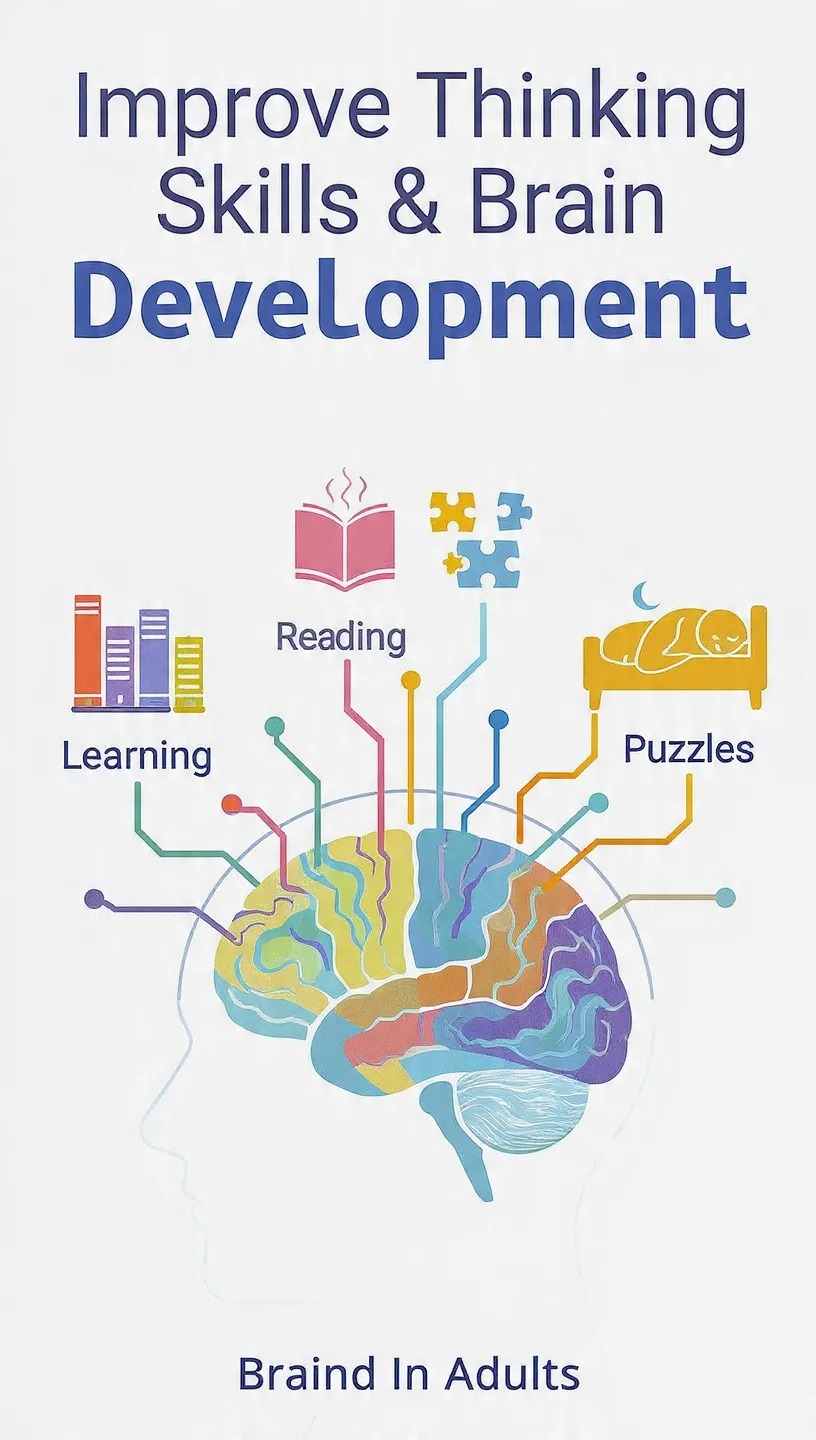
No. _Adult brains keep developing through _neuroplasticity_._Speed slows down, but learning never stops. You can _improve your thinking skills_ no matter your age.
2. What are the key phases of how we learn to think?
Jean Piaget theory_ breaks thinking into 4 _cognitive development stages_: sensorimotor, preoperational, concrete operational, and formal operational. Each stage sets the stage for the next.
3. How can I improve thinking skills naturally?
Read 20 minutes daily, solve puzzles, learn new skills, sleep 8 hours, reduce sugar. Consistency beats talent. That’s _neuroplasticity_ in action.
4. Why do teens make risky decisions?
Because their prefrontal cortex is still developing. Your brain doesn’t finish its updates until around age 25. Until then, logic and risk judgment stay weak.
5. Is Jean Piaget theory still valid in 2026?
Yes. While science has added details, the 4 _cognitive development stages_ from _Jean Piaget theory_ remain the foundation psychology students learn worldwide.






















Responses (0)
Sign in to share your thoughts.
Sign in