Aphantasia: Why Some People Cannot See Pictures in Their Minds

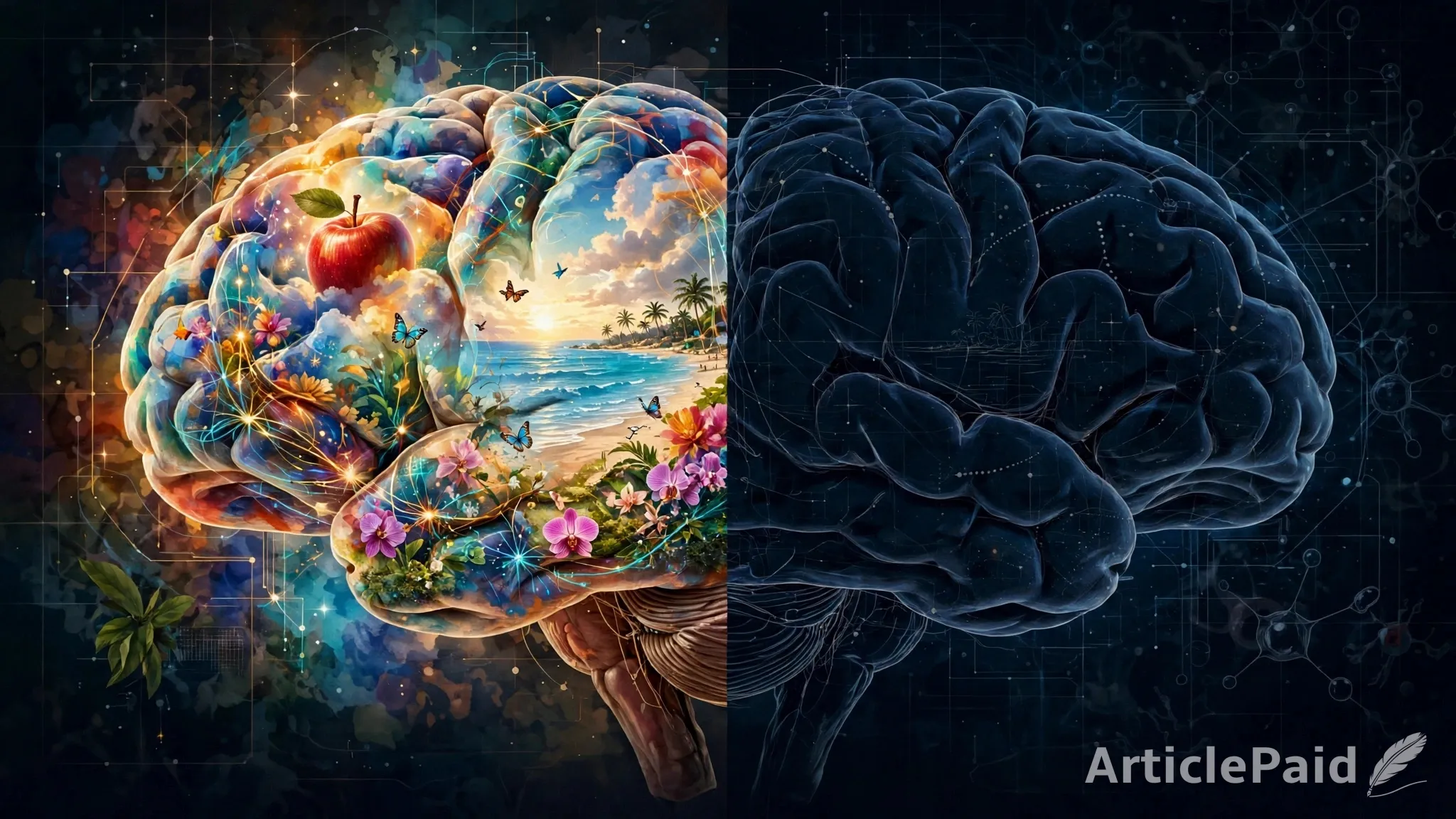
Have you ever closed your eyes and imagined a beautiful beach, a familiar face, or a red apple? For most people, creating a mental picture feels completely natural. But for some, this is impossible. They know exactly what an object looks like, yet they cannot see its image in their mind. This fascinating experience is called aphantasia.
What Is Aphantasia?
Aphantasia is a condition where a person cannot voluntarily create mental images, or can only produce extremely faint and unclear pictures. For example, if you ask them to imagine an apple, they will know its color, shape, and texture, but they will not actually see an apple in their mind's eye.
It is important to note that people with aphantasia can still think, learn, recognize faces and objects, and store information. Their brains simply process visual imagination in a different way.
How Common Is It?
Research shows that imagination is not the same for everyone. A large-scale study combining data from 9,063 participants in 2024 estimated that about 0.9% of people experience complete aphantasia, while another 3.3% have very weak visual imagery.
This proves that mental imagery exists on a spectrum. Some people have hyper-vivid imagination, while others have little to no visual imagery at all.
Why Does It Happen?
The exact cause of aphantasia is still under investigation. Scientists believe that mental imagery requires strong communication between different brain regions, including those responsible for memory, visual processing, and executive thinking.
Some individuals report having aphantasia their entire lives, suggesting it may be congenital. In other cases, people report changes in mental imagery after neurological events. Researchers are still working to understand these differences.
Does Aphantasia Affect Memory and Creativity?
A common myth is that people with aphantasia cannot be creative or have poor memory. This is not true.
People with aphantasia can be brilliant artists, writers, scientists, and designers. Instead of relying on mental pictures, they often use verbal, factual, emotional, and logical strategies to create and remember.
However, the lack of visual imagery can influence how they recall past events or approach learning, but it does not limit their potential.
Can You Test Your Own Imagination?
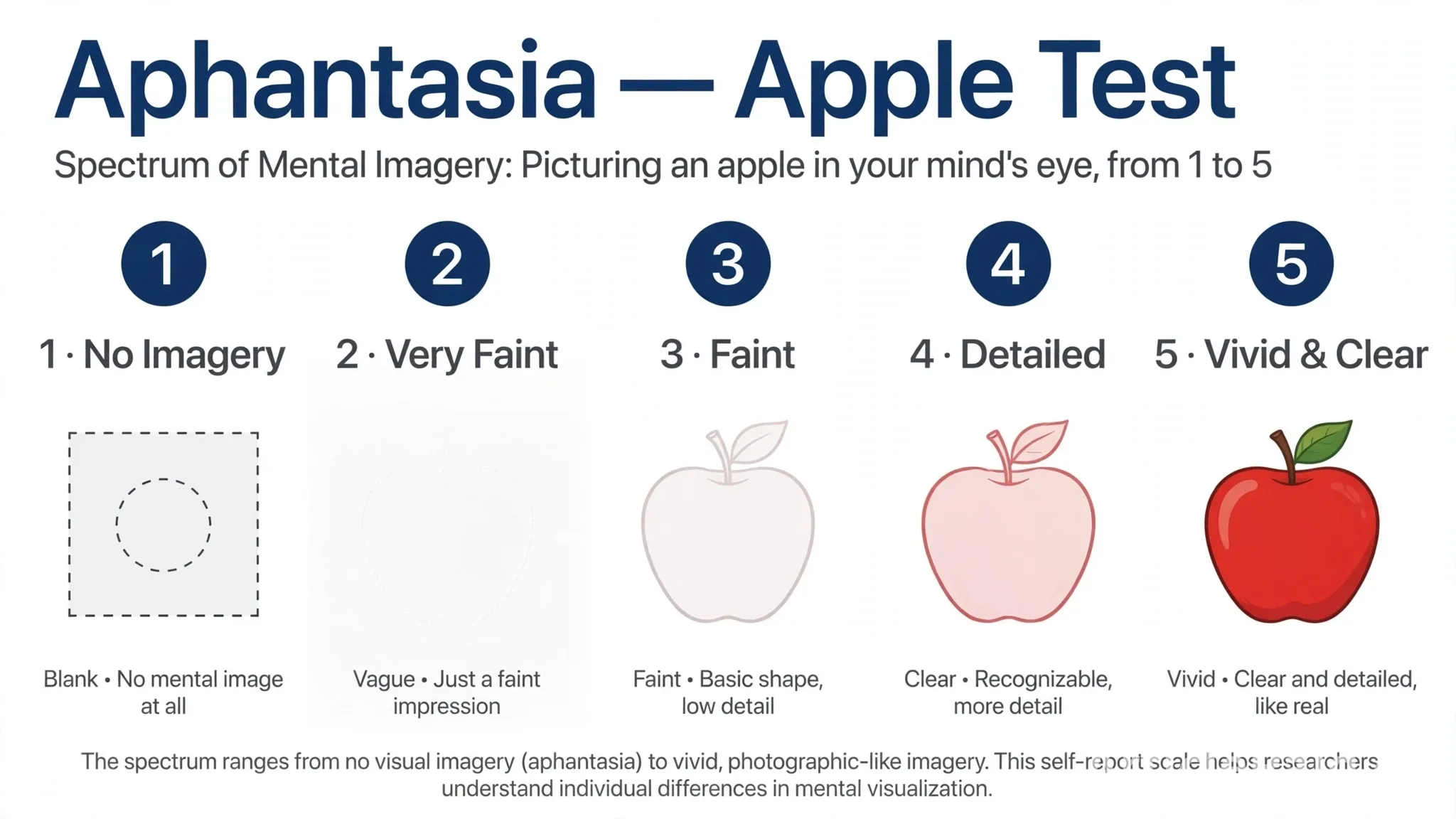
Try this simple exercise. Close your eyes and imagine a red apple on a table.
Can you clearly see its color, shape, and shine? Is the image blurry, or do you only know what it looks like without actually seeing it?
Everyone experiences imagination differently. This test can help you understand how your own mind works, but it is not a medical diagnosis.
Final Thoughts
Aphantasia reminds us that no two human brains work in exactly the same way. What feels effortless and natural for one person can be completely impossible for another.
The human brain is still full of mysteries. By studying conditions like aphantasia, scientists are learning more about imagination, memory, and consciousness itself. Perhaps the most fascinating question is not just what we can imagine, but how differently each of us experiences the world inside our own minds.







Responses (1)