
Benefits and Drawbacks of Drinking Coffee Every Morning,
With No Stomach One of the most widely consumed beverages on the planet is coffee. It's more than just a drink for millions of people; it's a morning ritual that gets them ready for the day. It's a good choice because of the scent, warmth, and energy rush. However, there are potential advantages and disadvantages to drinking coffee on an empty stomach, particularly early in the morning. If you are aware of these effects, it will be easier for you to decide whether drinking coffee in the morning is a healthy habit or something you might want to change.
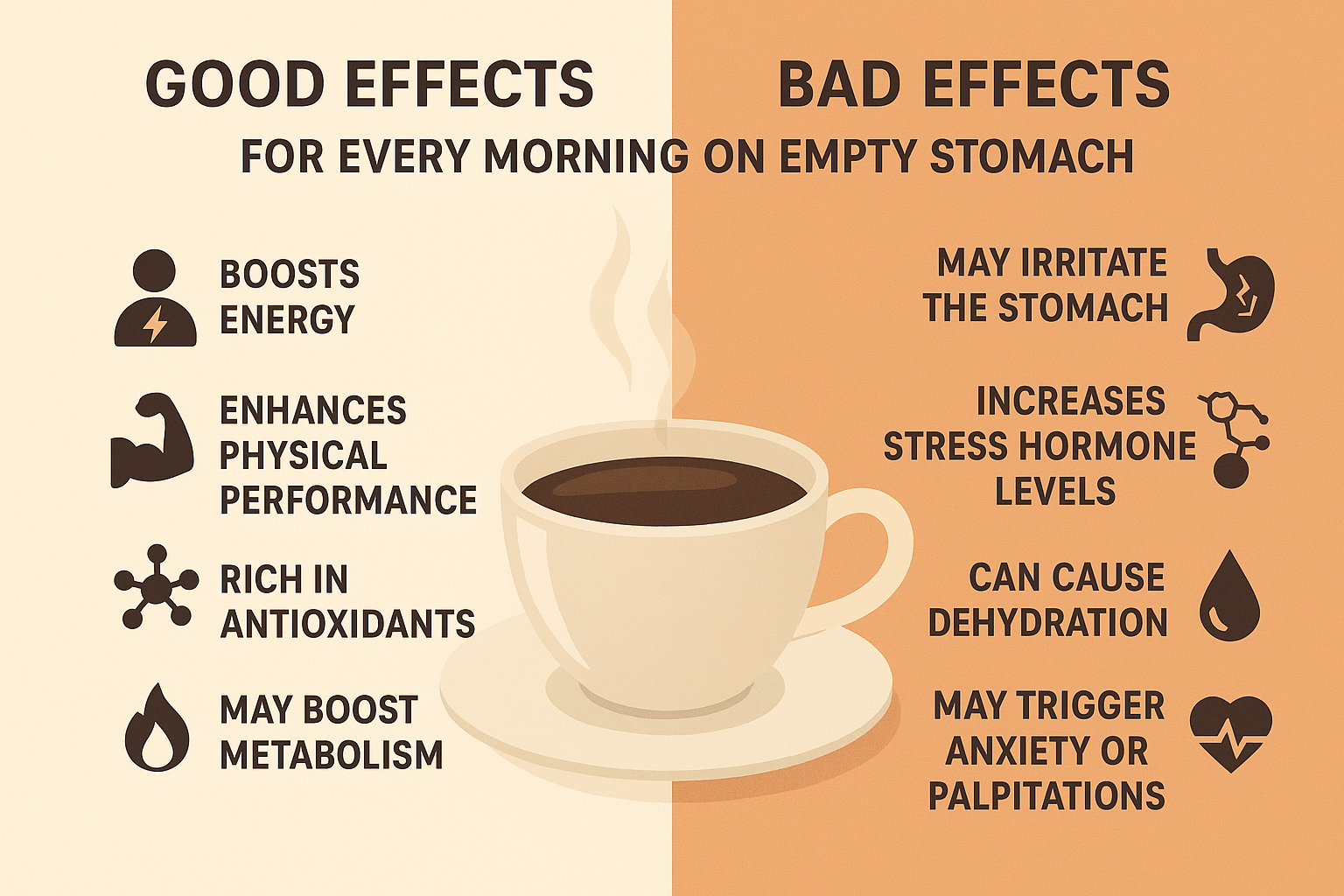
Morning Coffee's Beneficial Effects on an Empty Stomach While coffee often gets criticized, it also has scientifically backed benefits especially when consumed in moderation.
1.Boosts Energy and Alertness
Coffee is rich in caffeine, a natural stimulant that blocks adenosine, the chemical in the brain that promotes sleepiness. When taken in the morning, it can: Increase alertness
Improve concentration
Reduce mental fatigue
Coffee can help people who wake up feeling groggy feel more awake and ready for the day.
2.Enhances Physical Performance
Adrenaline can also be released by caffeine, preparing your body for physical activity. Coffee may: be harmful to exercisers in the morning Enhance endurance Make your muscles perform better. Prevent exhaustion during exercise. Because of this, many athletes take caffeine supplements or coffee prior to training.
3. Filled with antioxidants Coffee contains powerful antioxidants such as chlorogenic acid, polyphenols, and hydrocinnamic acid.
These compounds:
Help fight free radicals
Contribute to overall health may reduce the likelihood of certain chronic diseases When consumed without sugar and high-calorie creamers, coffee can be a low-calorie source of these beneficial compounds.
4. May Enhance Metabolism Caffeine may assist in calorie burning by temporarily increasing metabolic rate. According to studies, it may: Boost fat metabolism Promote thermogenesis (heat production in the body)
Even though it doesn't do much, it might help you lose weight if you combine it with a healthy diet and regular exercise.
5.Can Enhance Mood Caffeine influences neurotransmitters like dopamine and serotonin, which can:
Improve mood
Reduce the likelihood of depression in some people. Give people a feeling of well-being. Morning coffee also contributes to mental comfort and happiness for many people.
The Bad Effects of Drinking Coffee on an Empty Stomach
Even though coffee has advantages, drinking it first thing in the morning without eating can either cause or exacerbate certain problems.
1. Could Make the Stomach Raise Coffee is acidic and can increase the production of stomach acid. On an empty stomach, this may:
Cause stomach discomfort or pain
Make gastritis or acid reflux worse. cause heartburn Eating something before drinking coffee may help alleviate discomfort for those who are prone to digestive issues.
2. Increases Stress Hormone Levels
Drinking coffee early in the morning can trigger the release of cortisol, the body’s main stress hormone. High cortisol levels:
can make you feel anxious and jittery May interfere with normal hormonal balance
may affect the regulation of blood sugar This can make some people feel anxious or restless.
3.Can Cause Dehydration
Coffee can make more urine because it has mild diuretic properties. While moderate coffee consumption usually doesn’t cause severe dehydration, drinking it before having any water in the morning may:
Contribute to fluid loss
cause headaches or dizziness in people who are sensitive.
4.May Trigger Anxiety or Palpitations
Caffeine in high doses, especially when taken on an empty stomach, can: Stress the nervous system too much. generate a rapid heartbeat Lead to trembling or restlessness
When drinking coffee without food, people who are sensitive to caffeine or who are prone to anxiety may experience more severe symptoms.
5. Possible Impact on Nutrient Absorption
Some research suggests that drinking coffee close to meals may reduce the absorption of certain nutrients like iron and calcium. It might not be a big deal if you drink coffee right away in the morning and skip breakfast, but frequent fasting with coffee could lead to deficiencies over time.
Tips to Reduce the Negative Effects
If you like your morning coffee on an empty stomach but want to avoid any potential side effects, the following advice can be helpful:
1. Drink Water First
Start your day with a glass of water to rehydrate before having coffee.
2. Eat a Light Snack
A small portion of fruit, a handful of nuts, or toast before coffee can protect your stomach lining.
3. Limit Added Sugars and Creamers
The health benefits of coffee can be negated by adding high-fat and high-sugar coffee additives.
4.Choose Low-Acidity Coffee
Coffee with lower acidity from some brands might be easier on the stomach.
5. Moderate Your Intake
Caffeine intake should be limited to 1 to 2 cups per day.
6.Avoid Drinking Too Early
Shortly after waking, your body naturally produces more cortisol. Stress hormone spikes may be reduced by waiting an hour before drinking coffee.
Who Should Avoid Coffee on an Empty Stomach?
Some people might react more strongly to the effects of drinking coffee before eating. These are some: people who have gastritis or acid reflux sufferers of anxiety disorders Individuals with irritable bowel syndrome (IBS)
Caffeine-sensitive pregnant women People with irregular heart rhythms
For these groups, drinking coffee after breakfast or with a small snack may be the safer choice.
Moderation and paying attention to your body are the keys. If you feel uncomfortable, you might want to change when you drink your coffee or pair it with food. A mindful approach to coffee consumption can help most healthy adults enjoy the benefits while avoiding the drawbacks.





















Responses (0)
Sign in to share your thoughts.
Sign in