
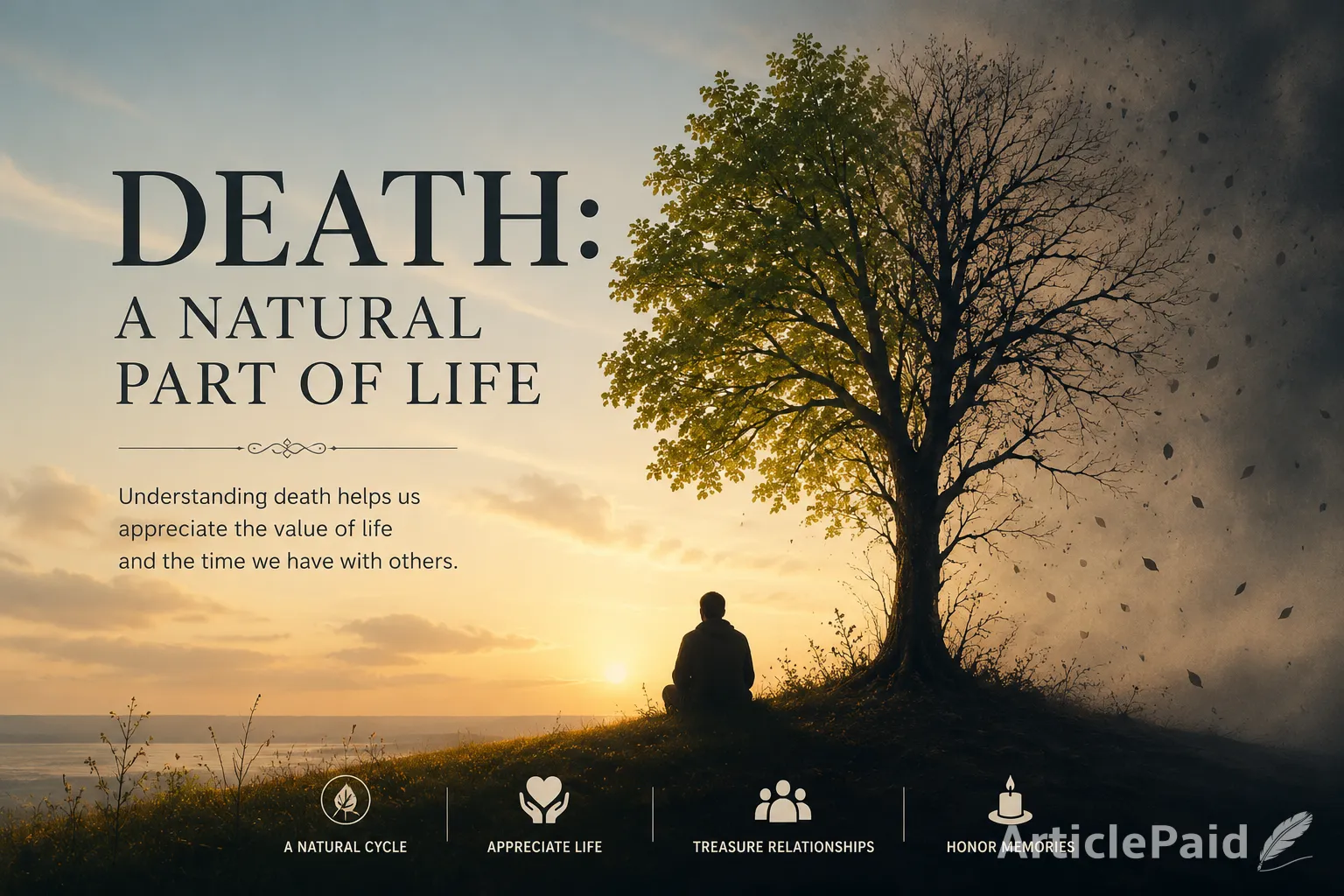
Death: A Natural Part of Life
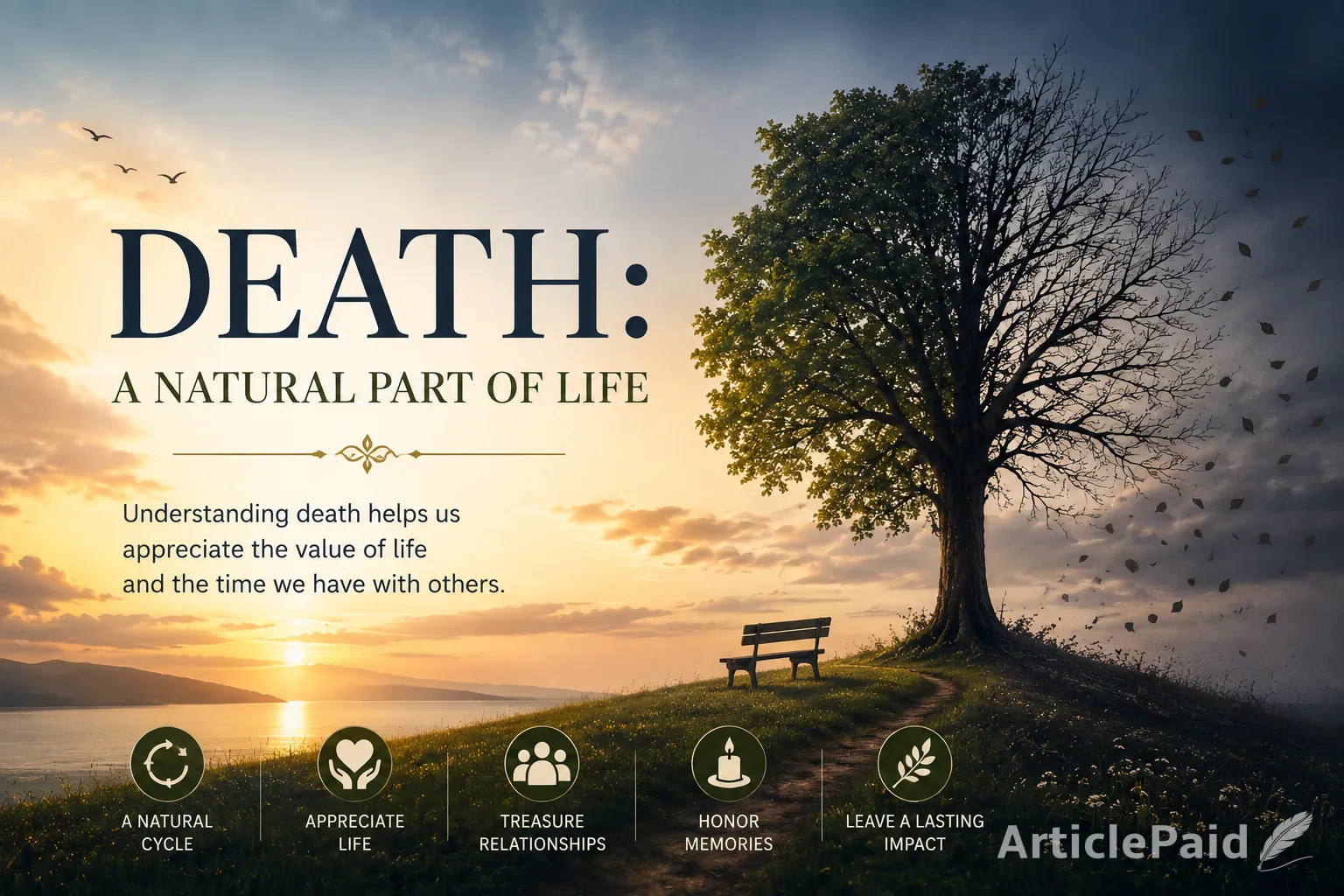
death is one of the most universal experiences of life. Every living organism eventually reaches the end of its natural lifespan, making death an important part of the cycle of life. Although people may find the subject difficult or sad to discuss, understanding death can help us appreciate the value of life and the time we have with others.
From a biological perspective, death occurs when the vital functions that maintain an organism can no longer continue. In humans, the body depends on systems such as the heart, lungs, brain, and other organs working together. When these essential functions permanently stop, the body can no longer maintain itself.
Death can occur for many different reasons. Aging is a natural process in which the body's ability to repair itself gradually decreases. Diseases, serious injuries, and other medical conditions can also cause death. The circumstances may differ, but death is ultimately a natural biological process shared by all living things.
Death also has an important place in human culture and society. Different cultures and religions have developed their own beliefs and traditions concerning what happens after death. Funerals, memorials, and other traditions provide ways for families and communities to remember those who have died and support one another through grief.
Thinking about death can also teach us something about life. Because our time is limited, relationships, education, kindness, and meaningful experiences become valuable. Remembering that life is temporary can encourage people to appreciate their families, friends, opportunities, and everyday moments.
Death is therefore not simply the opposite of life; it is part of the natural cycle of existence. While losing someone can bring sadness and grief, the memories, lessons, and influence of that person can continue through the people they touched. Understanding death helps us recognize both the fragility and the importance of life.















Responses (0)
Sign in to share your thoughts.
Sign in