
Overview
Have you ever wondered how some people can look at someone and tell you all about them? Or, how certain words can subconsciously affect you? The human mind is far more complex and sometimes sinister than most of us would like to believe. This dark side of psychology doesn’t have to be movie villains or clever masterminds pulling the strings of the world behind the scenes. Dark psychology is the understanding of the hidden processes that affect our thoughts, actions and decisions every single day. 10 Facts about the Human Mind that will Surprise and Disturb You.
1. Judgments Are Formed Instantly
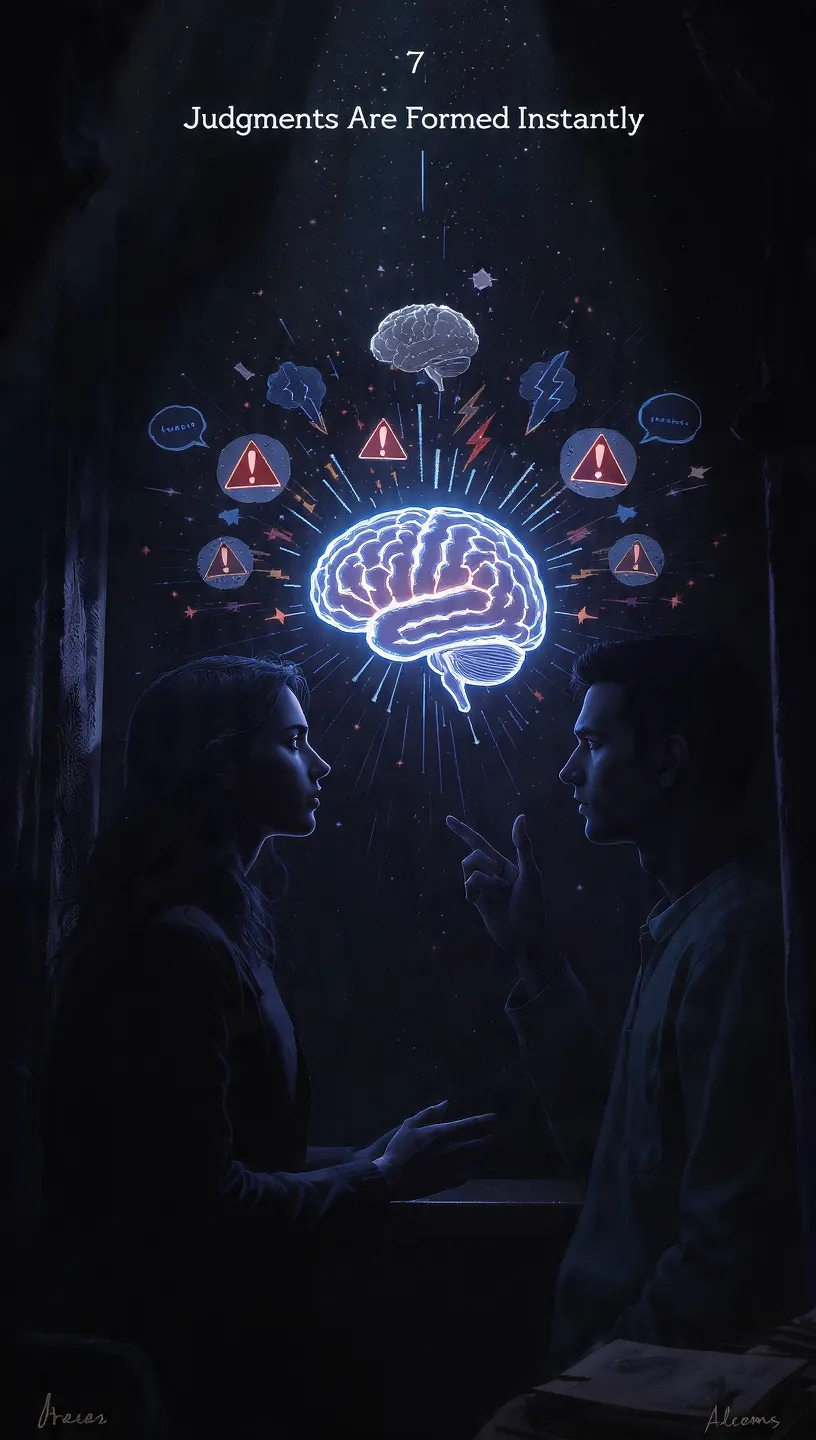 Within seven seconds after meeting a person, the brain has already judged this person and built an impression based on their facial expression, posture, and tone of voice. The impression is formed so quickly that the conscious part of our mind does not even have time to react. Once the opinion is formed, the brain starts looking for evidence to support this judgment, ignoring everything that proves the opposite.
2. Choices Are Made Subconsciously
Most people would believe that they are in full control of their choices, however, according to psychological research, it is not really the case. When we are given three options and one is obviously the best deal, the second one will be chosen by the majority of people as the "perfect choice". We perceive our decision-making process as an independent one; however, it has been predetermined by us without even noticing.
3. Silence makes the people talk
Silence is one of the most underrated dark psychology elements. When we ask a question and wait for a response, we tend to say more than we intended to just because of the awkward silence. This technique is used by many negotiators as it forces people to speak more and even make deals just to stop this uncomfortable silence.
4. We Like People Who Mirror Us
Have you ever felt more comfortable with people similar to you? Our brains automatically get attracted by familiarity. If someone mirrors our movements, tone of voice, and even the word choice, he or she will be trusted more than others who do not show these features at all.
5. The Scarcity Increases Desires
When we are told that something is scarce, our desire for this object grows significantly. Even if we did not care about it before, as soon as we find out that this product might disappear soon, we suddenly start to crave it and buy it immediately.
6. First Emotions Color Everything Else
If the first emotions that we experience during a certain experience are negative, we are going to see everything else in the negative perspective. The same thing goes with positive emotions: even if some parts of an experience were neutral, the overall perception of the event will be positive because the experience started positively.
7. Repetition Builds False Trust
Even if something is untrue, it sounds more genuine and credible the more times we hear it. This is called illusory truth effect and is caused by the fact that the mind uses familiarity as the main tool of judging the truthfulness of something. Therefore, the repeated claims and statements become believable simply due to being heard too often.
8. We Agree to Requests after Guilt
People agree to requests and demands after they are being guilty for something. For example, if we apologize to someone and ask him/her to perform any favor, there is high chances that the person is going to comply without questions.
9. Compliments Lower our Defenses
Even if we think that someone gives us a compliment not honestly and just wants something, the mind perceives it as a positive feedback and responds with activation of the reward pathway. Therefore, the person is less likely to resist to further requests.
10. Losing is More Important than Gaining Something
Losing something hurts more psychologically than gaining the same thing brings joy. This is why the warnings about losing something or missing out the opportunity are more effective than the promises of gaining something valuable.
Final Words
Learning dark psychology is not about manipulating others and being suspicious to everyone you meet. It helps you to understand the hidden processes affecting the mind of others and yourself. Knowing them makes you less susceptible to manipulation and more able to make independent decisions.
Citations
Rosenthal, R., and Ambady, N. (1992). Thin slices of expressive behavior as predictors of interpersonal consequences: A meta-analysis. Psychological Bulletin, 111, 256–274.
Chartrand, T. L., & Bargh, J. A. (1999). The chameleon effect: Social interaction and the relationship between perception and behaviour. Journal of Personality and Social Psychology, 76(6), 893–910.
Tversky, A., & Kahneman, D. (1974). Judgment under uncertainty: Heuristics and biases. Science, 185(4157), 1124–1131.
Kahneman, D., & Tversky, A. (1979). Prospect theory: An analysis of decision under risk. Econometrica, 47(2), 263–291.
Hasher, L., Goldstein, D., & Toppino, T. (1977). Frequency and the conference of referential validity. Journal of Verbal Learning and Verbal Behavior, 16(1), 107–112.
Cialdini, R. B. (2006). Influence: The Psychology of Persuasion. Harper Business.
Predictably Irrational: The Unseen Factors Influencing Our Choices. HarperCollins
#DarkPsychology #Psychology #MindGames #HumanBehavior #Persuasion #PsychologyFacts #MentalHealth #SelfAwareness #BehavioralScience #CognitiveBias #Manipulation #Influence #PersonalDevelopment #Mindset #EmotionalIntelligence




















Responses (0)
Sign in to share your thoughts.
Sign in