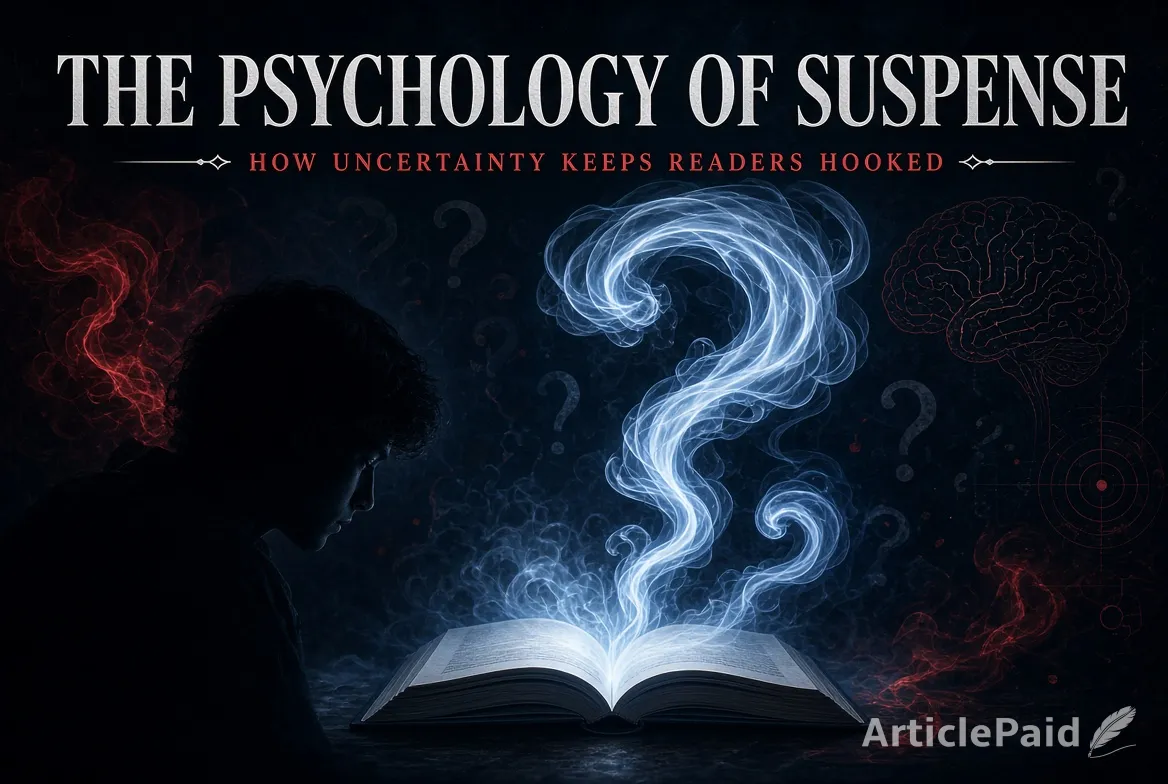
The Psychology of Suspense: How Uncertainty Keeps Readers Hooked
Ever finish a chapter and swear you’ll sleep—then read three more? That’s not weak willpower. It’s your brain on suspense.
Three brainy reasons cliffhangers work
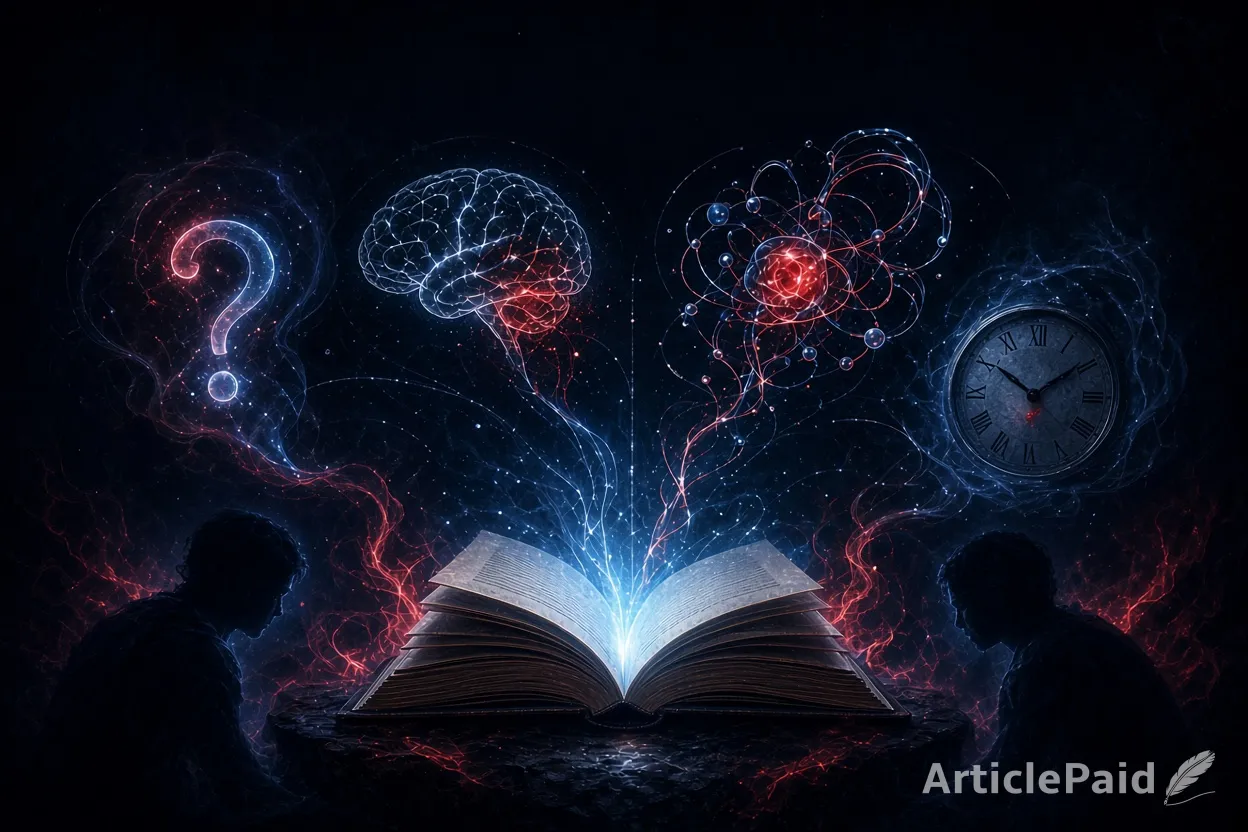
- Curiosity gaps: Psychologist George Loewenstein showed we feel curiosity when there’s a gap between what we know and what we want to know. Writers tease just enough detail to spark a question (“Who sent the note?”) but hold back the answer, creating a mental itch that begs to be scratched. When the gap is “Goldilocks‑sized”—not too small, not too huge—readers lean in instead of tuning out.
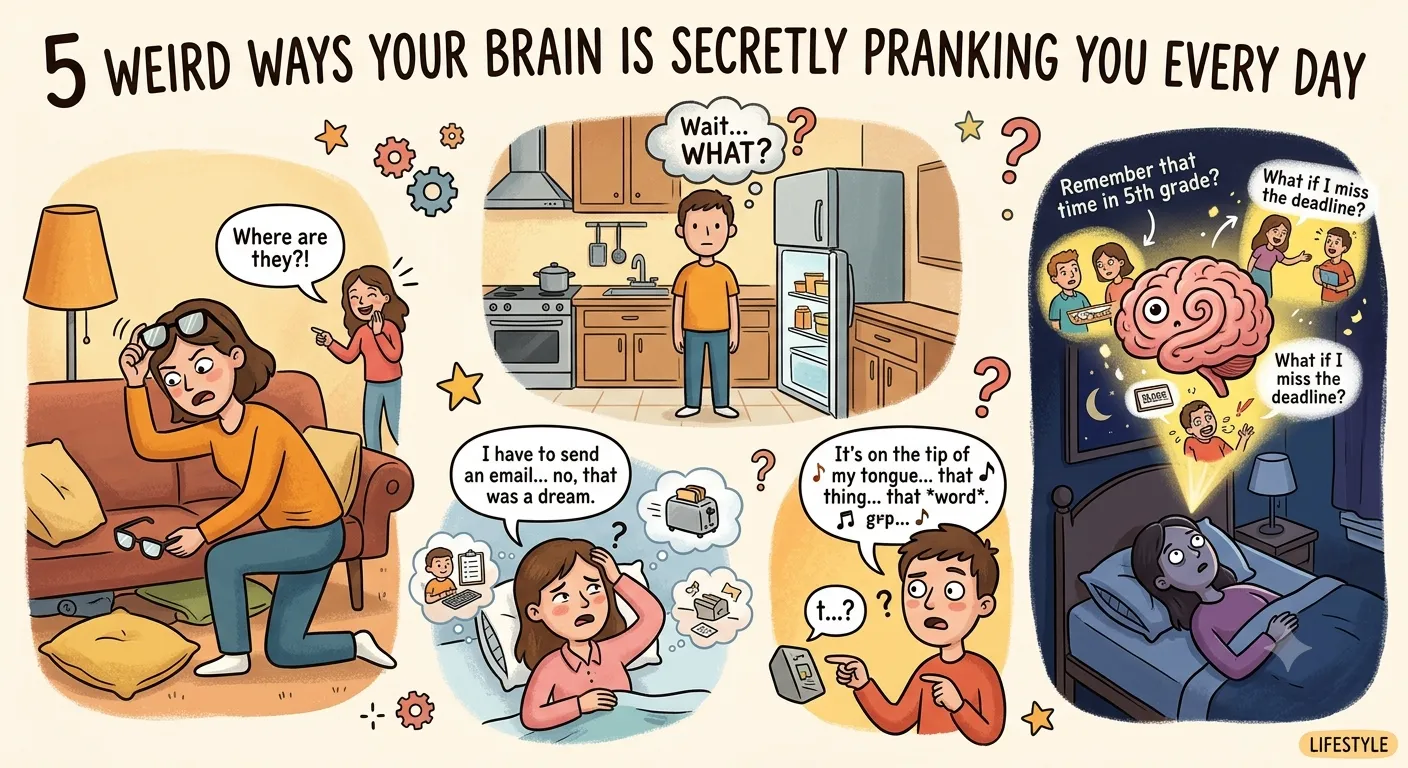
- Prediction errors: Your brain is a prediction machine, constantly guessing what comes next. When the story violates those guesses—a friendly character snaps, a safe room isn’t safe—it triggers a “prediction error,” a jolt that sharpens attention and makes you update your mental model. That micro‑shock feels like suspense, and it keeps you scanning for the next clue.
- The Zeigarnik effect: In the 1920s, Bluma Zeigarnik noticed waiters remembered unpaid orders better than settled ones. Unfinished tasks stick in memory. A chapter that cuts mid‑action leaves an “open loop,” and your mind keeps the file active until it gets closure. That’s why “to be continued” can feel like a gentle command: finish me.
Together, these mechanisms turn uncertainty into forward momentum: a question forms, your prediction gets challenged, and the unfinished moment nags until you click “next chapter.”
Practical techniques for chapter endings
Use these to engineer that “just one more” feeling without cheating your readers:
- End on a decision, not a summary: Close with a character choosing, refusing, or reaching for the door—not with the aftermath.
- Ask a micro‑question: A single line that implies stakes (“If he opens it, what dies?”) creates an instant curiosity gap.
- Cut mid‑motion: Stop during the action (the knock, the text pinging, the gun clicking) so the brain flags it as incomplete.
- Promise a reveal, delay it: Tease a secret (“the truth about Sarah”) but place the payoff two chapters later to sustain tension.
- Raise stakes in the last sentence: Add time pressure, moral cost, or irreversible consequence so the unresolved moment feels urgent.
- Vary rhythm before the drop: Short, punchy sentences accelerate heart rate; a sudden pause before the final line heightens the sting.
Think of each chapter as a mini‑mystery: pose a question early, complicate it in the middle, and end right as the answer becomes possible—but not yet given.
YouTube hooks that borrow from suspense
Short‑form video thrives on the same psychology. Try these openers:
- Gap + timer: “In 48 hours, this message deletes itself—and I still don’t know who sent it.”
- Prediction flip: “Everyone thinks the killer is the brother. Here’s the clue that proves it can’t be him.”
- Open loop promise: “I’ll show the text that changes everything—after we see what happens when she opens the door.”
- Partial reveal: Share one striking detail, then pause: “The photo had three people. Only two should exist.”
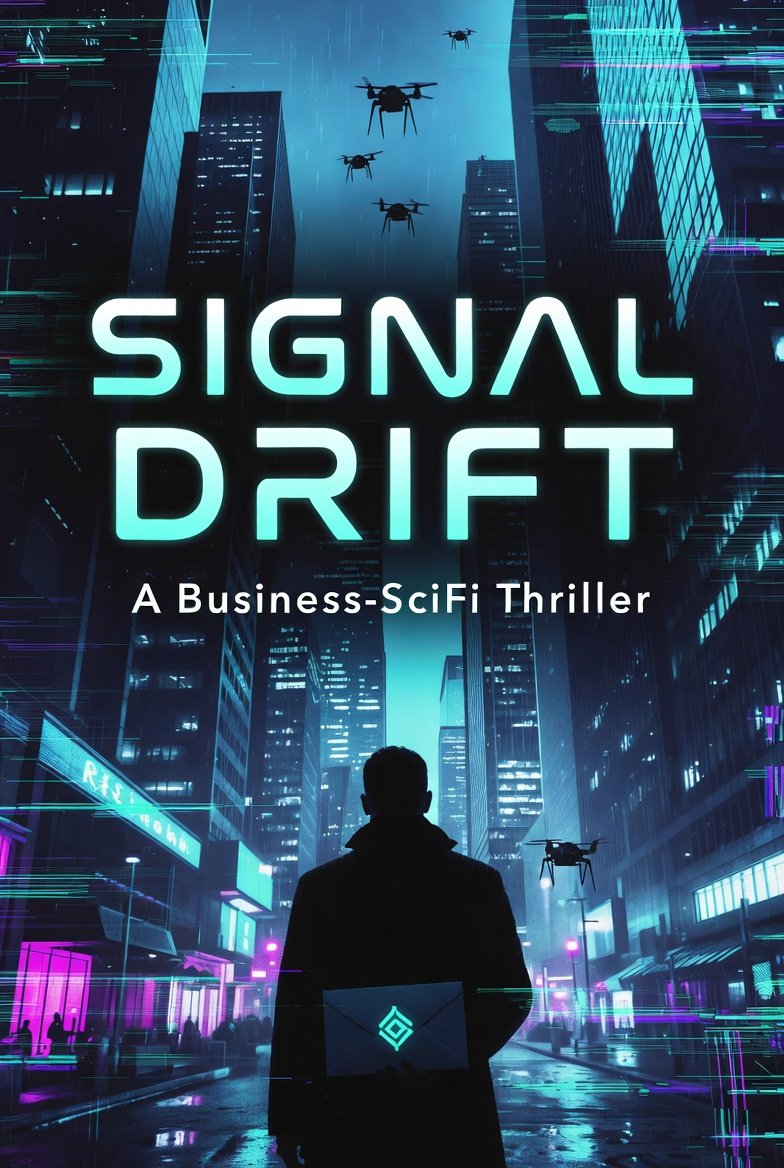
Keep the gap clear and specific. One sharp question beats three vague ones. Pair it with a visual cue (a locked envelope, a blinking timer) so viewers feel the tension, not just hear about it.
Use these tools kindly: tease fairly, pay off promises, and let uncertainty do the heavy lifting. When readers or viewers sense you respect their curiosity, they’ll follow you deeper into the dark.












Responses (0)
Sign in to share your thoughts.
Sign in