
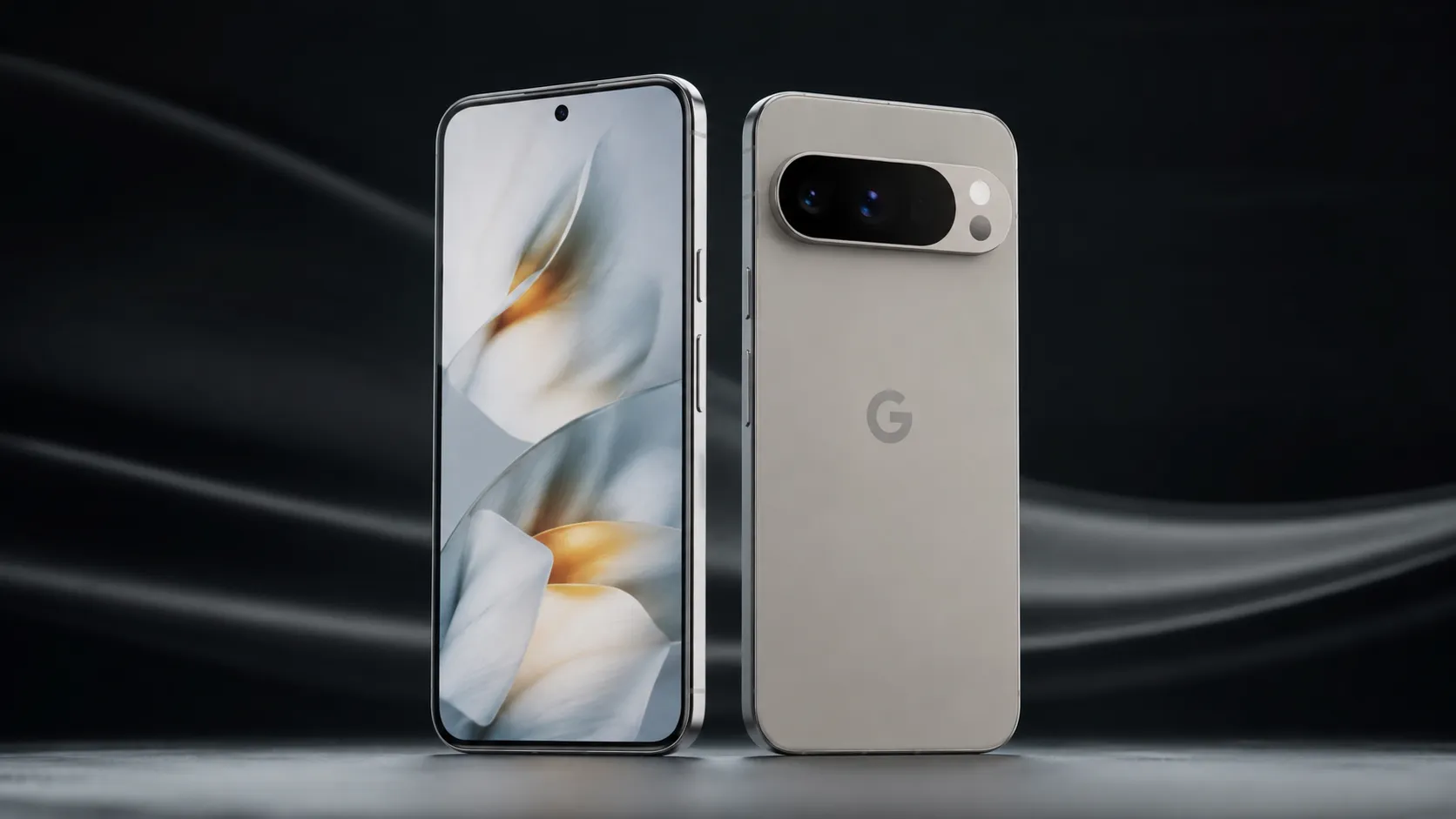
Google has steadily transformed the Pixel lineup from a niche Android alternative into one of the most innovative smartphone series on the market. While brands like Apple and Samsung continue to dominate global sales, Google's approach focuses on delivering intelligent software, industry-leading computational photography, and AI-powered features that make everyday tasks easier rather than simply increasing hardware specifications.
As anticipation builds around the Google Pixel 11, leaks, industry trends, and Google's recent product strategy provide valuable clues about what the next-generation flagship could offer. Although Google has yet to officially reveal every detail, expectations are already high, particularly as artificial intelligence becomes the defining feature of premium smartphones.
If Google's recent development cycle is any indication, the Pixel 11 will likely push AI integration even further while introducing performance improvements, camera refinements, and software features that distinguish it from competing Android devices.
A refined design with flagship hardware
Google rarely redesigns the Pixel lineup dramatically every year. Instead, the company typically focuses on refining an already recognizable design language, and the Pixel 11 is expected to continue that philosophy.
The smartphone will likely feature premium materials, slimmer bezels, improved durability, and enhanced water resistance. Google's camera bar has become one of the Pixel series' defining characteristics, so it is expected to remain while receiving subtle aesthetic updates.
Display technology should also receive noticeable improvements. Industry analysts expect Google to equip the Pixel 11 with a high-resolution OLED display supporting a 120Hz adaptive refresh rate for smoother scrolling, gaming, and animations. Increased brightness would improve outdoor visibility, while more efficient display technology could contribute to longer battery life.
Performance is expected to come from Google's newest Tensor processor, designed specifically to accelerate AI workloads rather than competing purely on benchmark scores. This chip will likely improve image processing, voice recognition, translation, security, and on-device machine learning.
Memory configurations may begin at 12GB of RAM, with higher-end models potentially offering 16GB for demanding multitasking and AI applications. Storage options are expected to range from 256GB to 1TB, giving users more flexibility than previous generations.
Battery capacity should also increase modestly, accompanied by faster wired charging, wireless charging, and improved battery optimization through Android's adaptive learning algorithms.
Instead of chasing specification records, Google will likely continue emphasizing balanced performance and intelligent software optimization, which has become a hallmark of the Pixel experience.
AI features expected to define the Pixel 11
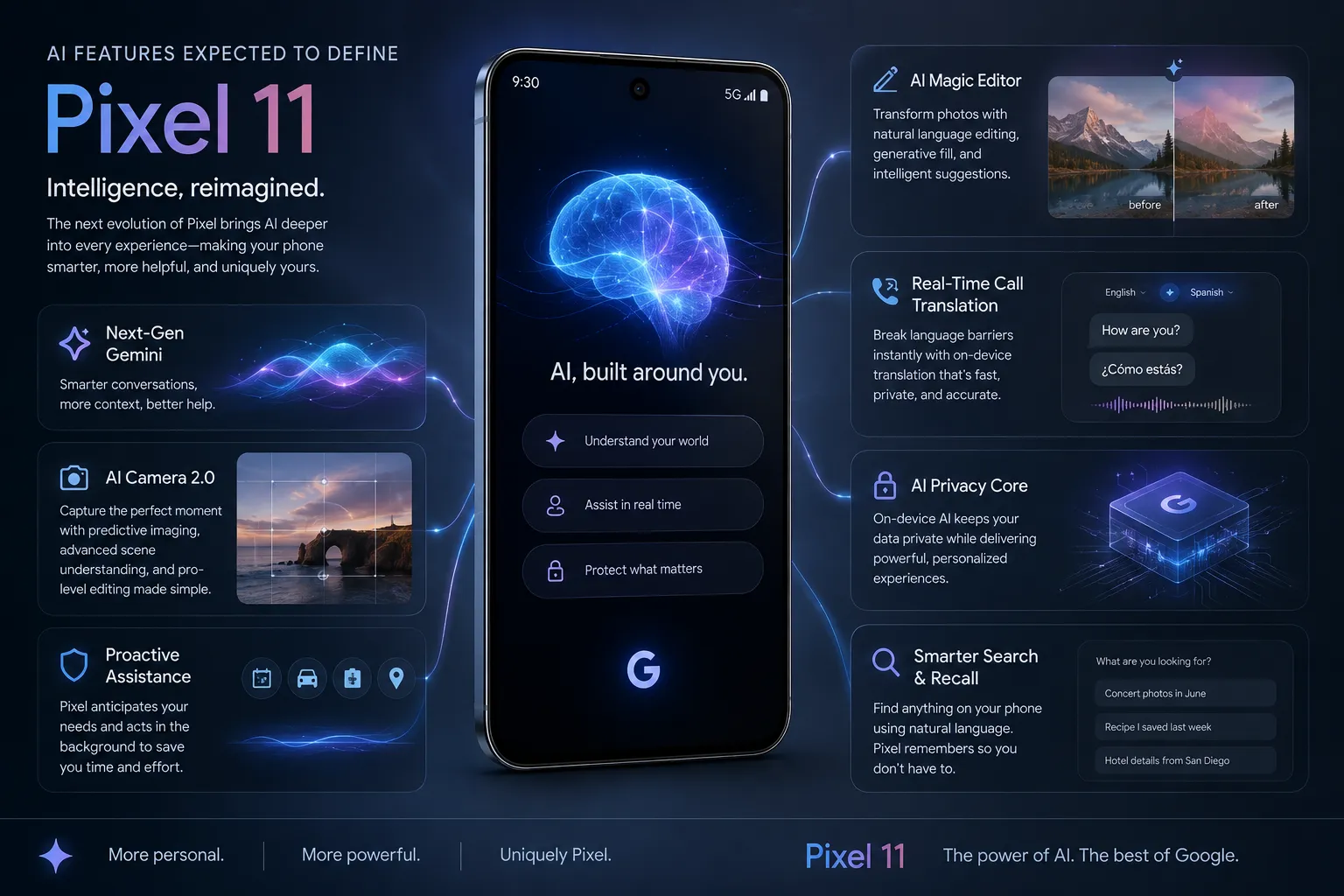
Artificial intelligence has become Google's greatest competitive advantage, and the Pixel 11 is expected to showcase some of the company's most advanced AI innovations to date.
Rather than relying solely on cloud computing, Google continues investing heavily in on-device AI processing. This approach offers faster responses, improved privacy, and offline functionality for many intelligent features.
One expected improvement involves a significantly more capable digital assistant powered by Google's latest AI models. Instead of simply answering questions, the assistant may handle complex workflows, summarize lengthy conversations, organize documents, generate emails, and perform multiple tasks using natural language commands.
Photography will almost certainly remain a major focus. Existing AI-powered tools such as Magic Editor, Best Take, Photo Unblur, and Audio Magic Eraser could receive substantial upgrades. New editing capabilities may allow users to modify images using conversational prompts, remove distractions more accurately, or enhance low-light photography automatically.
Real-time language translation is another area likely to evolve. Google already leads the industry in translation technologies, and the Pixel 11 may deliver faster multilingual conversations, improved transcription accuracy, and seamless communication across dozens of languages.
AI could also improve battery management by predicting user habits more accurately, allocating system resources intelligently, and extending battery life without sacrificing performance.
Security remains another important application. AI-driven fraud detection, smarter spam filtering, phishing protection, and enhanced biometric authentication are all expected to become more sophisticated.
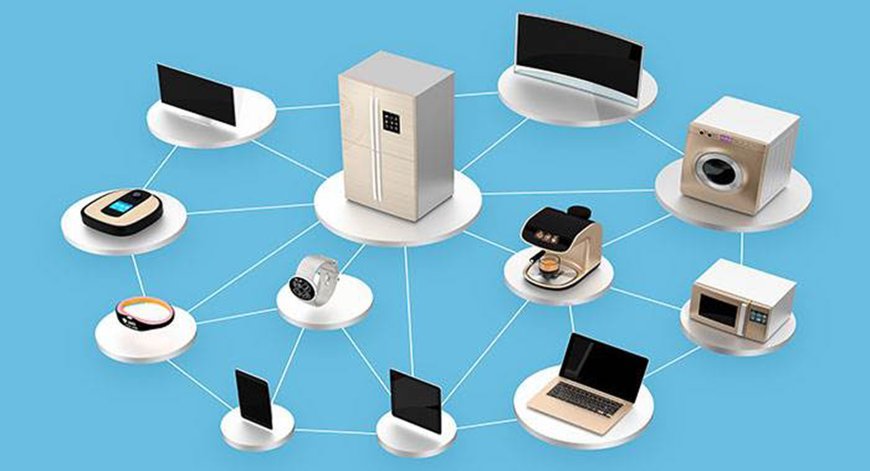
Perhaps the most exciting possibility is deeper integration between Android and Google's broader AI ecosystem, allowing users to move effortlessly between phones, tablets, computers, and cloud services while maintaining consistent AI assistance across devices.
Camera upgrades could strengthen Google's photography leadership
For years, Google has demonstrated that software can compete with larger camera sensors through computational photography. The Pixel 11 is expected to continue this tradition while introducing both hardware and software enhancements.
The primary camera sensor may receive modest improvements in resolution and light sensitivity, producing sharper images with better dynamic range. Combined with Google's image processing algorithms, users can expect vibrant colors, realistic skin tones, and impressive low-light performance.
The ultrawide camera is also likely to improve, offering greater detail, reduced distortion, and enhanced macro photography capabilities. Telephoto zoom could receive upgrades as well, allowing for clearer long-distance images without sacrificing quality.
Video recording has historically been one area where Google trailed competitors like Apple. The Pixel 11 may narrow this gap with better image stabilization, more advanced HDR recording, improved cinematic modes, and AI-assisted editing tools that simplify professional-looking video production.
Artificial intelligence will likely influence nearly every aspect of photography. Users may be able to remove unwanted objects more naturally, enhance facial expressions automatically, improve portrait lighting, and generate realistic edits using text-based instructions.
Google may also expand AI-powered video editing, allowing creators to stabilize footage, improve audio quality, remove background noise, and automatically create highlight reels with minimal manual effort.
These enhancements would reinforce Google's reputation as one of the best smartphone camera manufacturers, even if competitors continue introducing larger camera sensors.
Expected price, release date and available models
Although Google has not officially announced pricing, previous Pixel launches provide useful guidance for estimating the Pixel 11's position within the premium smartphone market.
Industry expectations suggest the standard Pixel 11 could begin around $799, while a larger Pixel 11 Pro may start near $999. If Google introduces an Ultra model, pricing could exceed $1,199, placing it directly against Apple's Pro Max lineup and Samsung's Galaxy Ultra series.
Storage upgrades would naturally increase pricing, particularly for models offering 512GB or 1TB configurations.
Regarding availability, Google has established a relatively predictable launch schedule over recent years. The Pixel 11 is widely expected to debut during Google's annual autumn hardware event, with pre-orders opening shortly after the official announcement and retail availability following within a few weeks.
Google will likely continue expanding regional availability, making the Pixel lineup accessible in more international markets while strengthening partnerships with wireless carriers and retailers.
Consumers may also benefit from attractive trade-in programs, financing options, and bundled services such as Google One storage, YouTube Premium, or AI subscription benefits that add value beyond the hardware itself.
Pricing remains one of Google's strongest advantages. Compared with similarly equipped flagship devices from Apple and Samsung, Pixel smartphones often deliver premium experiences at slightly lower prices, making them appealing to users seeking high-end performance without paying the highest possible premium.
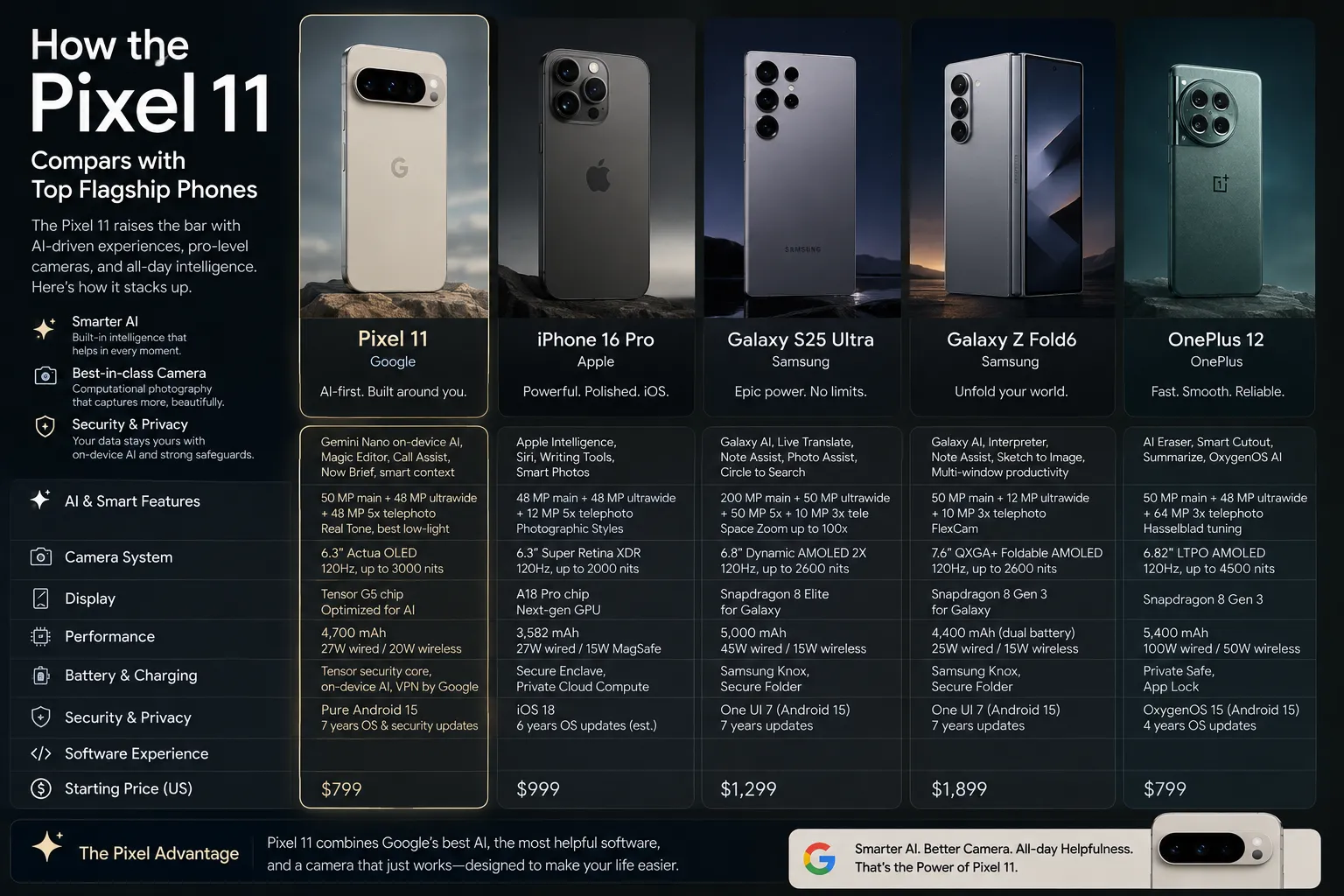
How the Pixel 11 compares with Apple, Samsung and other flagship phones
Competition in the flagship smartphone segment has never been more intense. The Pixel 11 will enter a market filled with powerful alternatives from Apple, Samsung, Xiaomi, OnePlus, and other premium manufacturers.
Compared with Apple's iPhone lineup, the Pixel 11 is expected to offer greater flexibility through Android, deeper AI customization, and more advanced image editing features. Apple's ecosystem remains exceptionally strong, but Google's leadership in generative AI could appeal to users seeking intelligent productivity tools.
Samsung's Galaxy flagship devices typically lead in display technology, hardware variety, and camera versatility. However, Google often counters with cleaner Android software, faster operating system updates, and computational photography that consistently delivers excellent real-world results.
Other Android competitors frequently prioritize raw hardware specifications, including extremely fast charging speeds or exceptionally large camera sensors. Google's strategy remains different. Instead of emphasizing numbers, it focuses on creating an experience where hardware and software work together intelligently.
Enterprise users may appreciate Google's security enhancements and AI-powered productivity features, while content creators could benefit from increasingly capable photography and video editing tools.
Developers and technology enthusiasts are also likely to value Google's close integration with Android, early software updates, and access to the newest AI capabilities before they become widely available on other devices.
Ultimately, the Pixel 11 is expected to compete not by having every specification on paper but by delivering one of the smartest smartphone experiences available.
Conclusion
The Google Pixel 11 is shaping up to be one of the most anticipated Android smartphones of its generation. While official specifications remain under wraps, current expectations point toward meaningful improvements in performance, AI capabilities, photography, battery efficiency, and software intelligence.
Rather than competing solely on processor speed or camera megapixels, Google continues building devices that place artificial intelligence at the center of the user experience. From smarter assistants and advanced photo editing to enhanced security and productivity tools, AI is likely to define nearly every aspect of the Pixel 11.
If Google maintains competitive pricing while delivering the anticipated hardware and software improvements, the Pixel 11 could become one of the strongest flagship smartphones available. For Android enthusiasts, mobile photographers, professionals, and users looking for an intelligent daily companion, Google's next-generation flagship is already shaping up to be a device worth watching closely.



















Responses (0)
Sign in to share your thoughts.
Sign in